


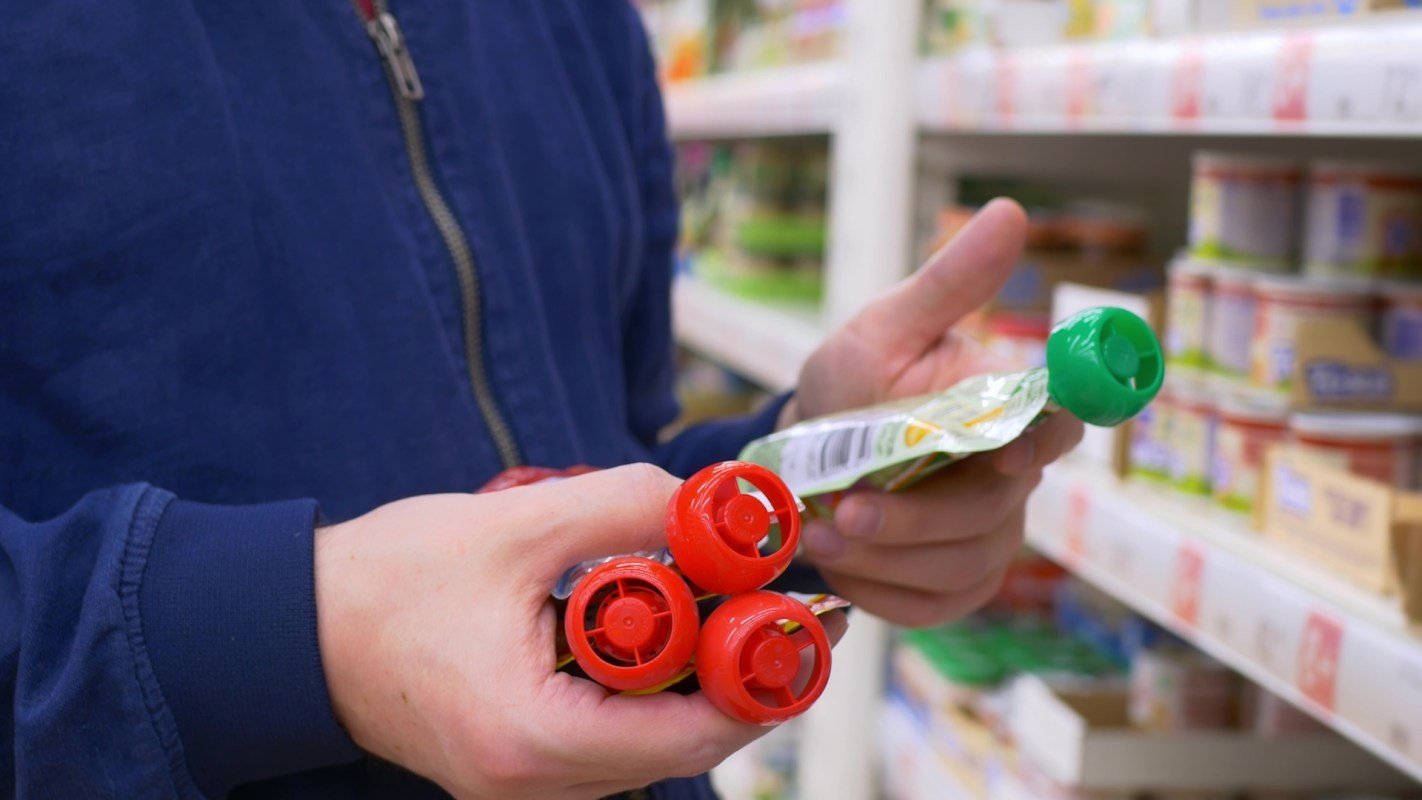
Baby fruit purees and yogurts sold for children in Taiwan are facing scrutiny over how they are packaged.
Greenpeace Taiwan said spout pouches make up most of that market, and testing cited by the group found that a single pouch can contain thousands of microplastic particles, with some surpassing 10,000.
What's happening?
For its April survey, Greenpeace Taiwan looked at puree and yogurt products for babies sold in physical retailers — including hypermarkets, pharmacies, and baby stores — as well as through major online marketplaces such as Momo, PChome, Shopee, and Coupang.
The review found that roughly 80% of the products used plastic spout-pouch packaging.
Taipei Times reported that hypermarkets were at the top of the list: every surveyed baby food item there came in that format. In pharmacies, baby stores, and online shops, the share was between 74% and 79%.
Greenpeace International had SINTEF Ocean Laboratory in Norway test baby foods from two major multinational brands last year.
TCD Picks » Quince Spotlight
💡These best-sellers from Quince deliver affordable, sustainable luxury for all




Greenpeace Taiwan communications officer Lo Chi said microplastics turned up in all of the spout-pouch products examined.
Among the tested items, fruit purees contained as many as 99 microplastic pieces per gram, which works out to more than 10,000 particles in a pouch. Yogurt samples reached 54 pieces per gram, or more than 5,000 per pouch.
Lo said the packaging has an outer layer of polyethylene terephthalate that children may handle, while the food itself touches an inner polyethylene layer.
Why does it matter?
Yen Tzung-hai, a nephrologist at Linkou Chang Gung Memorial Hospital, said medicine still has not pinned down how much microplastic exposure would be harmful to people.
He said evidence from animal and cell research indicates that high exposure could be linked to oxidative stress, inflammation, and organ damage.
Babies and toddlers consume smaller amounts overall, yet repeated exposure from commonly used products could build up over time.
Researchers continue to detect microplastics in more parts of daily life, from food packaging to drinking water.
That does not necessarily mean every product poses the same risk, but it adds to pressure on regulators and manufacturers to show that convenience is not coming at the expense of health.
What's being done?
Greenpeace Taiwan wants the country's Food and Drug Administration to look into whether baby food packaging can shed microplastics and harmful chemicals.
The group is likewise calling on baby food companies to test their own products and publish the results.
Hsiao I-lun, director of the Food Safety Testing and Functional Development Research Center at Taipei Medical University, said the pouches could involve more than microplastics alone, pointing to unintentionally added substances created during plastic production or use.
She urged Taiwan to manage chemicals used in food packaging under rules more closely aligned with those in Japan, the United States, and the European Union.
The larger solution, however, will likely depend on stronger oversight and clearer disclosure so families are not left guessing about what is in the packaging surrounding children's food.
Greenpeace Taiwan said products sold as nutritious options for children can also raise questions about exposure from their packaging.
With microplastics detected in every tested pouch product, the push is now for faster investigation, tighter rules, and greater transparency.

Get TCD's free newsletters for easy tips, smart advice, and a chance to earn $5,000 toward home upgrades. To see more stories like this one, change your Google preferences here.







