


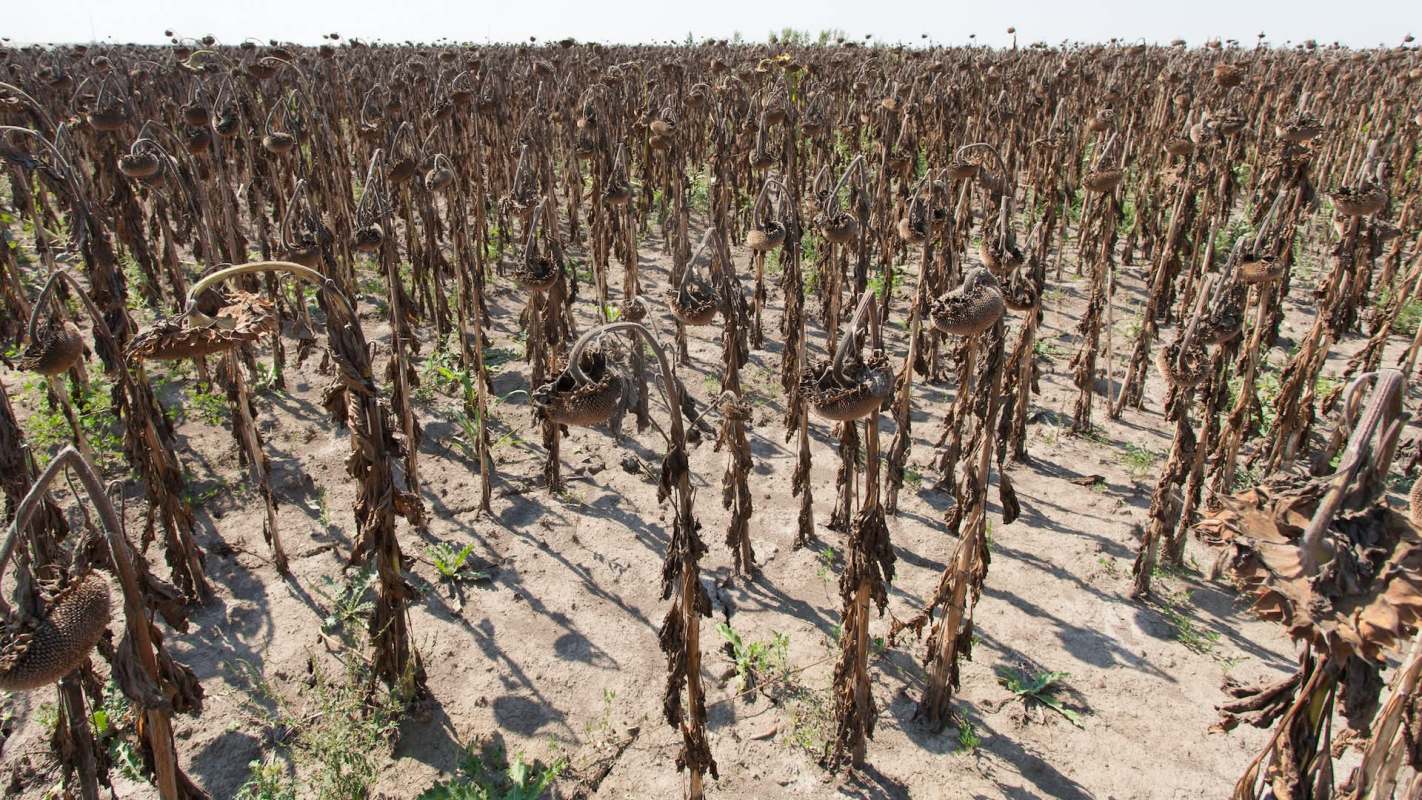
As winter descends on Pakistan's Balochistan province, many residents reach for their seasonal favorite: roasted sunflower seeds.
But this year, the snack is becoming harder to find, and farmers warn that "production has reduced," reflecting how rising heat and ongoing water shortages are reshaping both the livelihoods and the foods that communities rely on each winter.
What's happening?
Sunflower seed yields in Balochistan have dropped sharply amid persistent drought.
According to Arab News, Pakistan's Meteorological Department placed 12 districts under drought watch in October, underscoring how hotter, drier conditions are tightening water supplies.
In Nushki district, production collapsed from 150 tons in 2024 to just 900 kilograms this season.
Farmer Muhammad Arif Baloch told the publication the crop is now "low-profit," while many growers have stopped planting it altogether.
Perk up the winter blues with natural, hemp-derived gummies Camino's hemp-derived gummies naturally support balance and recovery without disrupting your routine, so you can enjoy reliable, consistent dosing without guesswork or habit-forming ingredients. Flavors like sparkling pear for social events and tropical-burst for recovery deliver a sophisticated, elevated taste experience — and orchard peach for balance offers everyday support for managing stress while staying clear-headed and elevated.
Learn more → |

This decline has pushed Pakistan — once an exporter — to rely heavily on imported seeds. In 2024, the country brought in more than $33 million worth of sunflower seeds, mainly from China, Romania, Turkey, Australia, and South Africa.
Local wholesalers have said they have had no choice but to import thousands of sacks to meet winter demand.
Why is the seed shortage concerning?
For families across Balochistan, shrinking harvests mean both reduced income for farmers and a more unstable supply of an affordable winter staple. The story mirrors a broader trend: around the world, farmers are losing crops to the same pressures.
In Pennsylvania, potato growers have struggled with warming nighttime temperatures that threaten yields and raise costs for consumers.
TCD Picks » Upway Spotlight
💡Upway makes it easy to find discounts of up to 60% on premium e-bike brands





|
What is the biggest reason you don't grow food at home? Click your choice to see results and speak your mind. |
 Not enough time ⏳
 In Greece, chestnut producers have reported steep drops in harvests after repeated heat waves and droughts, leaving some growers without a reliable income.
These global examples highlight a shared problem: when rising temperatures and water shortages make staple crops harder to grow, communities feel the strain first — through higher prices, fewer local options, and greater dependence on imports that can fluctuate with international markets.
What's being done about the seed shortage?
As Arab News noted, Provincial officials have said they are working to support farmers as conditions worsen. Balochistan's agricultural research department is producing hybrid sunflower seeds and expanding efforts to multiply them.
The agency is also counseling farmers on which seed varieties are likely to benefit them in drought conditions and which are not.
Officials noted that sunflowers are a relatively short, three-month crop that matures and is harvested quickly, a feature they say could help farmers if they choose to cultivate it.
Local traders are also helping to prevent shortages by increasing winter imports, keeping prices lower than those of other dry goods.
For consumers, choosing locally grown seeds when available and supporting markets that work with regional farmers can strengthen the system during increasingly unpredictable seasons.
As conditions grow more challenging, farmers hope that better seeds, improved water management, and steady government support can keep this winter tradition alive, along with the livelihoods tied to it.

Get TCD's free newsletters for easy tips to save more, waste less, and make smarter choices — and earn up to $5,000 toward clean upgrades in TCD's exclusive Rewards Club.
Cool Picks




