


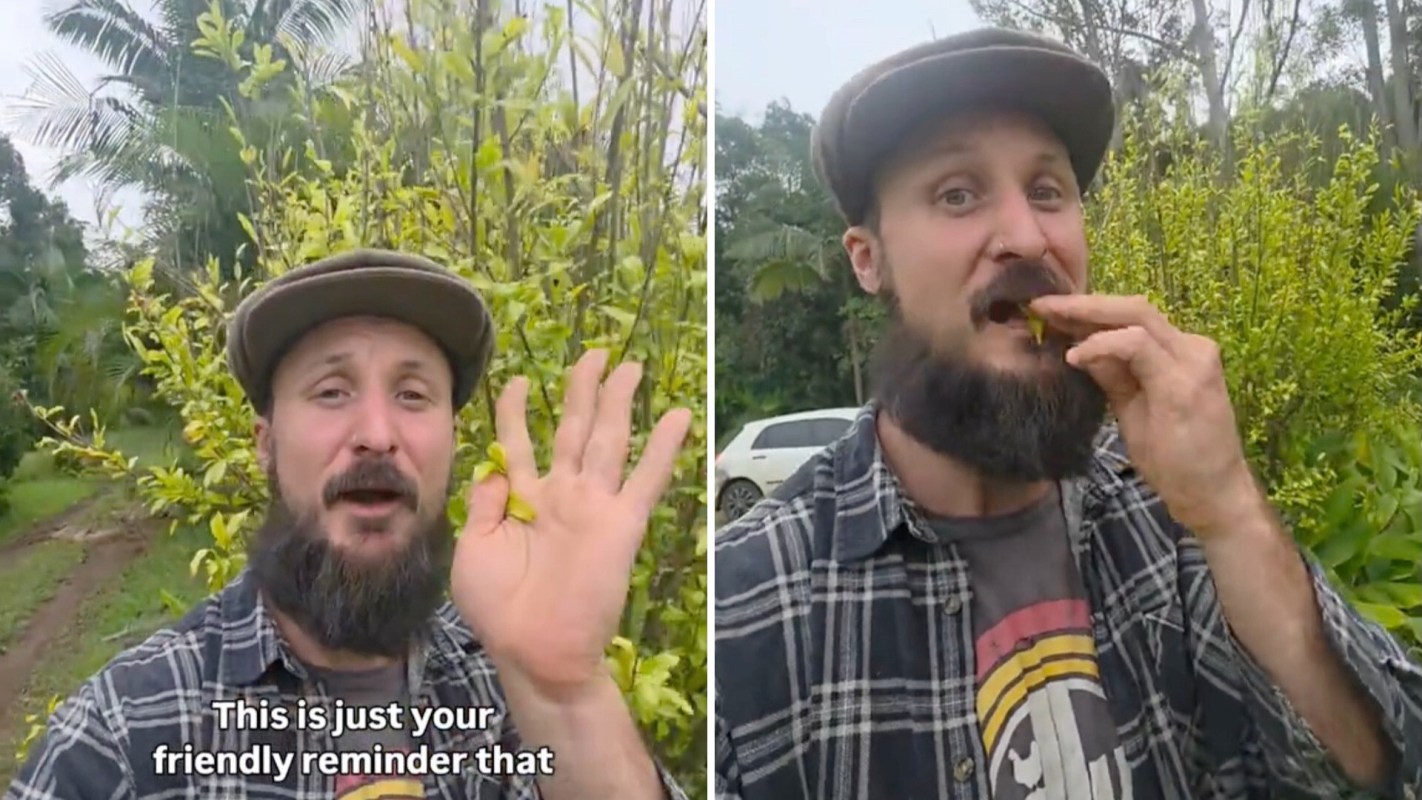
A homesteading creator on TikTok is informing viewers that pomegranate tree leaves can be a great way to make tea.
What's happening?
TikTok creator Nick (@NicholasIsBareFoot) described the missing life skill of knowing how to identify and grow food close to home and the hidden benefits of doing so.
@nicholasisbarefoo Something you never got taught in school was how to actually identify or grow food.. And with the modern world really dependent on supply chains and mas produced monoculture farms. Not only have most people lost their connection to food but they have lost the connection to the earth that provides it.. In this supply chain system foods are convenient and completely disattached from local climates or seasons. Like did you know that you can use pomegranate leafs in a medical tea? And they drop those leafs in winter as they are deciduous.. So you can just harvest all those leafs right before they fall and store them for tea over the winter.. No supply chains needed. No dependence on a system.. Just pure local resilance. Now that's something worth knowing (or teaching in school)
♬ original sound - Nicholasisbarefoot
The creator used the pomegranate tree as an example, noting that it drops its leaves in winter because it is deciduous.
"You can just harvest all those leaves right before they fall and store them for tea over the winter," Nick wrote in the caption.
In the video, Nick said the leaves have vitamins and antioxidants. A study from 2024 stated that more research is necessary to determine their capabilities. But it does generally agree that pomegranate leaves have therapeutic potential.
Nick also wrote in the caption that people have become disconnected from local climates and growing seasons because of "supply chains and [mass-produced] monoculture farms."
TCD Picks » Quince Spotlight
💡These best-sellers from Quince deliver affordable, sustainable luxury for all




Why does it matter?
The post reflects growing interest in finding more uses for backyard plants beyond their most obvious purpose.
For people who already have fruit trees, finding another use for leaves, flowers, or small fallen fruit could mean less yard waste and a little more value from something they are already growing.
Many people want food that feels more local and seasonal, but not everyone has the time, space, or budget to build a full garden.
Small habits, like learning what plants in your yard already produce, can feel more realistic than overhauling the way you shop and eat.
Even a small amount of homegrown food or tea can offer savings, reduce trips to the store, and make households a bit more resilient when prices jump or supplies fluctuate. By gardening and harvesting, homeowners can also reduce the environmental impact of globally shipped produce.
What can I do?
If you already have a pomegranate tree, the simplest first step is to observe it.
Notice when the leaves begin to yellow and drop, and learn the tree's seasonal rhythm before harvesting anything.
Only use leaves from plants you can confidently identify, and avoid anything that may have been sprayed with pesticides or exposed to roadside pollution.
If you are curious about drying leaves for tea, start small, and label what you collect so you know when and where it came from.
You don't have to have a homestead to benefit from this mindset. A balcony herb pot, a citrus tree, or even a neighborhood gardening class can help reconnect you with seasonal food in a manageable way.
If pomegranates are not part of your landscape, learn one edible or useful plant in your area each season. That can be enough to build confidence without turning food sourcing into a full-time project.

Get TCD's free newsletters for easy tips, smart advice, and a chance to earn $5,000 toward home upgrades. To see more stories like this one, change your Google preferences here.







