


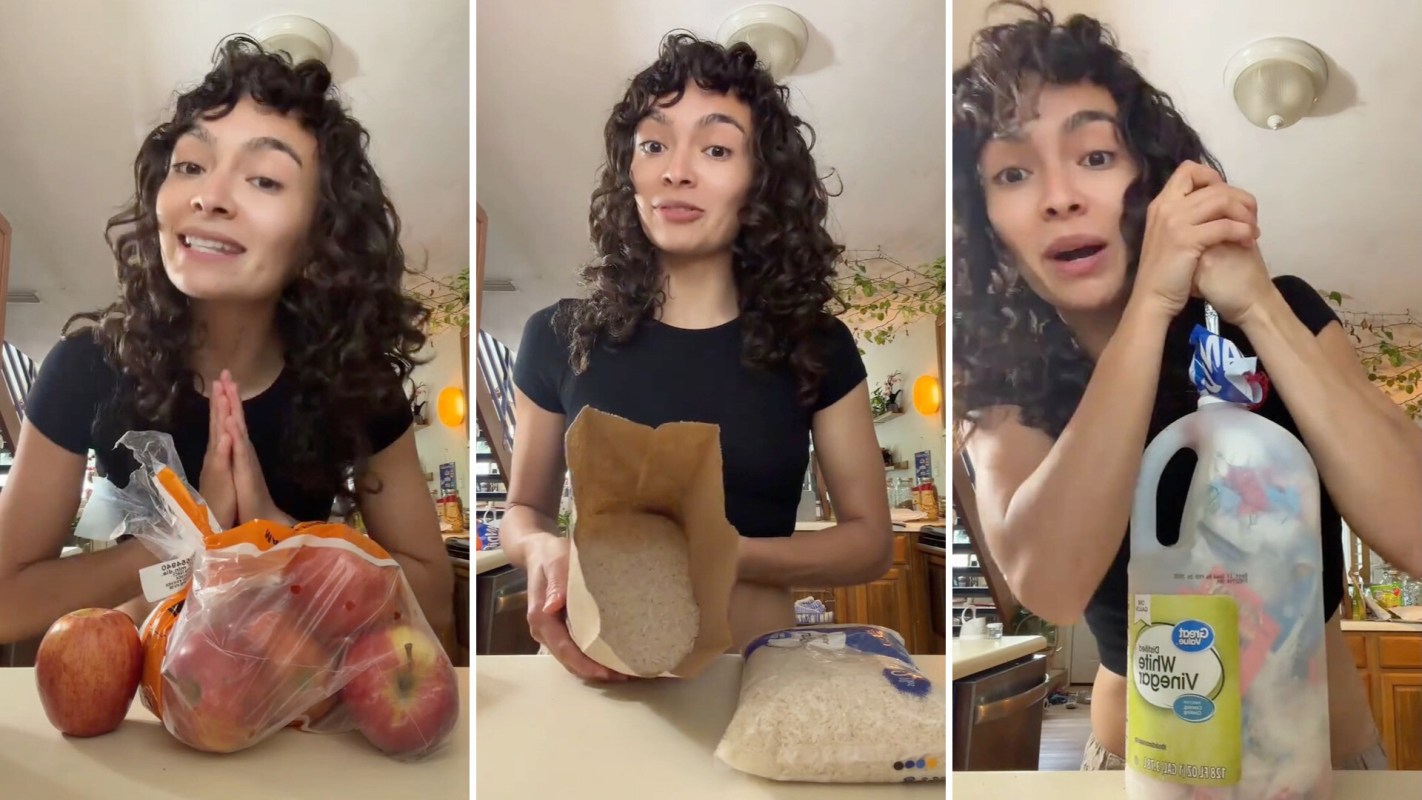
A viral grocery haul puts a price tag on something many shoppers already know. Avoiding plastic often costs more.
To drive the point home, content creator Jasmine Martinez (@smallandfragileclub) stuffed soft plastic into an ecobrick and summed up the frustration bluntly: "Plastic is inevitable."
Here's what to know
In a TikTok video, the creator looked at the price difference between basic groceries in plastic packaging and plastic-free alternatives, saying the comparison showed a "whopping 30 dollar difference" in groceries.
@smallandfragileclub I'm basically a plastic human #ecobrick #zerowaste #sustainability #sustainableliving #groceryhaul ♬ original sound - Small and Fragile Club
Across the haul, the lower-waste picks were consistently more expensive. The cheapest carton of milk Martinez found was $4.79, compared with $1.72 for a half-gallon in plastic. Eggs in cardboard were $3.99 versus $1.67 in Styrofoam, and two pounds of bulk rice cost $5.54, while rice in plastic was $1.77.
Bread showed a similar gap at $4.99 for the cheapest plastic-free option and $1.48 for the cheapest loaf in plastic, while three pounds of loose apples came to $6.71 compared with $3.24 for a bagged version.
Martinez's larger point was not that plastic is harmless, but that many consumers are being blamed for a system they did not build.
TCD Picks » Quince Spotlight
💡These best-sellers from Quince deliver affordable, sustainable luxury for all




"The next time someone tells me to just stop buying items in plastic, I might just lose my mind," she said.
Commenters echoed that anger and frustration.
"People should be re-directing their energy into forcing companies to develop affordable non-plastic options instead of scolding people for buying what's available to them," one wrote.
More background
By packing household plastic into an ecobrick, the creator turns everyday consumption into something tangible, showing how much soft plastic can pile up even when someone is trying to be mindful.
Accessibility is part of the problem too. Loose produce, bulk bins, and other lower-waste options can be harder to find, more expensive, or both. Martinez also noted that some alternatives presented as better still depend on plastic elsewhere in the process, including bulk goods shipped in large plastic bags and products covered in heavy film.
"I always buy the cheapest things cuz I'm a single mom and can't afford the other stuff and it's still expensive!!" one commenter admitted.
Another commenter added a detail many shoppers may overlook.
"Plastic is even in the carton packages for orange juice and milk to keep the carton from getting soggy and being destroyed by the liquid, people for some reason don't know that and of course the lid is plastic too," they noted.
What can be done?
Reusing produce bags, cutting back on single-use plastics where possible, and choosing longer-lasting items can help reduce waste and save money over time, but those steps work best when they fit a household's budget.
Companies can redesign packaging, expand refill and return systems, and make non-plastic options available at mainstream price points instead of treating them as premium products. Retailers can also make bulk and low-waste options easier to access in more neighborhoods.
Policy matters too. Rules that encourage producers to reduce unnecessary packaging and take responsibility for waste can shift the burden away from shoppers and communities.
"Yes, plastic is terrible, but I don't think a lot of people have access to a whole cow, fresh chicken, fresh eggs, or to be paying extra money for loose produce," Martinez concluded.
Where can I learn more?
Despite some challenges in going plastic-free, plastic bag bans are going forward in many locations. This pushes retailers to provide working alternatives.
• In Calgary, a new rule pushes a ban on wasteful single-use plastic in shopping and dining.
• In California, lawmakers are closing loopholes to ensure plastic bags fall out of use.
• In Vermont, shoppers saw an unorthodox side effect after the statewide plastic bag ban.
Shoppers can only do so much on their own at the checkout line. Whether lower-waste options are truly within reach depends on companies, retailers, and lawmakers making them affordable and easy to find.

Get TCD's free newsletters for easy tips, smart advice, and a chance to earn $5,000 toward home upgrades. To see more stories like this one, change your Google preferences here.







