


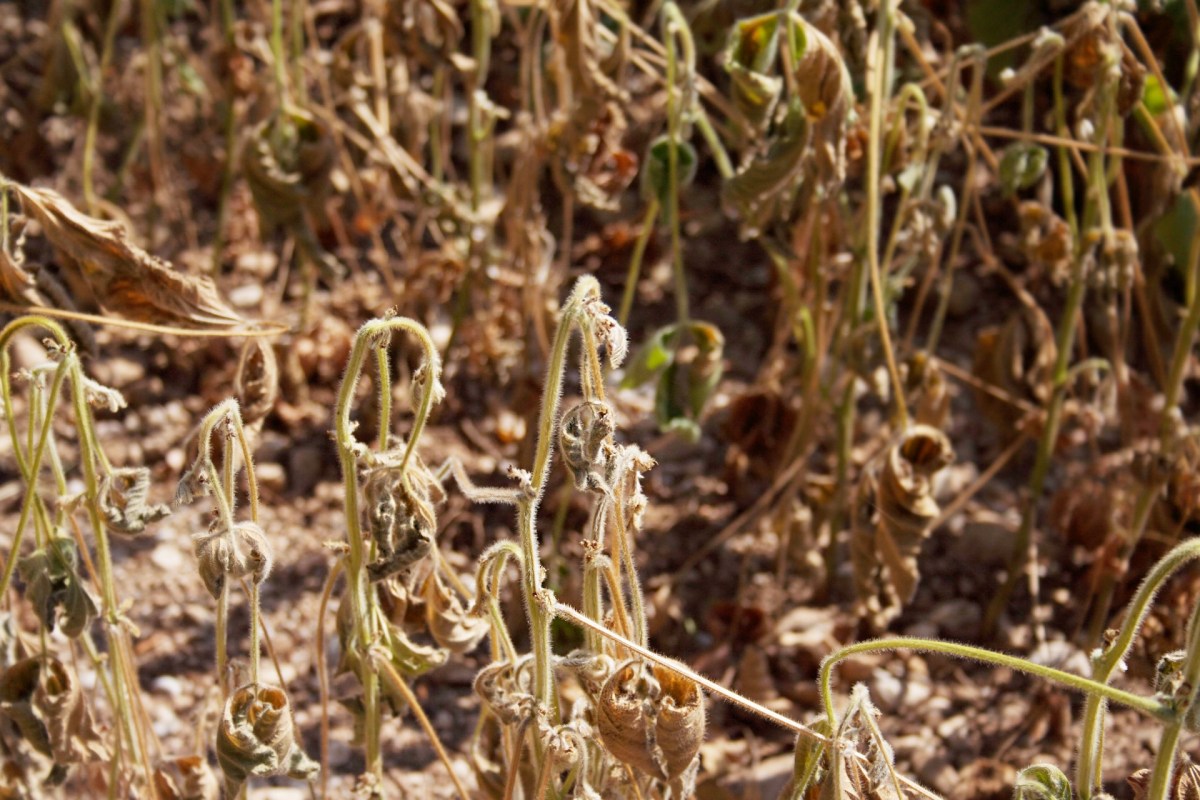
Farmers already struggling with hotter, drier summers now face another hidden threat to their crops: ozone pollution.
A new study from the University of Illinois Urbana-Champaign and the USDA's Agricultural Research Service shows that soybeans — one of the world's most important food and feed crops — are being damaged twice over by drought and rising ozone levels, a dangerous combination that scientists say could put future harvests and food security at risk, per a school release.
What's happening?
Researchers grew soybeans under field conditions for three years while exposing them to ozone concentrations of about 100 parts per billion — levels similar to those currently found in farming regions of China and India. Even when the plants were experiencing drought, ozone damage remained severe, reducing photosynthesis and leading to smaller harvests with fewer seeds.
"We found that really wasn't the case. There was a significant negative impact of ozone on yield, regardless of drought," said study co-author Lisa Ainsworth, crop scientist at Illinois, in a university press release.
Although U.S. ozone levels are generally lower, concentrations in the Corn Belt often exceed the threshold for damage — about 40 parts per billion — during the growing season, and are expected to rise through 2070.
Why is this research important?
Soybeans are the second-most planted crop in the U.S. and a staple ingredient in countless foods, from cooking oils to animal feed. A significant decline in yields would ripple through global food systems, raising grocery prices and squeezing farm families already facing tight margins.
The problem doesn't stop at soybeans. Many staple crops are vulnerable to ozone pollution, meaning the world's food supply could become increasingly unstable if air quality continues to worsen alongside drought. That instability threatens not only farmers' livelihoods but also consumers everywhere who depend on affordable, reliable harvests.
This isn't the first warning sign. Other studies have already highlighted how hotter temperatures and shifting rainfall patterns are straining crops worldwide. Together, these pressures are delaying progress toward a safer, more resilient food system.
What's being done about it?
The researchers stress that ozone is a short-lived pollutant, which means cutting it back could deliver quick wins for agriculture. Stronger air-quality standards, cleaner energy, and reduced vehicle pollution can all help prevent ozone from forming in the atmosphere.
On the farm side, breeders are exploring ways to make crops more ozone-tolerant, while conservation practices like cover cropping and soil health improvements can boost resilience to drought. Individuals can support these solutions by advocating for clean air policies, choosing locally grown foods, and supporting companies committed to sustainable farming.
TCD Picks » Quince Spotlight
💡These best-sellers from Quince deliver affordable, sustainable luxury for all




As Ainsworth put it, reducing ozone pollution is a solvable problem. And with global harvests on the line, solutions can't wait.
|
Do you worry about the quality of the air inside your home?
Click your choice to see results and speak your mind. |
 Yes — often 😬
Join our free newsletter for easy tips to save more and waste less, and don't miss this cool list of easy ways to help yourself while helping the planet.
Cool Picks




