


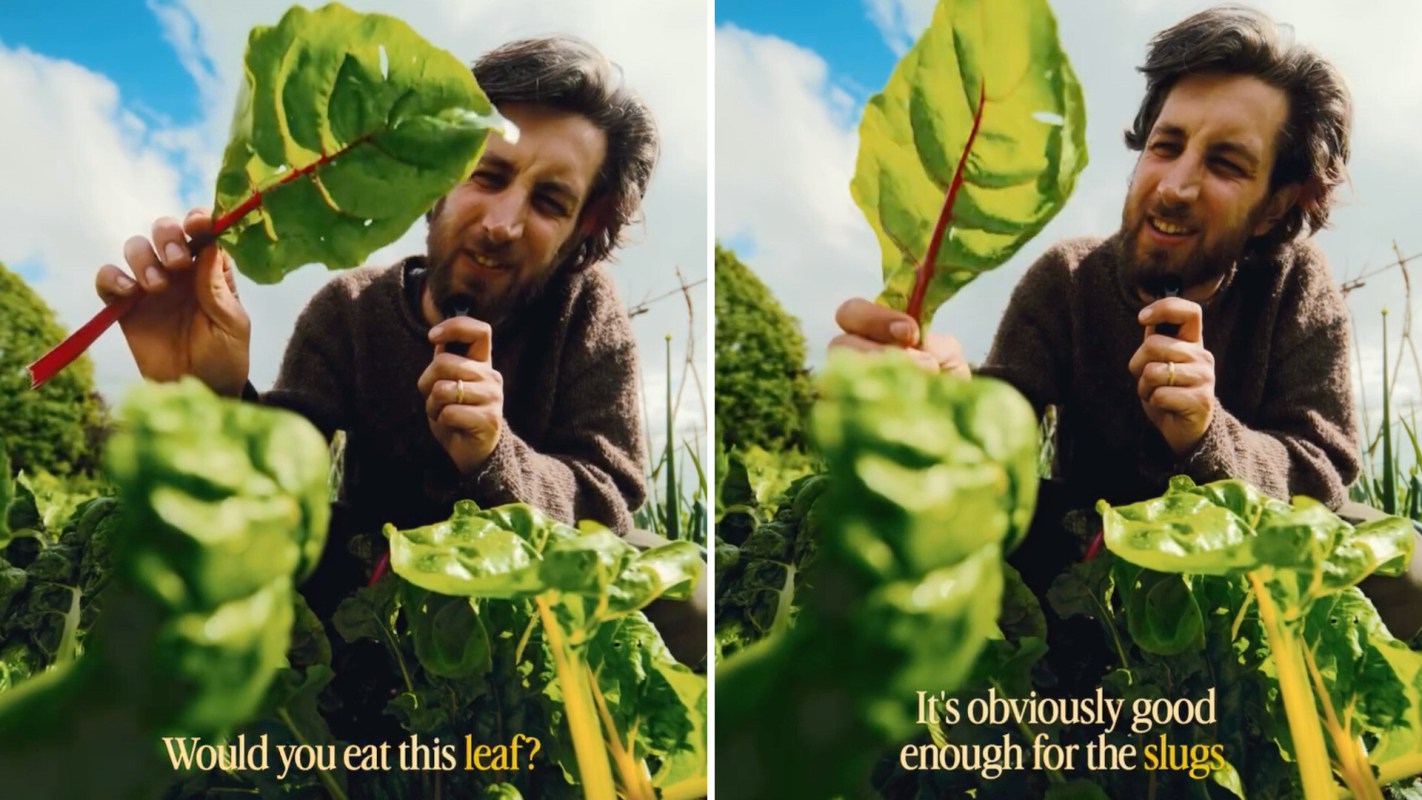
What many shoppers might dismiss as damaged produce, one permaculture farmer sees very differently: Those small holes can be one of the clearest signs a vegetable was grown without heavy chemical inputs.
What happened?
In a June 2 Instagram Reel, regenerative farmer Do Good Things (@DoGoodThings_Farm) used a hole-speckled leaf to challenge shoppers' expectations of what "good" produce is supposed to look like. The clip has over 3,000 likes, 90 comments, and more than 69,000 views.
"We knowingly poison our own food so other critters can't eat it! Let that sink in," the creator said.
Across the video and caption, the farmer compares glossy, untouched supermarket produce with pesticide-free vegetables that slugs or beetles have nibbled, reframing those bite marks as evidence of how the food was grown.
"These holes are a good sign, it tells you this vegetable is actually edible! So welcome the imperfections, if it looks too good to be true, it probably is!" the farmer added.
Many commenters agreed. "Absolutely yes let's normalise the look of organic produce," one person wrote. Another added, "Few holes never hurt anyone!"
TCD Picks » Quince Spotlight
💡These best-sellers from Quince deliver affordable, sustainable luxury for all




Why does it matter?
Cosmetic standards often shape what people buy, even when appearance says little about taste or quality.
A leafy green with a few holes can still be perfectly good to eat, especially if it's being chopped, sautéed, or tossed into a soup. When shoppers expect every vegetable to look flawless, growers can feel pressure to control every slug, beetle, or weed rather than tolerate minor imperfections.
That can mean more chemical use in farming and gardening in the name of preserving appearances.
Growing your own food can help save money on produce, especially during peak season. Many gardeners also say homegrown vegetables taste better than store-bought ones, and gardening can support physical activity and mental health through time outside, movement, and stress relief.
One commenter summed it up, writing, "Real food doesn't need to look like it came from a catalogue."
What can I do?
Getting more comfortable with minor cosmetic damage is one simple step. A few holes usually call for trimming, not tossing. Asking local farmers how they grow their food can also help you find produce that aligns with your values.
For people who want more control, even starting a small garden can make a difference. A few pots of greens or herbs can cut grocery costs, provide fresher flavor, and make it easier to accept that nature rarely produces identical, untouched leaves.
That doesn't mean letting pests destroy everything. It means using lower-impact methods such as hand-picking bugs, protecting plants with barriers, improving soil health, and accepting a little nibbling as part of a healthy garden ecosystem.

Get TCD's free newsletters for easy tips, smart advice, and a chance to earn $5,000 toward home upgrades. To see more stories like this one, change your Google preferences here.







