


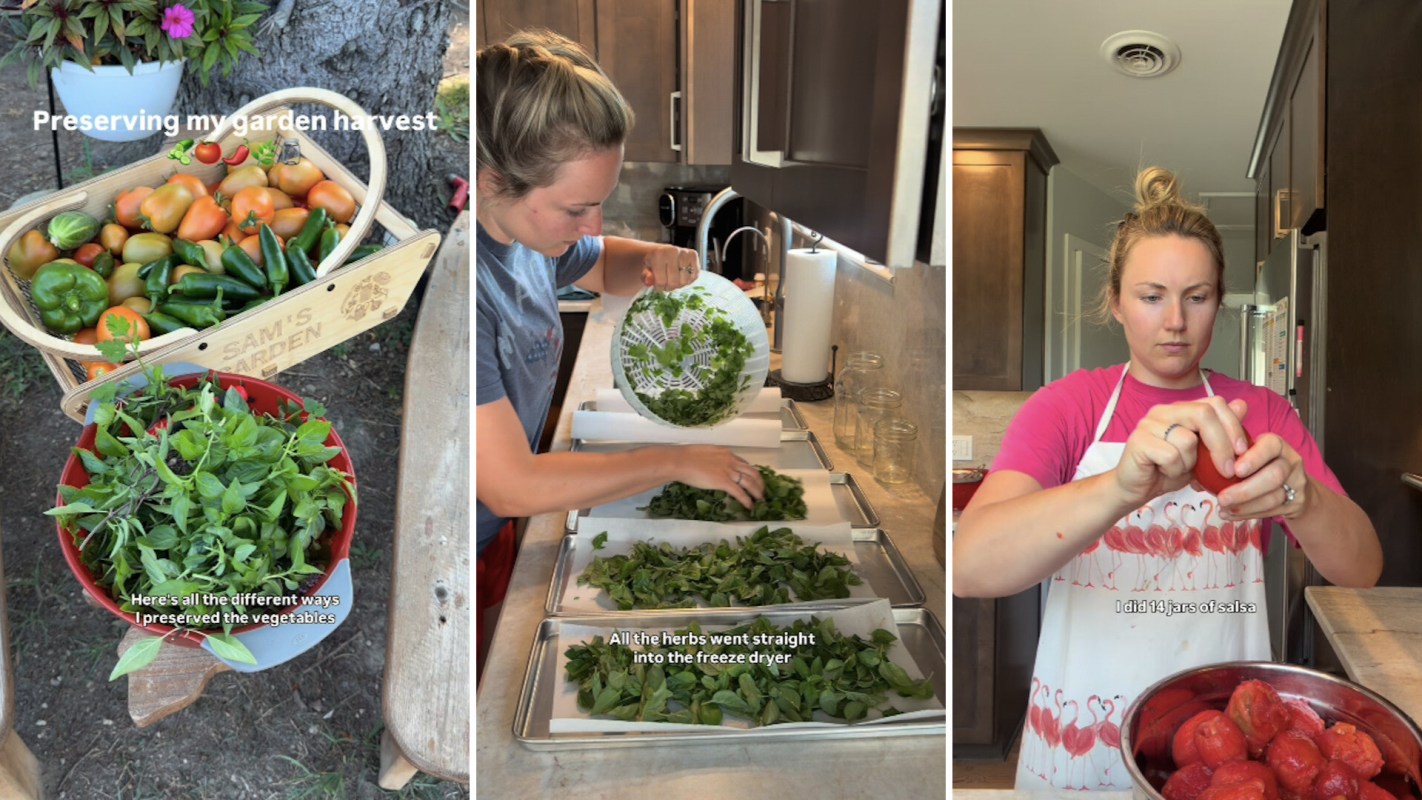
One expert gardener's harvest video is showing what happens when a productive garden stops being hypothetical and starts requiring a full-on plan to preserve the food.
Here's what to know
Late summer can turn a backyard garden from a relaxing hobby into a full-on kitchen project, and an Aug. 12 garden update from Sam of More than Gardening highlights what happens when a harvest produces more food than a household can eat fresh.
Sam's garden harvest showed off several ways to preserve a productive garden, including canned salsa, homemade pickles, pickled peppers, and freeze-dried herbs.
@morethangardening_ August is BUSY 🥒🍅🌶️🫑🌿🫙 #canningsalsa #freezedryingherbs #makingpickles #preservingthegarden #picklingpeppers ♬ original sound - Sam | More than Gardening
She starts off the video, titled "August is BUSY," by showing off "all the different ways I preserved the vegetables that I harvested."
First up was her cucumbers. She slices them in preparation to turn them into refrigerator pickles, which she claims can be ready, "the very next day." Next up were the herbs, which she freeze-dried in an effort to make them shelf-stable.
After that, the jalapenos and tomatoes were turned into 14 cans of salsa. Finally, she pickled the rest of her jalapenos.
TCD Picks » Quince Spotlight
💡These best-sellers from Quince deliver affordable, sustainable luxury for all




More background
The video underscored how quickly fresh produce can outpace what a household can use right away. For home growers, or even shoppers who buy produce in bulk when prices dip, preservation can mean the difference between enjoying that abundance for months and watching part of it go to waste.
The video reflects a practical challenge. Fresh produce is perishable, and peak harvests can arrive faster than most people can cook through them. Turning extra vegetables and herbs into shelf-stable or longer-lasting foods can help households get more value from what they already have.
That can translate into real savings. A few jars of salsa, a batch of pickled peppers, or dried herbs from the garden can reduce the need to buy pricier store-bought versions later in the year. The same idea can apply to a farmers market haul or discounted in-season produce.
There is also a waste-reduction angle. Food that gets tossed can end up in landfills, where it contributes to planet-warming pollution as it breaks down. Using or preserving extra produce before it spoils is a manageable way to reduce some of that waste at home.
Of course, not every method works for every kitchen. Freeze-drying equipment can be expensive, and pressure-free home canning requires time, supplies, and careful technique. Yet, even one useful habit can help stretch a harvest further.

Get TCD's free newsletters for easy tips, smart advice, and a chance to earn $5,000 toward home upgrades. To see more stories like this one, change your Google preferences here.








