


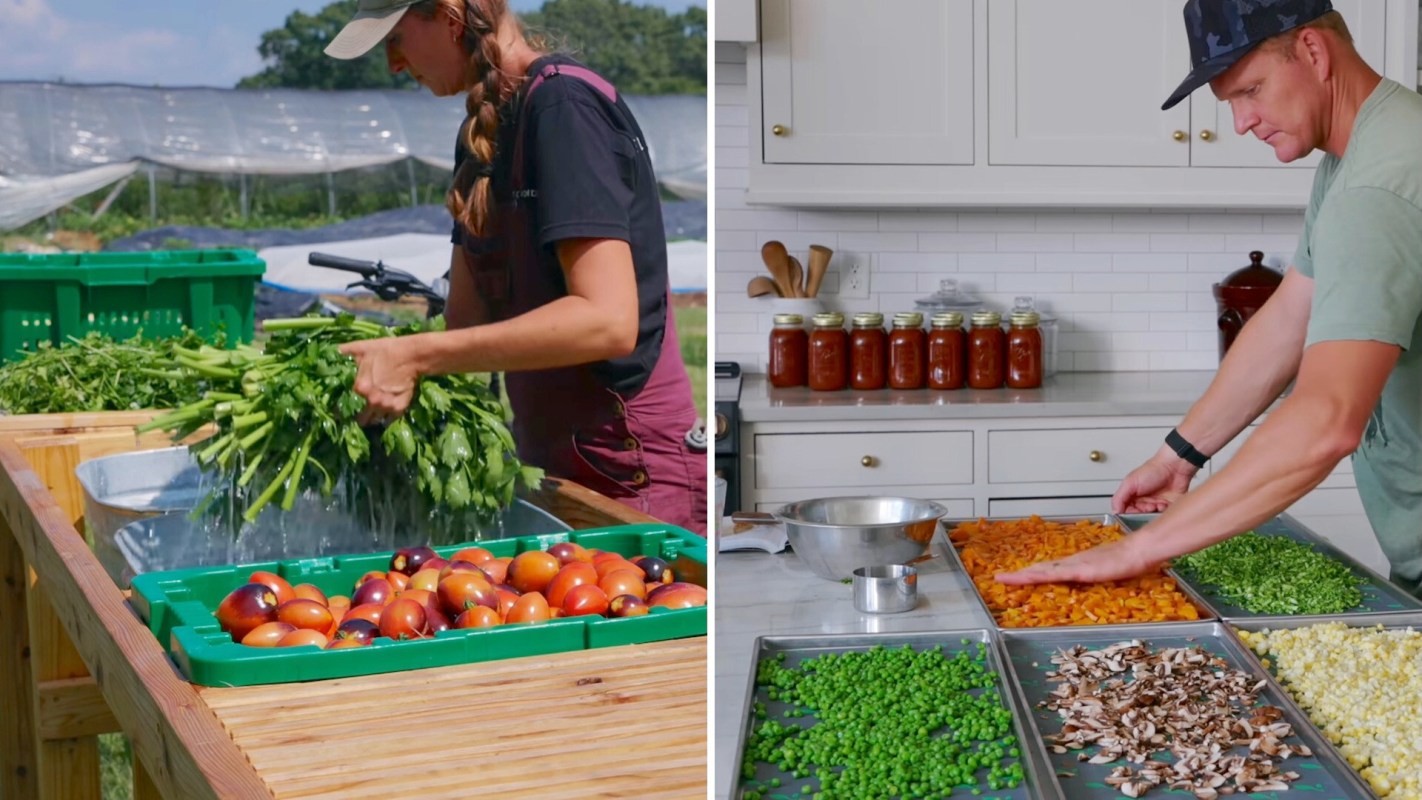
A family's giant preserving marathon is offering a blueprint for anyone trying to make a garden haul last far beyond summer. By the end, tomatoes, peaches, carrots, corn, and cucumbers had been turned into sauce, pie filling, freezer meals, and ramen add-ins.
For households, the appeal is straightforward: less food waste, fewer grocery runs, and more homemade staples ready when produce prices rise.
Here's what to know
Becky and Cam from The Seasonal Homestead (@TheSeasonalHomestead) explained in a YouTube video that the work was divided into two stages: one day for picking produce and another for preserving it.
Becky summed up the challenge this way: "We're about to attempt something we normally avoid, harvesting everything we can from the garden and preserving it all in one massive marathon."
Their to-do list centered on four preserves: pressure-canned meat spaghetti sauce, peach pie filling, chicken pot pie starter for the freezer, and homemade freeze-dried ramen packets.
Of those jobs, the sauce took the most time, with a tested pressure-canning method that called for 70 minutes at 15 pounds of pressure because the family lives at an elevation above 1,000 feet.
TCD Picks » Quince Spotlight
💡These best-sellers from Quince deliver affordable, sustainable luxury for all




The schedule soon stretched beyond a single marathon. Preparation kept getting delayed by regular homestead chores, a broken drip line left some carrots undersized and split, and cucumber picking was interrupted by a copperhead snake.
More background
Their process also highlighted how usable a harvest can be even when it is less than perfect. Split carrots, surplus meat already in the freezer, and vegetables that fit more than one recipe all worked into the final batch of food.
Store-bought meat sauce, pie filling, and freezer meal starters can also be expensive, so families that replace some of those convenience foods with preserved homegrown ingredients may save money over the course of a season, depending on how much they store up.
Viewers related to both the job's scale and the time it required.
One commenter wrote, "Oh boy! That's a lot of food and work! You guys are ambitious! Thanks for sharing your life with us all!" Another added, "It always takes so much longer than I anticipate."
What can be done?
The most practical takeaway may be to keep the scope modest.
In Becky and Cam's view, the better routine is usually "just a little bit of preserving each day," rather than trying to stack several major projects into one marathon.
Safety matters too: tested canning guidance is especially important for low-acid foods and recipes that include meat. In the video, the family used the Ball Complete Book of Home Preserving for the spaghetti sauce while adjusting freezer recipes around the ingredients they already had.
The family also saved work by designing multiple dishes around the same produce. Carrots, corn, peas, and garlic scapes were prepared once and then divided between the chicken pot pie starter and the ramen packets, which reduced labor and helped keep the produce from spoiling.
The same strategy can work even for people without a garden. Buying in bulk at a farmers market or picking up discounted produce at the grocery store can make it possible to preserve food when it is plentiful and cheaper and then use it later when prices rise.
At its core, the project was about turning the harvest into "food for our family's year-round supply," Becky said.
"What a satisfying thing to preserve and make meals with your own homegrown food," one commenter wrote. "Trying to replace one grocery store item at a time was my challenge last year."

Get TCD's free newsletters for easy tips, smart advice, and a chance to earn $5,000 toward home upgrades. To see more stories like this one, change your Google preferences here.







