


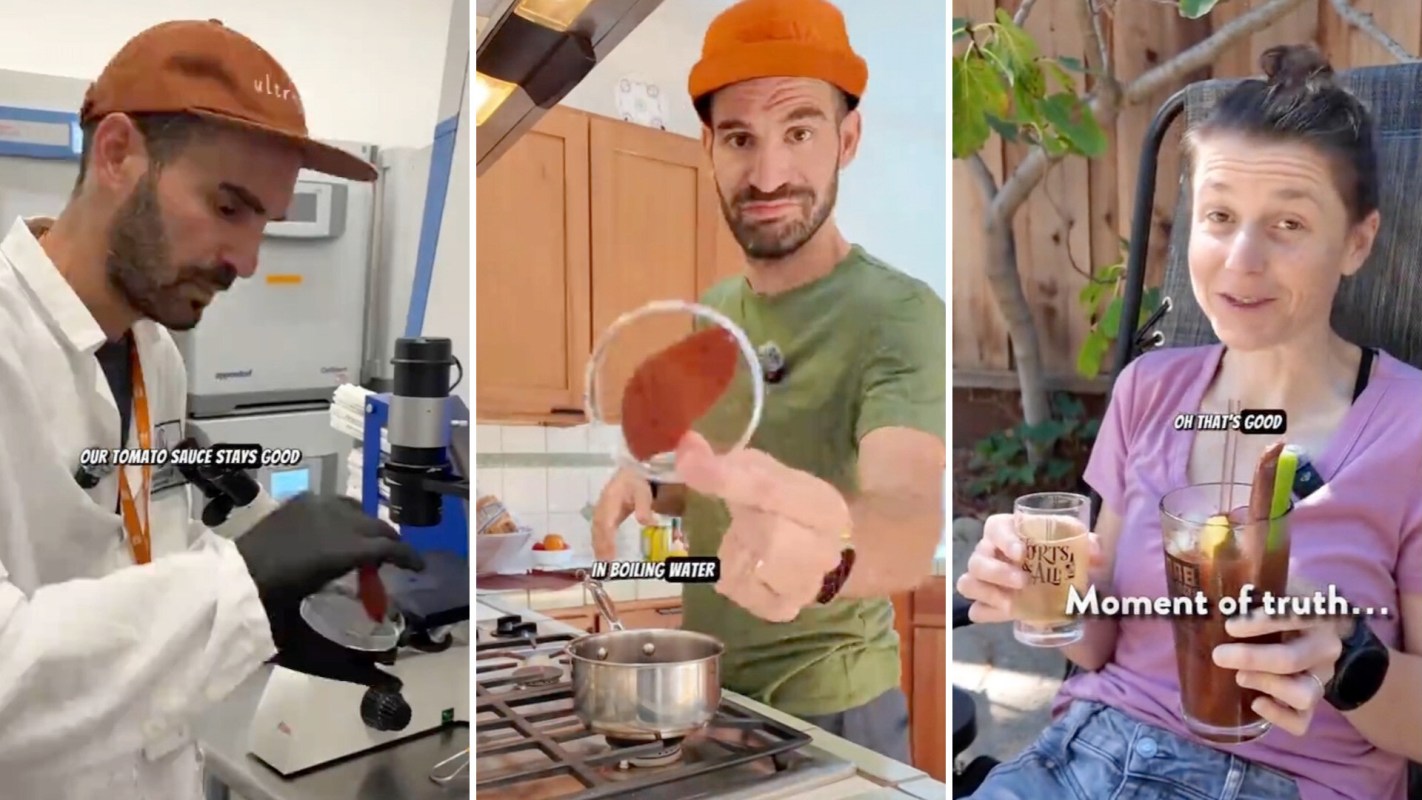
An unusual pantry hack is at the center of a TikTok food-preservation experiment: tomato sauce dehydrated into binder pages for storage. After three months, the creators said one sheet showed no mold under a microscope and could still be rehydrated into a Bloody Mary.
Here's what to know
Creators @thruhikers posted a TikTok video with an update on a seven-month test involving sheets of dehydrated tomato sauce kept in a binder.
@thruhikers Is there mold on our sauce binder? It's been 3 months. (Microscope test) It's been three months since we put these sauces in a binder. Now we've turned a page into spaghetti and a page into a bloody mary. We've got 30 days to decide what we'll make next! Suggestions welcome! 🧐 #Dehydrated #TomatoSauce #Binder ♬ original sound - Renee-and-Tim
The creators said, "It's been three months since we put these sauces in a binder. Now we've turned a page into spaghetti and a page into a bloody mary. We've got 30 days to decide what we'll make next! Suggestions welcome!"
According to the clip, they also examined the tested page with a microscope and said they found no mold.
If tomato sauce can be preserved in a compact, lightweight form and then rehydrated successfully, it could help save leftovers, reduce food waste, and stretch grocery purchases further.
More background
Tomato-based foods often go to waste. A half-used jar, extra homemade sauce, or cocktail-mix ingredients can spoil before they are fully used, especially in smaller households.
TCD Picks » Quince Spotlight
💡These best-sellers from Quince deliver affordable, sustainable luxury for all




If a preserved serving of sauce can be used later for pasta or drinks, that is one less serving a shopper has to replace. The exact savings depend on what someone would otherwise throw out or buy again, but avoiding waste from even one jar of sauce or one bottle of Bloody Mary mix can help cut a grocery bill.
Still, this kind of experiment should not be mistaken for a broad food-safety guarantee. One mold-free check after three months is interesting, but it does not prove that every homemade dehydrated sauce will store safely at room temperature. The level of drying, sanitation, ingredients, and storage conditions all matter.
What can be done?
Dehydrating, freezing, or portioning leftover sauce can make it easier to use later instead of forgetting it in the back of the fridge.
Measured portions can also help households use only what they need. Rehydrating a small amount for pasta, soup, or a drink may be more efficient than opening a new container and risking more leftovers. Over time, that can reduce repeat purchases of tomato sauce, soup base, or cocktail mixers.
Anyone trying a similar approach should rely on tested food-preservation practices and label batches clearly with dates. If you're unsure about dryness, storage conditions, or spoilage, freezing or refrigeration is the safer option.
Where can I learn more?
Here are a few more stories on making tomato products and produce last longer. They cover freezer storage for tomato paste and marinara, experimental coatings that extend produce shelf life, and concerns about contamination from some food containers.
• Home cooks are freezing tomato paste in measured portions to stop mold and cut waste.
• Fans of Rao's are using a simple marinara storage hack so pricey sauce lasts longer.
• Scientists are testing cinnamon bark oil coatings that help fruits and vegetables stay fresh longer.
• Scientists say some common food containers may expose stored leftovers to hazardous microplastics.

Get TCD's free newsletters for easy tips, smart advice, and a chance to earn $5,000 toward home upgrades. To see more stories like this one, change your Google preferences here.







