


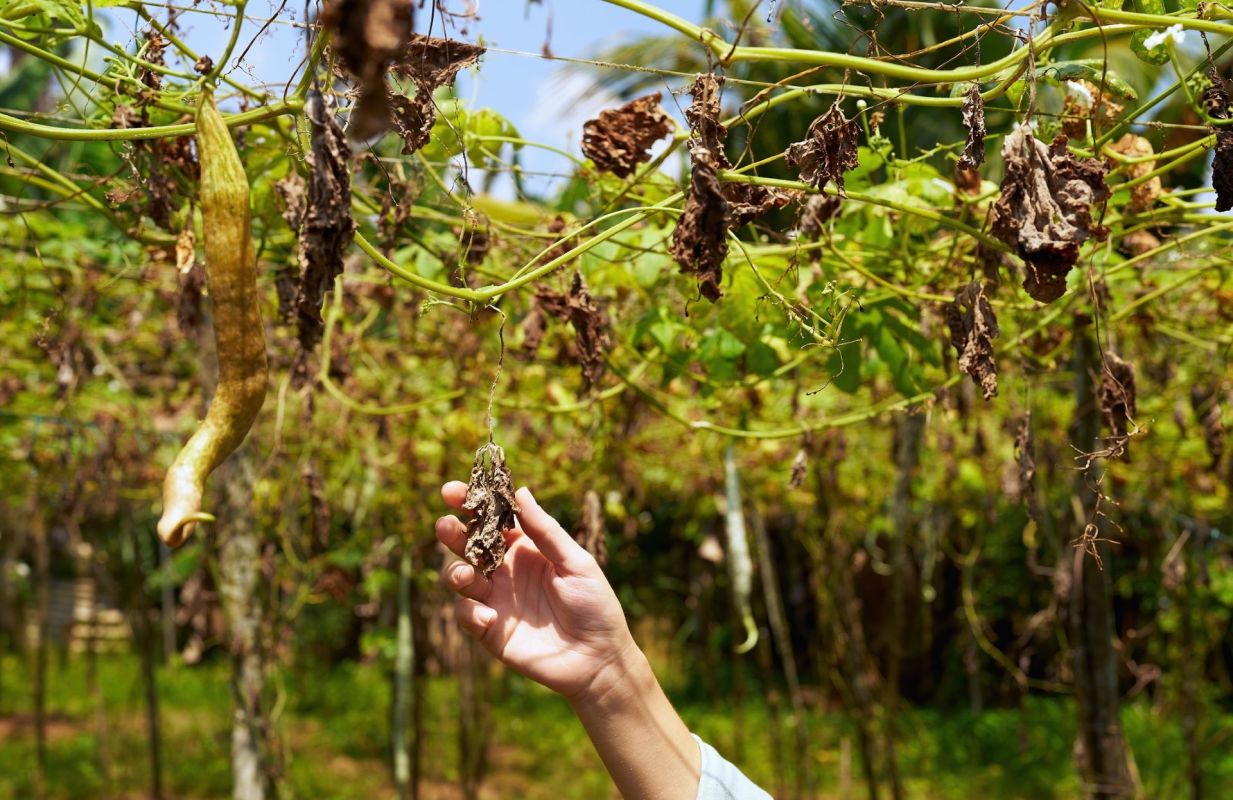
A variety of crops grown in Turkey saw significant production declines in 2025 due to atypical weather patterns, a worrying trend linked to extreme weather events.
What's happening?
The Turkish Statistical Institute reported that fruit production in Turkey fell by 30% in 2025, according to Bianet.
The country's overall crop production fell compared to 2024, with fruit, beverage, and spice crops recording the steepest decline at 30.9%, down to around 19.6 million tons.
Apples and peaches saw drops of 48.3% and 46.1%, respectively, but cherries were hit hardest, declining by 70.6%.
Experts attributed the decrease in production to widespread frost in April and prolonged drought.
According to the dean of the Faculty of Agriculture at Atatürk University, precipitation in the Mediterranean basin has dropped 20% in the past 25 years, contributing to sustained drought conditions in the region.
Other crops hit hard by the unusual weather in the past year include cereals, chickpeas, green and red lentils, and potatoes.
Why is lower crop production concerning?
The sharp decline in crop production in Turkey is just the latest alarming indicator that changing weather patterns from the overheating of the planet are severely impacting the food supply, farmers' livelihoods, and food prices.
According to a study published in the journal Nature, summarized by Stanford University, every additional degree (measured in Celsius) of global temperature will reduce the world's ability to produce food by 120 calories per person per day, equivalent to 4.4% of daily consumption.
These losses mean increased prices for consumers, which can additionally impact communities facing food insecurity — around 9% of the world in 2023, per the United Nations.
TCD Picks » Quince Spotlight
💡These best-sellers from Quince deliver affordable, sustainable luxury for all




|
Do you think our phones and devices have enough battery life? Click your choice to see results and speak your mind. |
 No complaints here 👍
 Increased temperatures also exacerbate extreme weather events, which don't just damage output but also impair the ability to continue producing crops.
What's being done about lower crop production?
The large-scale solution is to limit the rise of global temperatures, which can help lower the impact of extreme weather events.
On a smaller scale, farmers can adopt sustainable practices and invest in technologies, such as improved irrigation systems, to cut down on water needs.
On a personal level, everyone can work on reducing food waste, which can stretch food budgets and make the most of available produce.

Get TCD's free newsletters for easy tips to save more, waste less, and make smarter choices — and earn up to $5,000 toward clean upgrades in TCD's exclusive Rewards Club.
Cool Picks




