


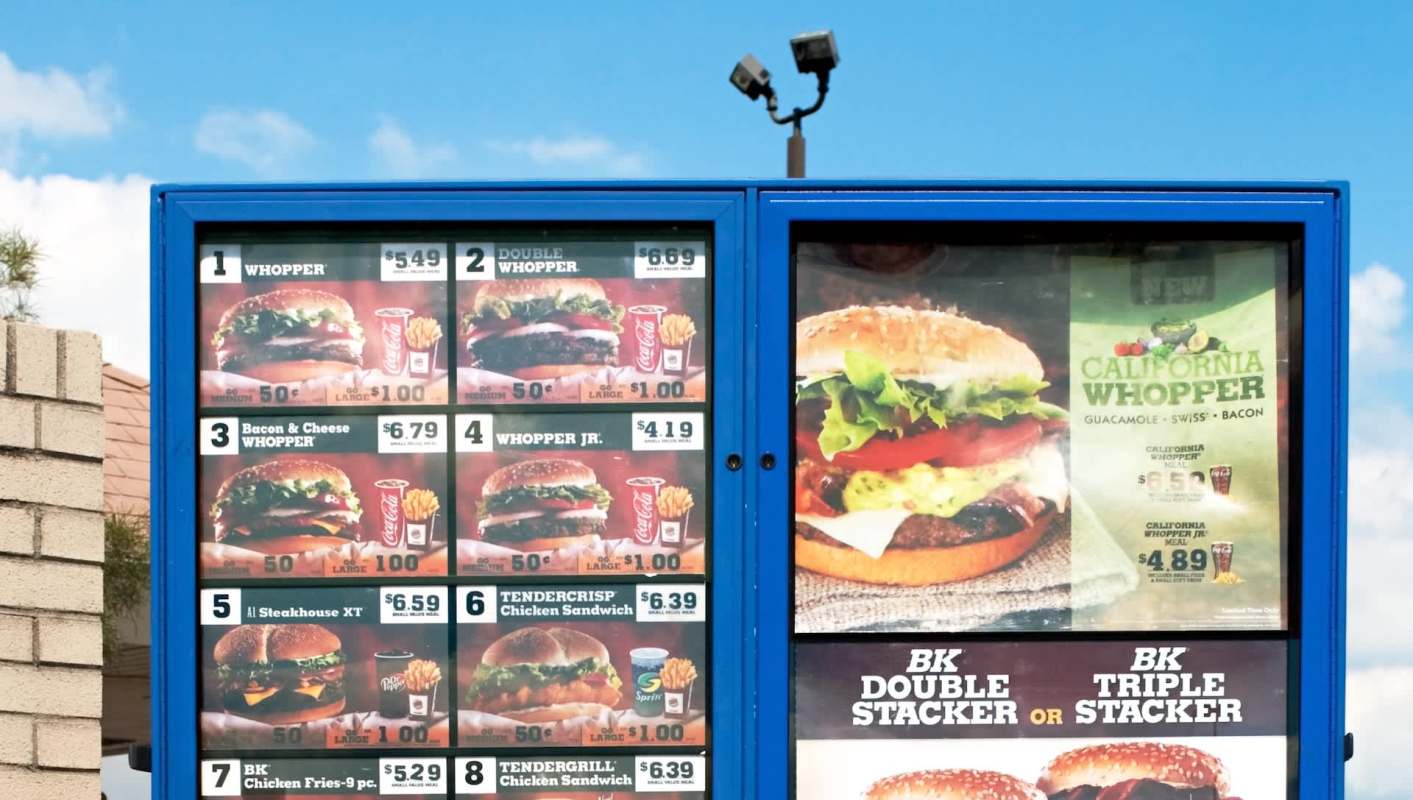
Burger King's old two-Whoppers-for-$2 promotion now reads like something from a completely different era, as a comparison of the chain's 2000 and 2026 prices shows just how sharply fast-food costs have risen — and how those increases have gone beyond standard inflation.
Here's what to know
According to Mashed, the Whopper debuted at 37 cents in 1957. By 2000, a single burger usually sold for $2 to $2.50 without a deal, and Burger King also ran a TV commercial that year advertising two Whoppers for $2. In 2026, one Whopper costs about $5.60 in some rural areas and around $8 in dense urban markets.
Depending on where customers live, that means the burger's price has nearly quadrupled since the start of the century.
Because the Whopper is Burger King's flagship sandwich rather than a limited-run premium item, it serves as a useful gauge of how fast-food pricing has shifted over time.
More background
Part of that increase can be traced to inflation, but not all of it. According to the Bureau of Labor Statistics' inflation calculator, $2 in July 2000 is equivalent to $3.86 in July 2026.
If the Whopper had risen only in line with overall inflation, it would be much closer to $4 than $8.
TCD Picks » Quince Spotlight
💡These best-sellers from Quince deliver affordable, sustainable luxury for all




Restaurants must account for pressures such as labor, rent, and broader factors like climate change when setting menu prices.
What can be done?
Burger King still offers Whopper giveaways or steep discounts during the year, helping soften the blow for customers who want the sandwich without paying full menu price.
Burger King has also tried to justify the higher price by improving the product itself. In early 2026, the chain updated the Whopper with changes that included a new bun and new packaging.
A Burger King representative said that making those updates would be more expensive, but the menu price would not increase.
Whether diners agree is another matter. With the standalone burger priced as high as $8 in some cities, Burger King executives have described the revamped Whopper as "elevated" — a telling choice of words in today's fast-food economy.

Get TCD's free newsletters for easy tips, smart advice, and a chance to earn $5,000 toward home upgrades. To see more stories like this one, change your Google preferences here.







