


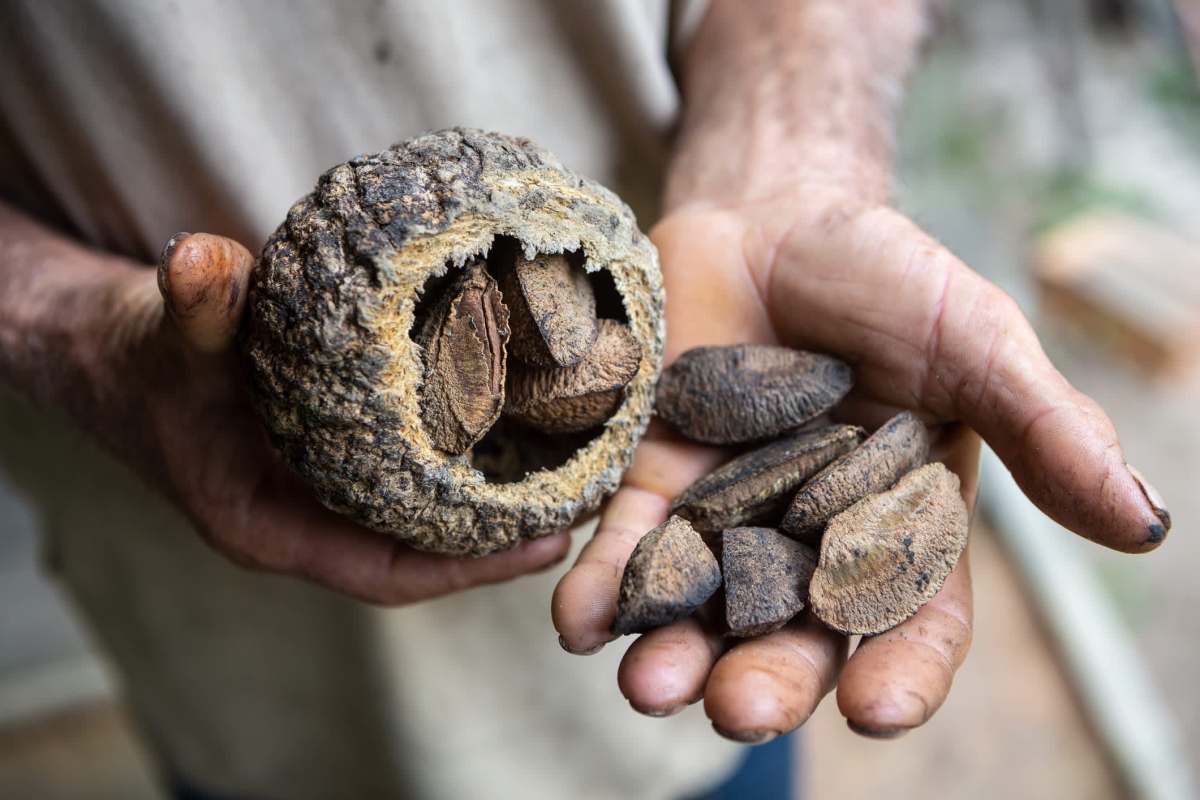
The Brazil nut, an icon of the Amazon and the base of many Brazilian livelihoods, is under threat.
What's happening?
As reported by Mongabay, Brazil's recent nut harvest season has been one of the worst on record, plummeting by as much as 80%.
Communities across multiple states, including Rondônia, Amapá, and Roraima, have reported massive crop failures for the Brazil nut — also known as Pará nuts or Amazonian chestnuts — with some, like the Karipuna Indigenous Territory, collecting zero nuts this year for the first time.
"This year's harvest was very poor," Anauá leader Levi José da Silva of the Wai Wai Indigenous Territory told Mongabay.
As extreme climate events sweep through the region, their effect on nut crops threatens the fragile economy of extractivist and Indigenous communities who depend on this prized superfood.
Scientists point to prolonged droughts triggered by a severe El Niño climate pattern. The flowering and fruiting of Brazil nut trees takes over a year, meaning last year's drought directly sabotaged this season's output.
This doesn't just affect the local farmers and families; it also affects shoppers at the grocery store. Prices have already skyrocketed. In some regions, a 5-gallon bucket of nuts surged to nearly four times its usual price by March 2025.
Why is the poor Brazil nut harvest concerning?
The Brazil nut is a healthy snack and the foundation of a sustainable rainforest economy.
More than 60,000 people from Indigenous and traditional communities rely on the seasonal harvest for their survival, according to Brazil's Amazon Chestnut Observatory.
But when crops fail, sellers raise prices, and global distributors often drop the nut from product mixes. This market shift has left communities with abundant nuts but no buyers, tanking prices by up to 60%.
TCD Picks » Quince Spotlight
💡These best-sellers from Quince deliver affordable, sustainable luxury for all




|
What supplies do you keep on hand in case of a blackout? Click your choice to see results and speak your mind. |
 Just a flashlight 🔦
 More broadly, the health of the Brazil nut tree is tightly linked to the health of the Amazon. These massive trees live up to 800 years and require an intact forest with wild pollinators and seed-dispersing animals like agoutis to reproduce. Fires, deforestation, and other weather extremes weaken this delicate balance.
What's being done about Brazil nut harvests?
Embrapa, Brazil's leading agricultural research agency, is working with communities to renew groves, grow saplings in greenhouses, and identify climate-resilient tree varieties. They've found that clearing vines from existing trees can improve yields by up to 30%.
One promising path is replanting nut trees in abandoned farm areas, where sunlight and agouti populations create ideal conditions.
"In these areas, there are more young nut trees than in the forest," said Embrapa project lead Patrícia da Costa.
More broadly, everyday consumers can lend a hand in reducing major environmental events. From electrifying your home to backing local tree-planting efforts, local climate action helps reduce the very emissions that drive El Niño.
These habits don't just shrink your environmental impact, they also help ensure crops like the Brazil nut and the communities that depend on them can continue to thrive.

Join our free newsletter for easy tips to save more and waste less, and don't miss this cool list of easy ways to help yourself while helping the planet.
Cool Picks




