


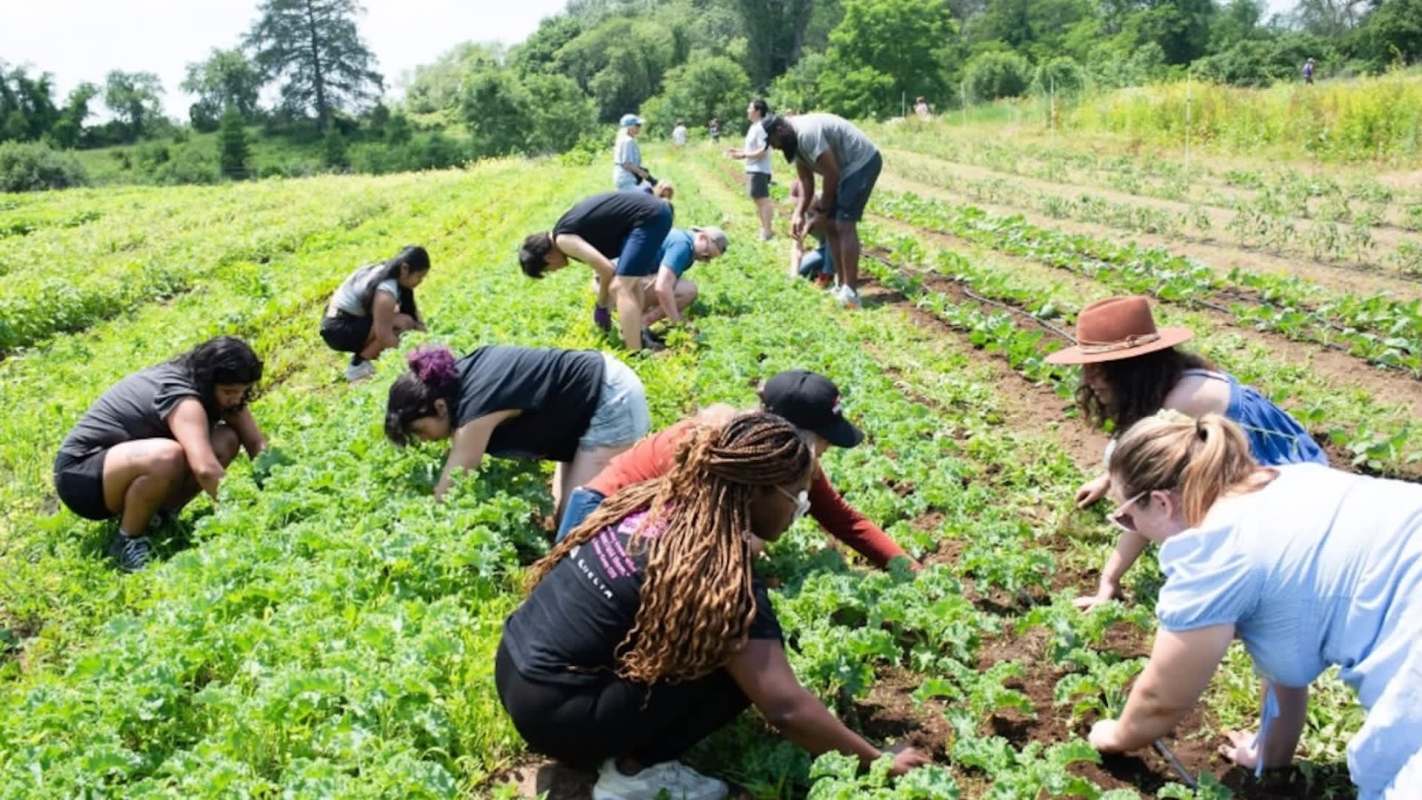
A Boston nonprofit is showing how a summer job can do far more than fill teens' schedules. At The Food Project in Massachusetts, young workers are helping grow food for their neighbors while learning how agriculture connects to hunger, health, and community.
Here's what to know
Highlighting the organization in an Instagram post, Localize food app founder Zephyr Zoidis (@zephzoid) said, "A Boston nonprofit pays teenagers fifteen dollars an hour to grow two hundred thousand pounds of food," describing a model that combines youth employment with hunger relief.
According to The Food Project, its summer program has been bringing together teens from Boston and nearby suburbs since 1991.
The Boston Globe reported that participants work across 70 acres and that a large share of what they grow goes to hunger relief efforts around Massachusetts. This work is taking place in a state where 34% of households said they either did not have or could not afford enough food each month.
The nonprofit sells produce at affordable prices at markets in Boston's Dudley neighborhood and in Lynn. On its website, The Food Project says those markets were among the first in Massachusetts to accept electronic SNAP benefits and to pilot a matching program that was later adopted statewide.
John Wang, The Food Project's co-director of strategy and organization support, said a longtime part of the organization's mission has been figuring out which communities face barriers to healthy food and why.
TCD Picks » Quince Spotlight
💡These best-sellers from Quince deliver affordable, sustainable luxury for all




"Whether it's intentional or unintentional there is a system that doesn't grant access for local fresh, healthy foods for certain folks," he said, according to the Globe.
More background
A Greater Boston Food Bank study cited by the Globe found that food insecurity was especially common among historically marginalized groups. The survey of more than 3,000 Massachusetts adults, conducted between November 2023 and March 2024, identified Black, Hispanic, and Alaska Native communities, college students, and LGBTQ people among those most affected.
Each year, The Food Project installs 100 raised bed gardens for households and organizations, expanding access to fresh food that people can grow themselves.
Danielle Andrews, The Food Project's Boston Farms and Greenhouse Manager, said the barrier is often cost, not a lack of interest in fresh fruits and vegetables, per the Globe.
"My experience is that everybody actually really does want them and they can't afford them, so figuring that out is really just better for all of us and leads to a healthier society," she said.
What's being done?
The Globe reported that the Greater Boston Seed Crew hires teens ages 14 to 18 at $15 an hour and teaches them skills including harvesting crops, weeding, preparing beds, moving produce, and maintaining equipment and facilities.
In his third summer with the program, 17-year-old peer leader Nox Southard said more young people might pursue agriculture if they had more exposure to why the work matters and what opportunities exist, the Globe reported.
"You don't ever think 'I can do this' until you get in a real life space of moving things around, seeing people you're helping, handing things to people and even kind of suffering in the heat some days," Southard said.
Where can I learn more?
Similar efforts are taking root in other communities, too. These stories look at students, neighborhood growers, and nonprofits using farms and food systems to help feed people.
• At Ashwaubenon High School, students use a hydroponic garden to supply cafeteria produce.
• In Los Angeles, Beverly Lofton turned her lawn into a neighborhood microfarm feeding families.
• In California, ExtraFood uses state-backed food recovery to redirect meals to neighbors.

Get TCD's free newsletters for easy tips, smart advice, and a chance to earn $5,000 toward home upgrades. To see more stories like this one, change your Google preferences here.







