


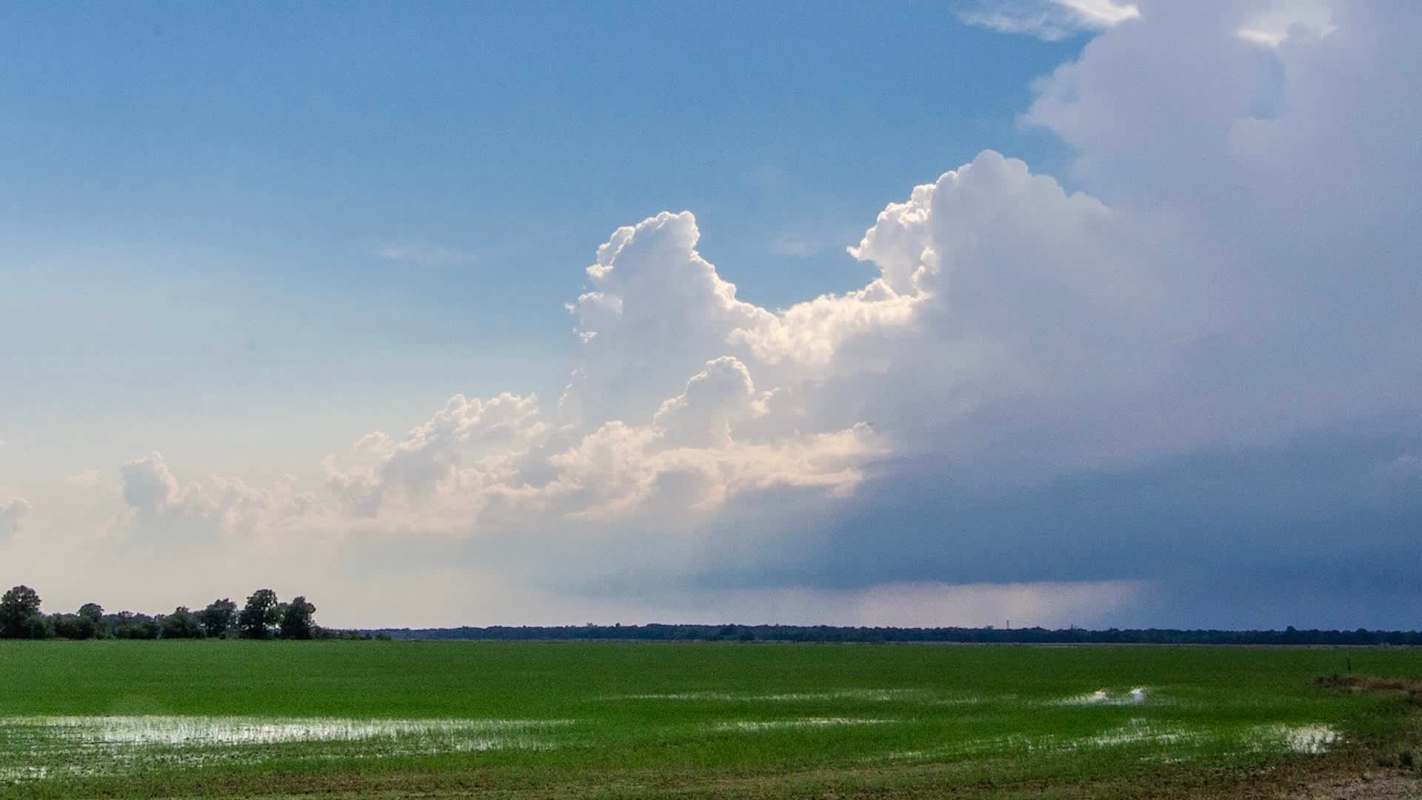
This spring, severe flooding destroyed thousands of acres of crops across Arkansas and other Southern states, forcing farmers to scramble to recover.
What's happening?
From April 2 to 6, heavy rains flooded over 260,000 acres of farmland in the Arkansas Delta, causing an estimated $79 million in damages, according to the University of Arkansas. Lonoke, Lawrence, Clay, and other counties lost roughly half their planted crops.
Lonoke County farmer Harrison Jones told the Arkansas Times it was "the biggest total acreage losses we've ever had."
Rainfall during this period set records, nearly doubling the usual April amount, with some areas receiving up to 12.5 inches. Floodwaters forced the Isbell family to skip planting 1,500 acres of rice, increasing their losses.
Scientists from the World Weather Attribution group analyzed the storm and found that rising global temperatures made the rainfall 9% heavier and the flooding 1.4 times more likely than it would have been without this warming.
They warned that if global temperatures continue to rise, storms such as this will strike more often and with greater intensity, putting even more pressure on farmers and driving up prices at the grocery store.
Why are these floods important?
These extreme weather events, worsened by the warming planet, are hitting farming families hard, threatening their livelihoods and the food supplies that communities rely on.
Floods not only destroy crops but also delay planting and harvesting, thereby reducing farmers' yields and increasing their costs. This often leads to higher food prices and less reliable access to fresh produce for families everywhere.
Floodwaters also cause soil erosion and wash harmful chemicals into rivers and lakes, disrupting local ecosystems and food chains. As the changing climate fuels more extreme weather, farming communities face growing risks that threaten their way of life and the food many depend on daily.
What's being done about the flooding?
Experts urge investment in improved flood warning systems and stronger infrastructure to better manage extreme weather. Farmers and communities are pushing for policies that support clean energy and reduce the pollution that is driving the warming of the planet.
TCD Picks » Quince Spotlight
💡These best-sellers from Quince deliver affordable, sustainable luxury for all




|
Do you think America does a good job of protecting its natural beauty? Click your choice to see results and speak your mind. |
 Definitely 👍
 Individuals can raise awareness about the changing climate and support sustainable farming practices. While the challenges remain significant, coordinated action offers hope for communities to adapt and continue feeding the nation.
"Climate change isn't creating new risks: rather, it's amplifying existing ones," Texas Tech University climate scientist Katharine Hayhoe said.

Join our free newsletter for easy tips to save more and waste less, and don't miss this cool list of easy ways to help yourself while helping the planet.
Cool Picks




