


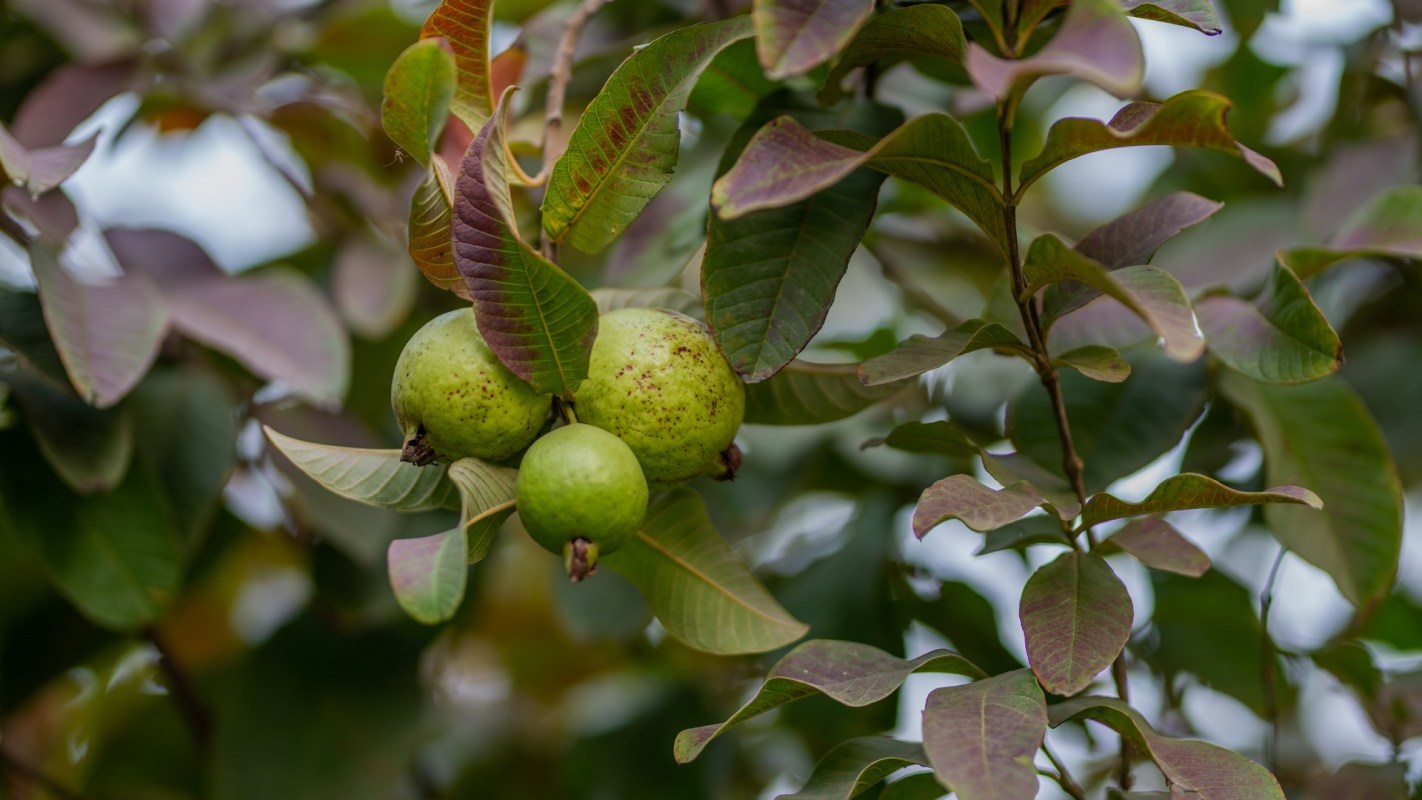
Farmers in India are facing the devastating loss of a prized crop after a year of extreme weather and pests.
What's happening?
The Allahabadi guava crop in Prayagraj was decimated by a heavier-than-normal monsoon season along with a fruit fly infestation and fungal disease spread, resulting in the destruction of 13,000 quintals (2.9 million pounds) of the produce, per The Hindustan Times.
Guava plays a vital role in the region's economy, with more than 1,300 hectares (3,212 acres) dedicated to the crop. Normally, an average hectare of guava orchard produces 100 quintals (22,046 pounds), but officials estimate that 10-15% of the yield from each hectare was damaged by the rain, pests, and fungi.
"Although the trees are bearing fruit, more than half of it is worm-infested and falls prematurely, leaving no buyers," Munna Patel, president of the Surkha Guava Growers' Association, told the outlet.
The excessive rain and moisture from monsoon season created ideal conditions for the fruit flies to thrive, according to one expert cited by the Times.
Why is the guava crop important?
Farmers have good and bad seasons, but the increase in frequency and severity of extreme weather events caused by human-made pollution is creating more bad seasons. According to the Farm Bureau, farmers suffered $20.3 billion in losses in 2024 from weather disasters.
Bad seasons result in devastating financial losses for farmers, especially smaller-scale ones, and also drive up prices for consumers. The Allahabadi guava is prized for its flavor and is typically only harvested in winter.
What's being done about the guava crop?
Extreme weather that impacts farmers is a global issue, from Australia, where farmers faced losses from rain, to drought problems in the United States.
There are methods available to farmers to prevent damage from rain, hail, heat, and other issues, including raising crop beds, implementing drip irrigation, diversifying crops, and protecting soil health.
In the long term, it's important for governments, businesses, and everyday people to work together to limit the impacts of pollution and focus on solutions that support sustainability for the future.
TCD Picks » Quince Spotlight
💡These best-sellers from Quince deliver affordable, sustainable luxury for all




|
What is the biggest reason you don't grow food at home? Click your choice to see results and speak your mind. |
 Not enough time ⏳
Get TCD's free newsletters for easy tips to save more, waste less, and make smarter choices — and earn up to $5,000 toward clean upgrades in TCD's exclusive Rewards Club.
Cool Picks




