


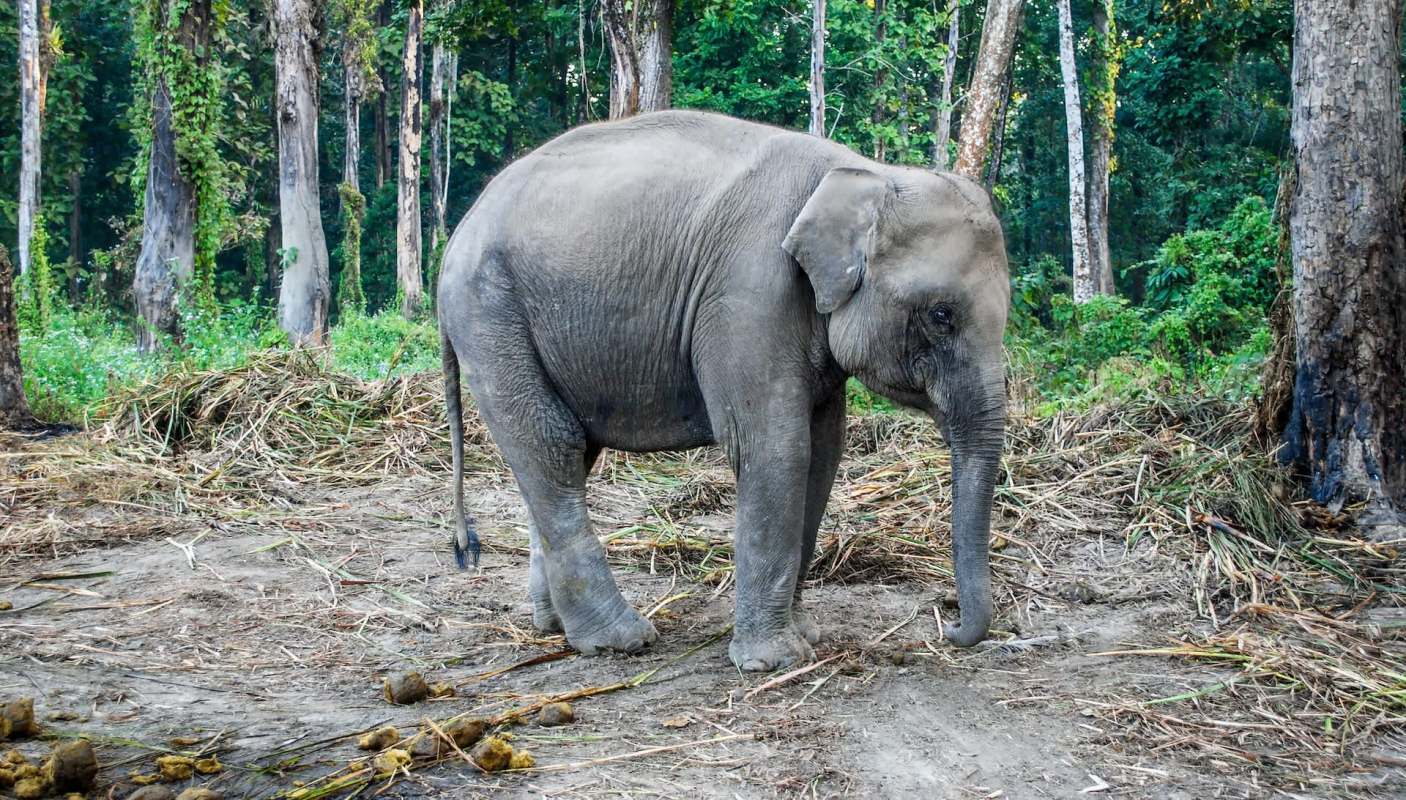
An effort to clamp down on the cause of hundreds of elephant deaths in North Bengal is paying off, with zero fatalities in the last year.
As the Millennium Post reported, 630 elephants were killed by electrocution in the past decade. Some cases were due to negligence, while others were deliberate, as villagers set up illegal hooking and fencing to protect their crops from roaming herds. Now, thanks to a yearlong effort to raise public awareness and inspect sites, that number is zero.
Authorities inspected over 50 rural villages that border protected lands in Jaldapara National Park and Buxa Tiger Reserve.
"Even with year-round coordination with the power department, we're taking no chances," Nabikanta Jha, assistant wildlife warden at Jaldapara, told the Post. "… Our aim is to eliminate any electrocution threats."
One of the biggest problems the elephants of Bengal face is the destruction and fragmentation of their habitats, which brings them into conflict with people. As Roundglass Sustain explains, the life expectancy of Bengali elephants is much lower than it should be. It's not just a result of the improper use of electricity but also collisions with trains. Indeed, the latter is still an all-too-frequent occurrence; in July, three elephants were struck by a train in Jhagram, per The Hindu.
Elephants play a key role in the ecosystem. The Asian elephant is second only to its African cousin as the largest land mammal on Earth. As the World Wildlife Fund puts it, they are the "eco engineers and gardeners of the forest." Their ceaseless foraging spreads nutrients and opens paths through dense vegetation for other animals. In addition to poaching and habitat loss, rising global temperatures are causing fatal diseases to spread and threatening elephants' food supply. Mitigating human-elephant conflicts is just one part of the equation.
The success of the program highlights the importance of local action, as raising public awareness enabled officials to eliminate at least one of the threats the elephants face.
"Our special drive concluded successfully," Harikrishnan PJ, deputy field director of Buxa Tiger Reserve, told the Post. "No major threats were found, but we are focusing on public awareness. These operations will continue throughout the year."
|
Do you think America does a good job of protecting its natural beauty? Click your choice to see results and speak your mind. |
 Definitely 👍
Join our free newsletter for good news and useful tips, and don't miss this cool list of easy ways to help yourself while helping the planet.
Cool Picks




