


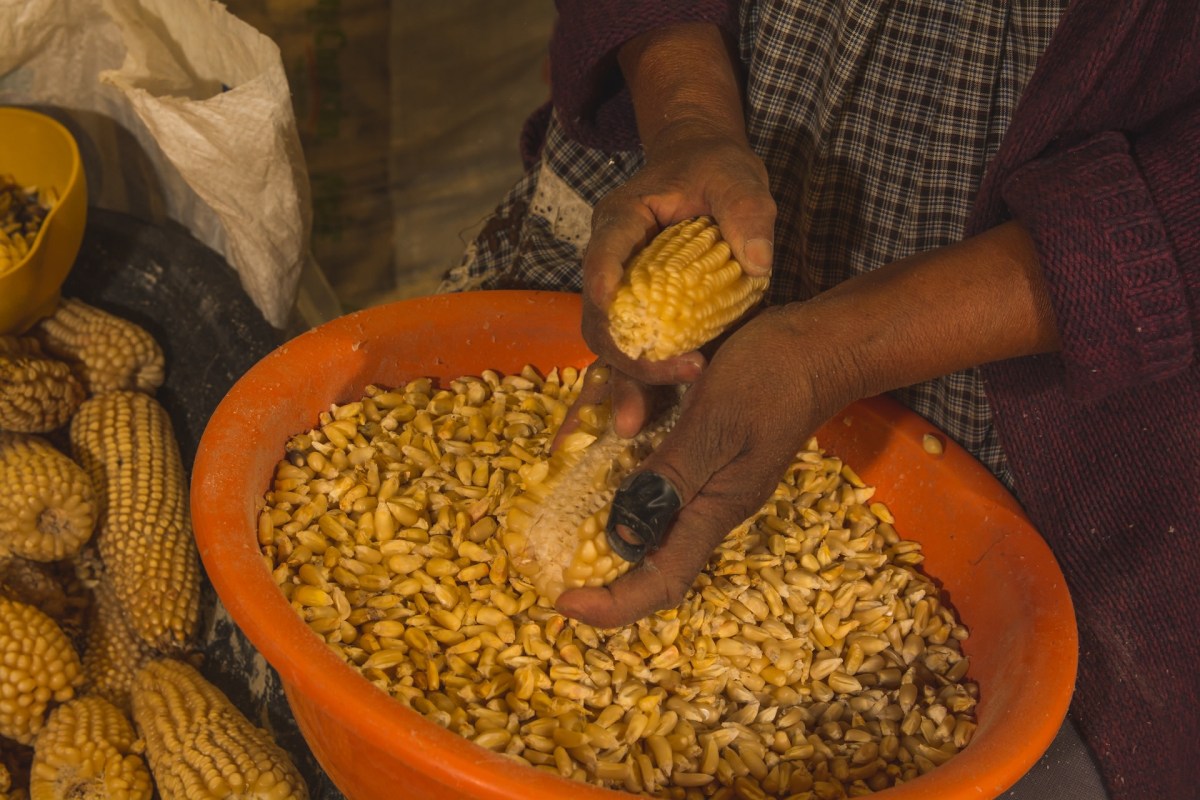
Indigenous communities in Colombia are going back to their roots, turning to traditional farming techniques to grow more resilient crops in the face of the changing climate.
While the Indigenous Zenú have practiced ancestral farming for hundreds of years, their way of life is hanging by a thread because of increasingly frequent natural disasters and heat waves.
"We lost around 90% of the first harvest due to drought, and the little corn we have now is smaller than usual. We had no rain during the last month, and now we can't sow," Remberto Gil, a farmer who lives in the 25,000-acre Zenú reserve in northwestern Colombia, told Mongabay.
To safeguard their food supplies and protect their people, the Zenú are turning to more heat-resistant ancestral corn varieties, such as blaquito and negrito, along with drought-tolerant corn called cariaco, as the outlet reported.
Local farmers told Mongabay that these indigenous corn plants are adapted to the environment and don't need as much water as the imported corn varieties they now grow.
While the Zenú still eat traditional dishes made with native fish and reptiles such as caiman, their focus is shoring up ancestral food stocks as the weather becomes more unpredictable.
Victor Negrete, a professor at Sinù University in Colombia, spoke to Mongabay about how farmers and seed guardians like Gil are working to preserve their ancestral foods. The Association of Organic Agriculture and Livestock Producers and their Communitarian Seed House are two projects helping the Zenú maintain their agricultural wisdom and save seeds for the future.
The seed bank houses 12 indigenous corn varieties, along with numerous native beans, pumpkins, eggplants, and herbs, in jars and two refrigerators. In addition to the seed house, an agroforestry system complete with chickens, turkeys, and various tropical fruit trees such as papaya, banana, and passionfruit provides food security for local families.
Mongabay reports that 25 families participate in sharing, preserving, and selling the seeds of 32 rare vegetables and traditional herbs, such as lemon balm.
"Working together helps us to save, share more seeds, and sell at fair price [while] avoiding intermediaries and increasing families' incomes," Gil told the outlet. "Last year, we sold 8 million seeds to organic restaurants in Bogotà and Medellín."
TCD Picks » Quince Spotlight
💡These best-sellers from Quince deliver affordable, sustainable luxury for all




These traditional farming practices not only benefit the Zenú but also help to support a healthy, thriving ecosystem for animal and plant species. Farmers in Peru are turning to ancestral agricultural methods as well to grow hundreds of varieties of climate-resilient potatoes, quinoa, corn, maize, and other crops in an effort to adapt to the warming planet.
"The most important challenge we have now is to save ancient species and involve new generations in ancestral practice," Sonia Rocha Marquez, a professor of social sciences at Sinù University, also told Mongabay.

Join our free newsletter for cool news and cool tips that make it easy to help yourself while helping the planet.
Cool Picks






