


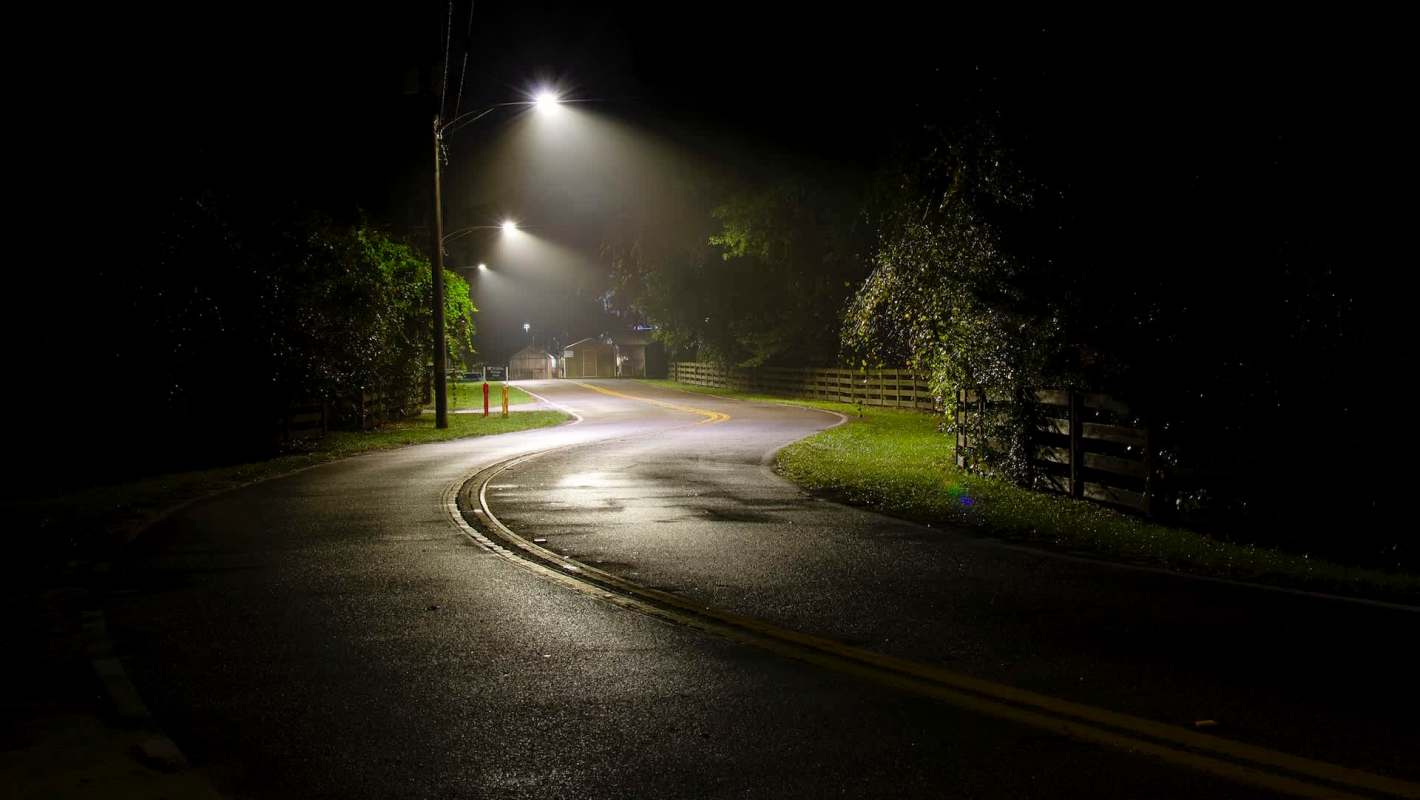
A strange side effect of modern streetlights is coming into focus: Researchers say thousands of tiny land isopods — better known as woodlice, pill bugs, or roly-polies — can get pulled into giant synchronized circles that function like "death spirals" under artificial light.
In a new study published in Ecology and Evolution, a team led by researchers at the Hebrew University of Jerusalem documented what it describes as a never-before-seen collective behavior in the species Armadillo sordidus. Beyond being deeply unsettling to look at, the finding suggests that everyday human infrastructure can quietly reshape wildlife behavior in ways that may put vulnerable animals at risk.
The phenomenon first came to scientists' attention after amateur naturalist Eviatar Itzkovich, as recounted in the Hebrew University source, noticed swirling masses on summer nights in the Golan Heights. That discovery led to a closer investigation by Ph.D. student Idan Sheizaf and Prof. Ariel Chipman, who focused on a species that usually lives alone beneath stones and damp debris to avoid drying out.
According to the researchers, these isopod "mills" can include more than 5,000 individuals at once, which is a major departure from the animals' usual sheltered, solitary routine.
To figure out what was driving the circles, the team tested several possible triggers. Strong magnets had no effect, even though the Golan Heights has unusual magnetic properties. Ultraviolet flashlights attracted only a small number of isopods and did not trigger any coordinated marching.
White light was different. When the researchers aimed a white lamp straight down, it repeatedly set off the circular behavior. The vertical beam forms a circular lit boundary on the ground, and the isopods begin tracking that edge. Once enough of them gather, the motion sustains itself as a swirl.
TCD Picks » Quince Spotlight
💡These best-sellers from Quince deliver affordable, sustainable luxury for all




That's where the bigger concern comes in for communities trying to build healthier neighborhoods and ecosystems. Artificial light at night is already known to disrupt wildlife, and this study suggests even ground-dwelling creatures can be caught in dangerous behavioral traps.
In one observation, a centipede preyed on the distracted mass. When outdoor lighting draws animals from shelter, depletes their energy, and makes them easier to catch, it can weaken the small species that local food webs depend on.
Seemingly minor design choices can ripple through an ecosystem. Smarter lighting, such as better shielding and less intrusive night illumination, could help communities reduce energy waste while also protecting wildlife from hazards they never evolved to handle.
Denmark recently swapped out a long stretch of streetlights for red-light LED lamps to minimize disruption to local wildlife, particularly bats.
Reflecting on the discovery, Sheizaf said, "While collective movement is common in the animal kingdom, seeing it in this form in isopods was entirely unexpected."
He added that "the geometry of our modern world — specifically the circular pools of light created by streetlights, is interacting with the natural instincts of these creatures to create a mesmerizing, yet potentially harmful, emergent phenomenon."

Get TCD's free newsletters for easy tips, smart advice, and a chance to earn $5,000 toward home upgrades. To see more stories like this one, change your Google preferences here.







