


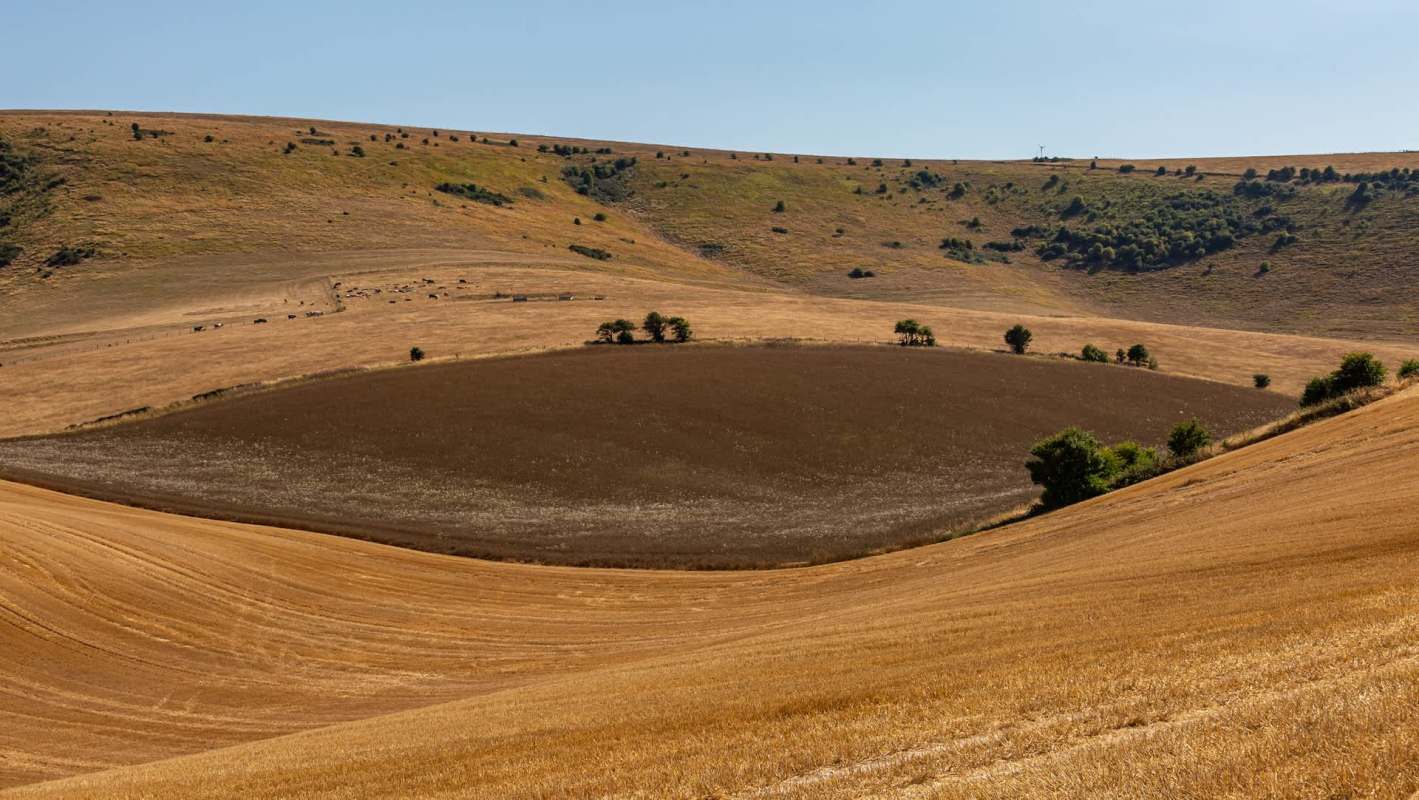
Drought has wiped out the entire hay harvest at one National Trust estate, highlighting growing concern about what extreme dry weather could mean for future food production.
Here's what to know
At Wimpole Estate in Cambridgeshire, meadows that typically yield about 165 tons (150 tonnes) of hay produced nothing, according to The Independent.
With grass growth stalled by the dry weather, livestock at Wimpole Estate have been moved onto winter feed months earlier than usual, the National Trust said. The charity noted that the 3,000-acre (1,200-hectare) site is its largest organic in-hand farm, and this is the third major drought in five years.
The impact is also showing up across the farm's wider output, The Independent noted. Hay production has dropped from about 165 tons (150 tonnes) to zero, grain yields are down by roughly 25%, and straw output has fallen from 200 bales to 60.
Dave Hassall, National Trust farm and countryside manager, described the scale of the disruption in blunt terms.
"Drought affects every part of the system – crops, grassland, livestock, wildlife and costs," he told the publication.
TCD Picks » Quince Spotlight
💡These best-sellers from Quince deliver affordable, sustainable luxury for all




More background
The effects of the dry spell are visible well beyond the fields. The estate says soils are cracking, veteran trees are showing signs of stress, and invasive plants, including ragwort and thistles, are spreading quickly, according to The Independent.
"These pressures are being felt across all farming systems, and they show why adapting to a changing climate is essential for food production, nature and rural communities," Hassall noted in the paper.
The estate also warned that disrupted weather patterns are throwing off the timing between flowering plants and pollinating insects, a mismatch that can ripple through both biodiversity and food production.
Around the world, drought and extreme heat are some of the most challenging conditions for growers and livestock managers.
What's being done?
The National Trust says it is stepping up climate adaptation efforts at Wimpole Estate. Since 2021, 125,000 trees have been planted there to add shade, strengthen soil health, improve moisture retention, and make habitats more resilient, according to The Independent.
The estate is also working on ways to hold more rainwater in the landscape and using conservation grazing to help restore habitats while lowering wildfire risk.
On the agricultural side, Wimpole is trialing forage alternatives such as willow and aspen, examining crop varieties that can better handle drought, and making breeding choices intended to help livestock cope in drier conditions.
As Hassall put it to The Independent, Wimpole Estate "has adapted for 2,000 years" and "that spirit continues." Still, he noted that these efforts require collective action and support.
"Long‑term resilience requires sustained investment in nature and climate adaptation," he asserted. "We cannot do this alone."

Get TCD's free newsletters for easy tips, smart advice, and a chance to earn $5,000 toward home upgrades. To see more stories like this one, change your Google preferences here.







