


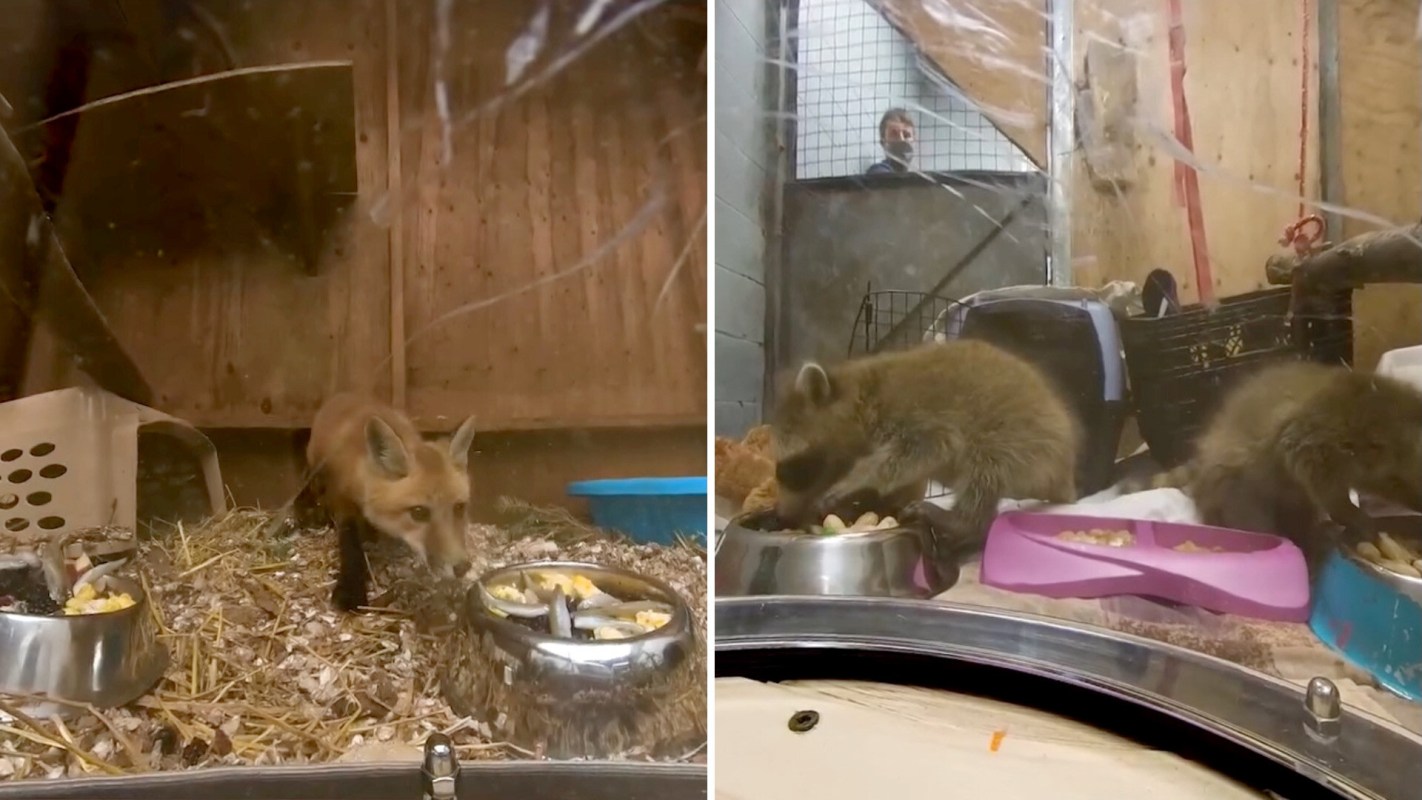
The Toronto Wildlife Centre shared a video that offers an adorable, eye-opening look at a less visible part of wildlife rehabilitation. Beyond rescuing animals, the work also includes carefully preparing meals for patients as different as tiny opossums and recovering hawks.
The clip turns feeding time into a mini spectacle, complete with chatter, tube feedings, and plenty of hungry faces waiting for their turn.
What happened?
In an Instagram post, the Toronto Wildlife Centre shared the caption, "Who's hungry for a little WILD competition?!" The Canadian wildlife rehabilitation center explained that mealtime involves preparing "dozens of specialized diets for wild patients with vastly different nutritional needs."
The video shows employees at the wildlife center engaging in a cooking show-inspired cookoff, preparing food for its wild residents.
"Who can make the most enticing feast for a baby fox or raccoon?" they wrote in the caption.
Among the animals featured are some of the center's smallest and most delicate patients.
TCD Picks » Quince Spotlight
💡These best-sellers from Quince deliver affordable, sustainable luxury for all




"Tiny opossums require tube-feedings of specialized formula multiple times a day before they can graduate to a menu of smelt, fruits, and vegetables," the post explains. Other patients have very different diets; the center explained that "Hungry bats chatter impatiently while awaiting their mealworms," while a recovering hawk is fed "protein-rich meat."
The Toronto Wildlife Centre also says orphaned red foxes and raccoons are among the animals in its care. The organization says they were found alone and hungry but are now getting enough to "fill their bellies and grow."
Why does it matter?
The post serves as a reminder that wildlife rescue is highly skilled, around-the-clock work. Feeding an injured or orphaned animal is not as simple as offering scraps; each species has different nutritional needs, and the wrong food can make recovery even harder.
The Toronto Wildlife Centre's post also shows why organizations like this rely on public support. Specialized formula, fish, meat, produce, and insects can quickly become expensive.
What are people saying?
"Whether a patient weighs less than a golf ball or has a wingspan wider than your arms, the right food helps provide the strength needed to heal and eventually return to the wild," the center wrote in the post's caption.
Commenters praised the workers for their hard work and dedication to helping wildlife.
"It never ceases to amaze me the amount of care and dedication that goes into rehabilitating wildlife. Meal prep alone is a full time job. You folks are amazing," wrote one person.

Get TCD's free newsletters for easy tips, smart advice, and a chance to earn $5,000 toward home upgrades. To see more stories like this one, change your Google preferences here.







