


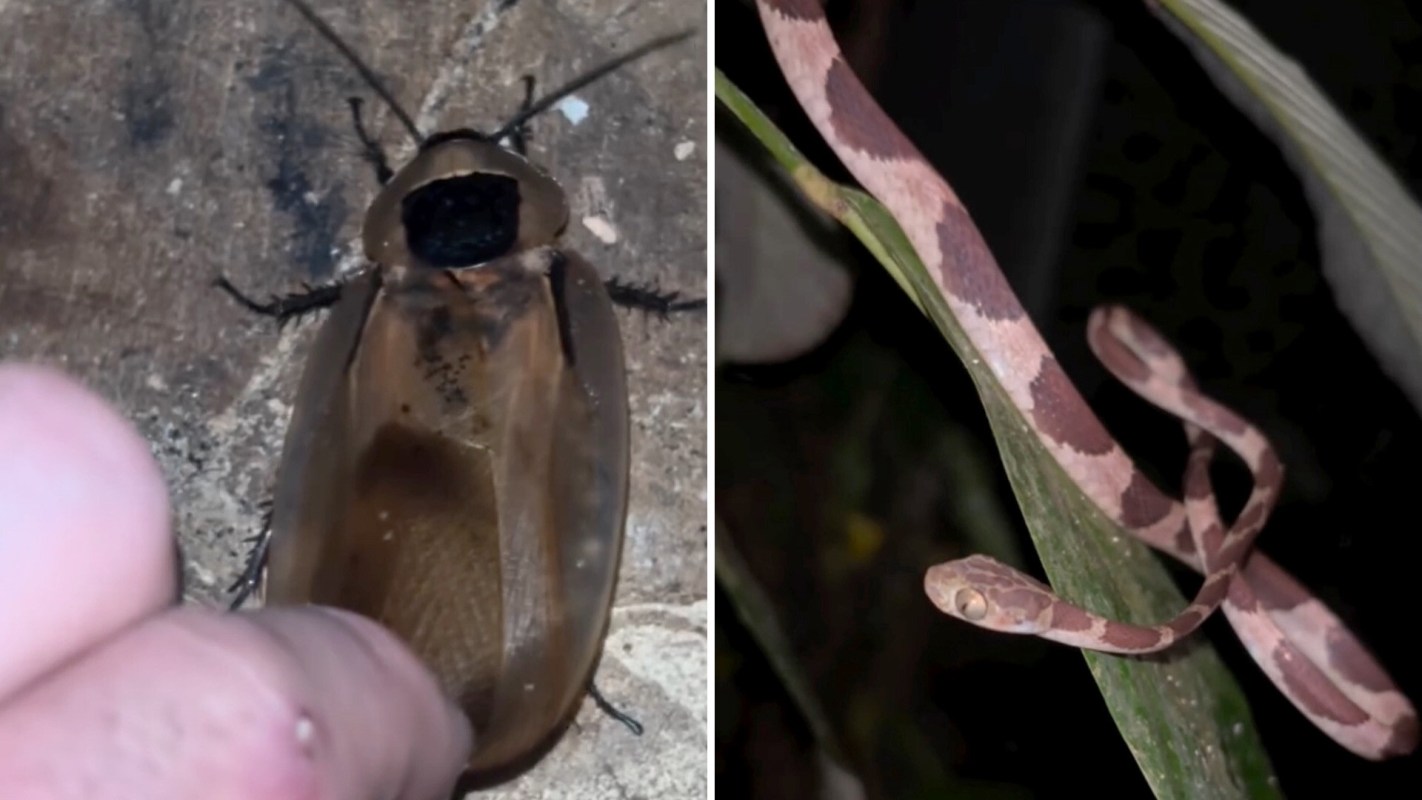
A conservation educator and wildlife videographer is putting a global spotlight on Ecuador with a lighthearted search for what he refers to as "dubious creatures of the night."
What's happening?
Zach O'Neill (@natural_selections__) is a content creator who uses comedy to teach people about nature and the animals. In a recent Instagram reel, he showcased underappreciated nighttime creatures, including cockroaches, a tree snake, a frog with tadpoles, and cicadas.
"Ecuador is one of the most biodiverse places on Earth, but all I ever record are SILLY LITTLE GUYS," O'Neill wrote. "I've seen various monkeys, caiman, a river dolphin, jaguar tracks, and more, but seeing something and documenting it are totally different. I'm not complaining though. It's just a matter of time before I record some bonker animal."
Despite its relatively small size, Ecuador is one of the world's "megadiverse" hot spots, featuring an extraordinary range of ecosystems, from coastal habitats and mountain ranges to the Amazon and Galapagos Islands, according to the Convention on Biological Diversity.
One commenter pointed out that those "silly little guys" may be far more special than they might appear to the untrained eye, writing: "Growing up in Ecuador, I remember seeing critters (mainly insects) I have yet to see again even after studying Entomology. Have a great time in Ec!"
Why does it matter?
Insects like cockroaches and cicadas may not inspire awe, but they play vital roles in biodiverse ecosystems, adding nutrients to soil and serving as food sources for predators.
TCD Picks » Quince Spotlight
💡These best-sellers from Quince deliver affordable, sustainable luxury for all




Biodiversity may sound like a distant scientific concept, but it has direct consequences for everyday life. Healthy ecosystems support clean water, climate stability, and food systems.
When countries with exceptional biodiversity face growing pressure from habitat loss, pollution, or climate-related disruption, the effects reach far beyond individual species.
Entire ecological networks can become more fragile, affecting tourism, agriculture, and wildlife.
What can I do?
One of the most practical first steps is to learn more about the ecosystems behind images on social media. Following credible conservation groups, park systems, researchers, and educators can help turn brief interest into deeper understanding.
Travel decisions can matter, too. Seek out ecotourism operators who respect wildlife, support local communities, and avoid exploitative animal encounters.
You can also avoid purchasing products tied to habitat destruction or the wildlife trade while supporting organizations working to preserve forests and other species-rich habitats.
Individual action alone will not solve biodiversity loss, but it can help direct money and attention toward better outcomes.

Get TCD's free newsletters for easy tips, smart advice, and a chance to earn $5,000 toward home upgrades. To see more stories like this one, change your Google preferences here.







