


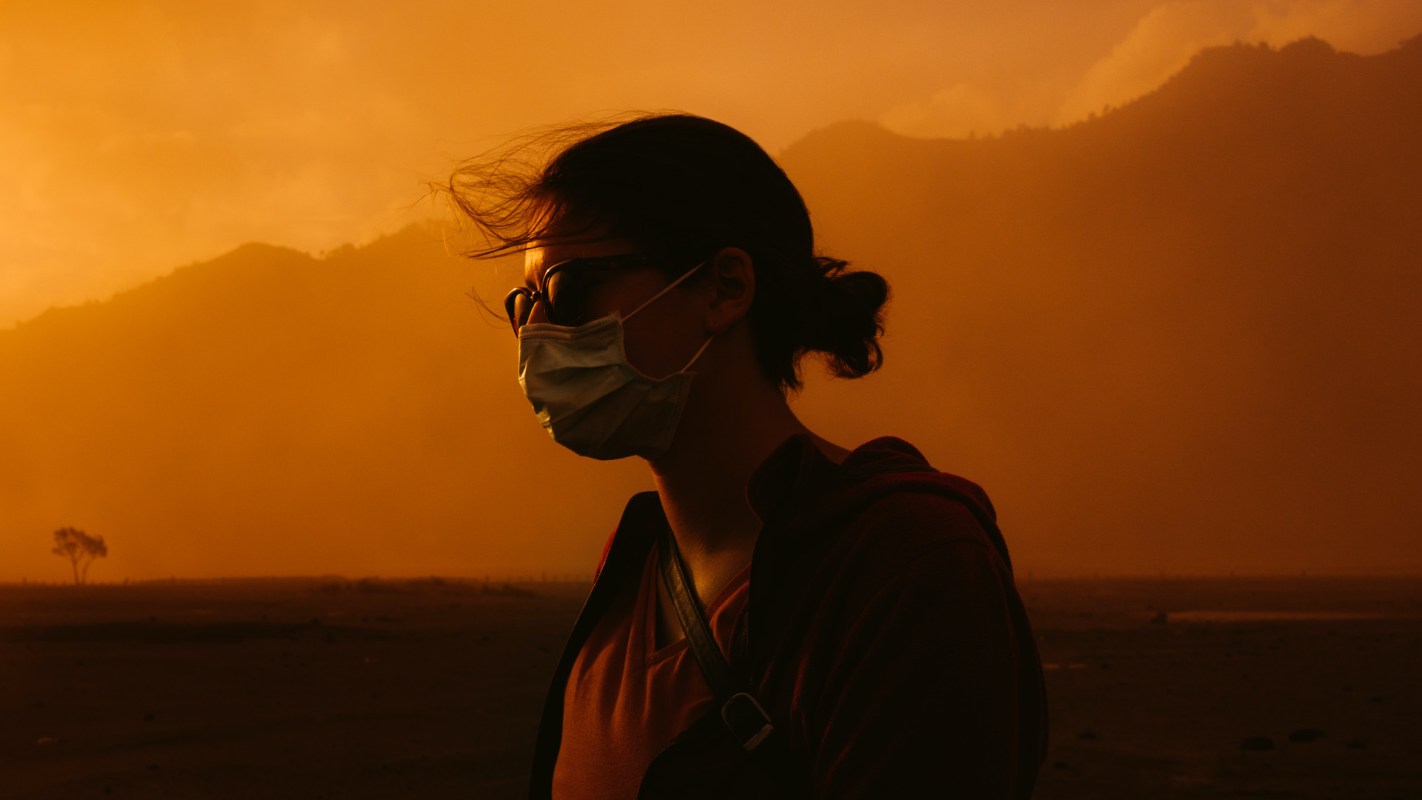
A new study conducted by a team of researchers from Stanford University is sounding an alarm about the deadly consequences of increasing wildfires being fueled by an overheating planet. Their study, titled "Wildfire smoke exposure and mortality burden in the US under climate change," was published in Nature this week. It cautions that our warming world could cause an additional nearly 30,000 deaths annually in our country from wildfire smoke pollution.
"The impacts are much larger than anything else that has been measured," said Stanford University environmental economist Marshall Burke, per the New York Times. "These are projections. They are not what's going to happen, necessarily," he added. "But what happens is a choice, and so these don't have to be an inevitability."
The Environmental Protection Agency says fine particles in wildfire smoke irritate the lungs and airways, causing coughing, wheezing, and breathing difficulties. They can also worsen asthma, heart disease, and other conditions, sometimes fatally. Extended or repeated exposure, such as in firefighters, may produce long-term lung function decline.
"We estimate that wildfire smoke is about 10 times as toxic as the regular air pollution we breathe from the burning of fossil fuels," according to Lisa Patel, a clinical associate professor of pediatrics at the Stanford School of Medicine.
This week gives a glimpse into an active year for wildfires in the U.S. As of Friday, there were more than 12,000 wildland firefighters and support personnel responding to 41 large fires that have burned over 470,000 acres, according to the National Interagency Fire Center. Large wildfires were burning across portions of at least ten states. The Dragon Bravo fire, located around two miles west of the Grand Canyon National Park's north rim in Arizona, was the biggest blaze burning by the end of the week. The megafire has charred over 145,000 acres and is 94% contained.
Through the middle of September, there have been 50,328 wildfire incidents across the nation. Wildfires this year have consumed 4,438,417 acres. The majority of fires have targeted the western U.S., but an expanding and deepening drought in the East is raising wildfire concerns for several states.
"While some areas recently received localized precipitation, it was not enough to significantly improve drought conditions or lessen the impacts," a National Integrated Drought Information System drought status update on the Northeast noted. "Outlooks indicate drought is likely to persist at least through the end of September, with above-normal wildland fire potential expected across Maine, New Hampshire, and Vermont."
The build-up of heat-trapping gases in our atmosphere is warming our world and supercharging extreme weather events. "In recent decades, wildfires have increased in size and intensity, and the fire season has lengthened," says the U.S. Geological Survey.
This past August was the 47th consecutive final month of meteorological summer with global temperatures at least nominally above average. The August global climate report from the National Centers for Environmental Information also revealed this was the world's third-warmest summer on record. There is now a 99.9% chance that 2025 will rank among the planet's top five warmest years on record.
|
Do you worry about the quality of the air inside your home?
Click your choice to see results and speak your mind. |
 Yes — often 😬
Join our free newsletter for good news and useful tips, and don't miss this cool list of easy ways to help yourself while helping the planet.
TCD Picks » Quince Spotlight
💡These best-sellers from Quince deliver affordable, sustainable luxury for all




Cool Picks






