


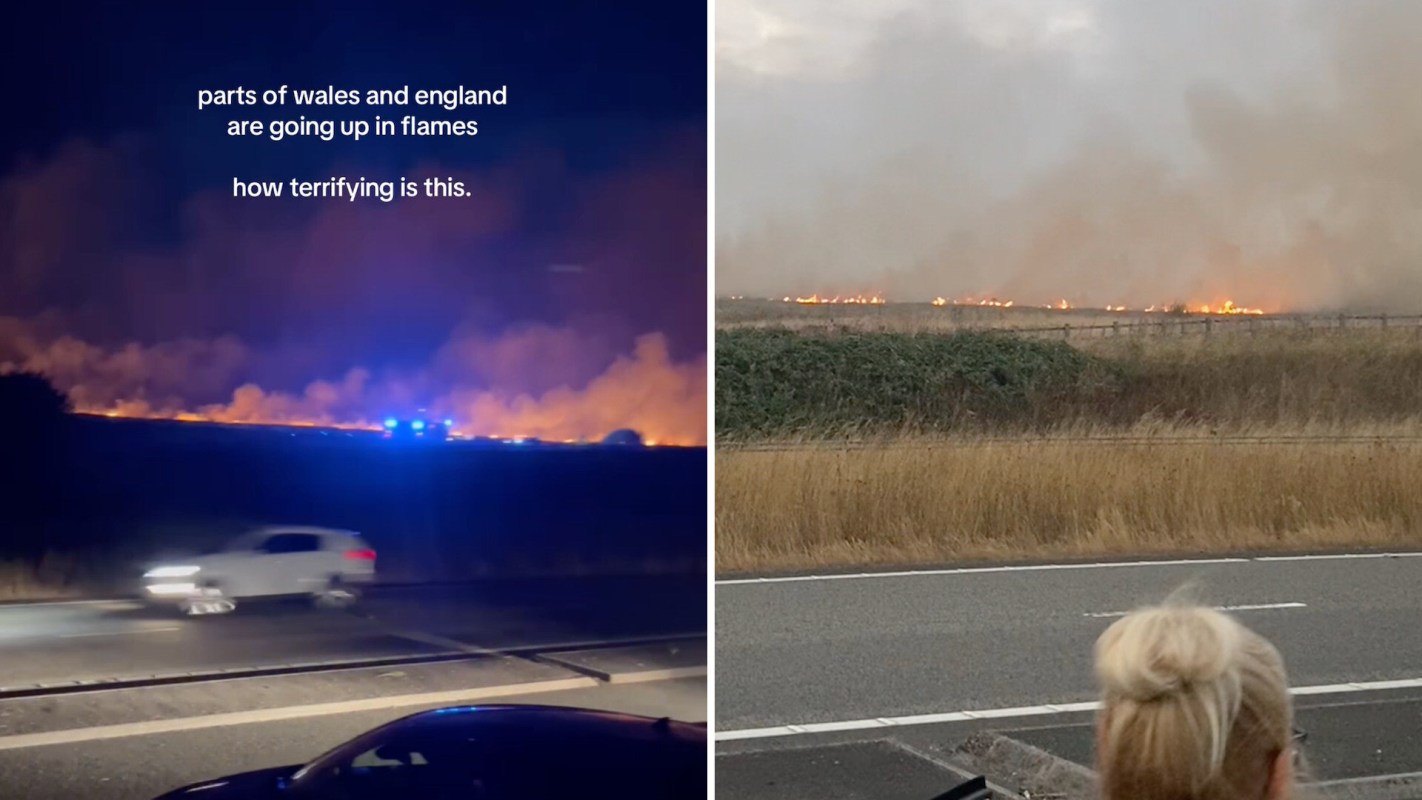
A TikTok appeal from Merthyr Tydfil, Wales, is drawing attention to wildfire danger after a content creator said thick smoke was moving through parts of the area, some evacuations had taken place, and water and other essentials were running low.
Here's what to know
Katie Lewis (@katielewisprivate) said she does not usually post about wildfires in an Aug. 17 TikTok video, in which she also warned that the community was "running low on water and many other things" while "black thick smoke is taking over parts of Merthyr and has caused evacuation in some areas."
@katielewisprivate this is absolutely terrifying to our country. i am never the one to come on social media and talk about how bad wildfires are, but we need to spread the word to get the help we need. were running low on water and many other things. Black thick smoke are taking over parts of Merthyr and have caused evacuation in some areas, its dangerous and harmful to us. The most scariest thing i have ever witnessed tonight. Literally looks like the world is ending. #fyp #foryoupage #viral #southwales #wildfires ♬ Outro - M83
Fires in the area got so bad that the country called in the military to help with fighting the blazes, and on Aug. 19, Prince Charles Hospital in Merthyr Tydfil had to close its helipad due to the encroaching fire, according to the BBC.
Lewis' video showed flames lighting up the night sky and portrayed the situation as dangerous and fast-moving, as Lewis called it "harmful to us," and urged people to spread the word so the area could get more help, saying, "Literally it looks like the world is ending."
Commenters echoed that fear and heartbreak. One wrote, "I've been in tears seeing this it's heartbreaking our wales burning," while another added, "It's insane that people actually find fun in lighting fires."
More background
Wildfire emergencies affect far more than the land that burns. Even when flames are not visible on every street, thick smoke can make it unsafe to be outside, reduce visibility, and force families to leave their homes with little notice.
TCD Picks » Quince Spotlight
💡These best-sellers from Quince deliver affordable, sustainable luxury for all




That kind of disruption can quickly strain a community's most basic systems. In this case, the creator's warning about dwindling water and other supplies points to a reality many people face during extreme weather disasters: access to clean air, drinking water, transportation, and emergency services can all become harder at once.
As extreme weather disasters worsen and become more destructive, they endanger lives and livelihoods in overlapping ways. Smoke and evacuations can threaten public health, especially for children, older adults, and people with respiratory conditions. Community safety can also be shaken as firefighters and local resources are stretched thin.
Economic stability can take a hit as well when roads close, work is interrupted, farms or small businesses are affected, and households suddenly need to pay for temporary shelter, supplies, or repairs.
Commenters also described a sense of repeated strain. One wrote, "Our valleys are just burning non stop it's mental."
What can be done?
During wildfire emergencies, official evacuation orders and local emergency guidance shape the response. Smoke moving into populated areas can raise health risks, and limited supplies can make water conservation, go-bags, and keeping windows closed during smoky periods necessary.
Verified local requests for aid, trusted community channels for supplies, and clear information can help communities during a crisis.
Lewis called it "The most scariest thing I have ever witnessed," and another viewer wrote, "It's so scary to see. Praying for everyone who's been affected."

Get TCD's free newsletters for easy tips, smart advice, and a chance to earn $5,000 toward home upgrades. To see more stories like this one, change your Google preferences here.







