


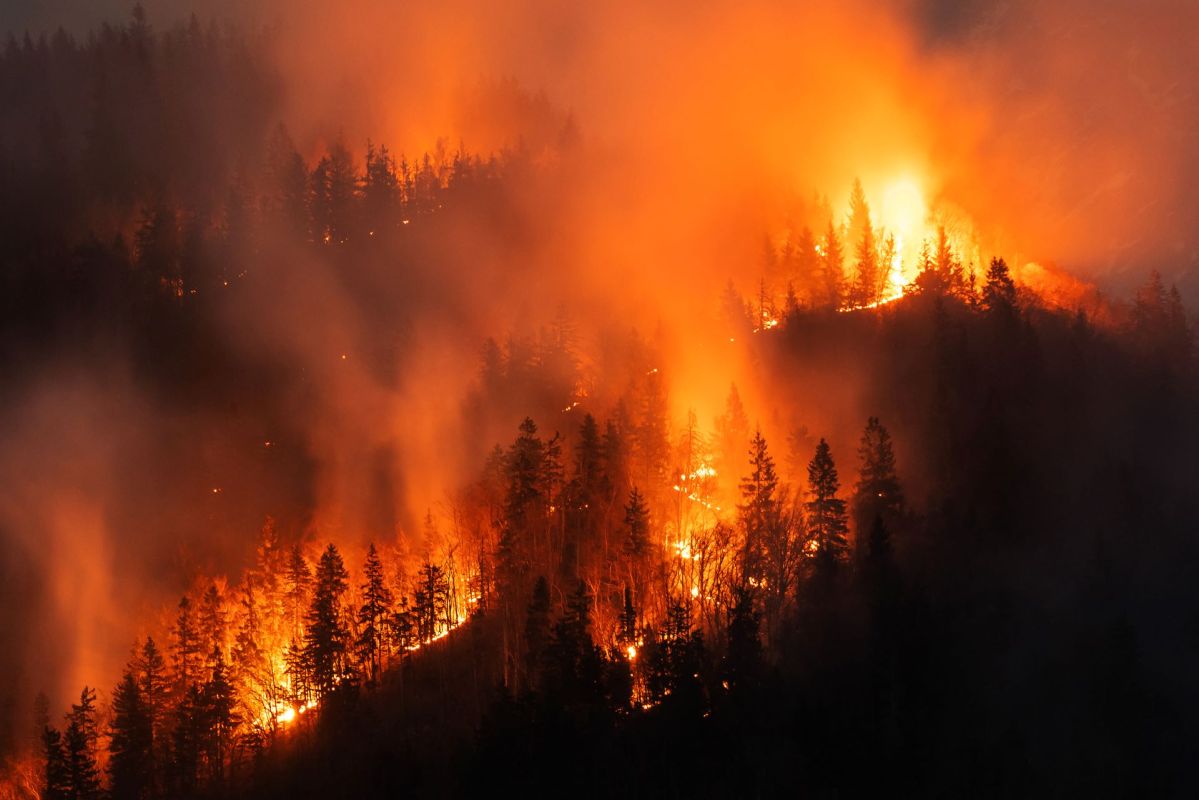
Increasingly intense and longer wildfire seasons are causing air quality problems all over the world, and the reach spans continents.
What's happening?
Rising global temperatures are driving up wildfire risk, and weather conditions can push smoke around the globe, AFP reported.
The World Meteorological Organization said in its fifth Air Quality and Climate Bulletin that this issue needs to be addressed with the changing climate, as they are intertwined. Heat and drought are fueling more frequent and intense wildfires, which contribute to air pollution that causes 4.5 million premature deaths every year.
"What we have from these fires is essentially a witches' brew of components that pollute the air," WMO scientific officer Lorenzo Labrador said.
AFP noted that wildfires in Canada have dirtied air over Europe and that other large wildfires have made it clear how big and widespread the problem is.
Why is this important?
Over the last four-plus decades, the global average surface temperature has rapidly risen, as the National Oceanic and Atmospheric Administration detailed.
TCD Picks » Quince Spotlight
💡These best-sellers from Quince deliver affordable, sustainable luxury for all




While a degree or two of warming doesn't seem significant, "it represents a significant increase in heat energy circulating through all parts of the Earth system, including the oceans, frozen landscapes, and the atmosphere," per the NOAA.
The burning of dirty energy sources is the main culprit, and the resulting imbalance in the atmosphere disrupts the water cycle, the carbon cycle, plants, animals, and other living things, according to the NOAA. More frequent and intense wildfires are part of this upset, as are increasingly destructive hurricanes and floods.
"The bulletin looked at the interplay between air quality and the climate, highlighting the role of tiny particles called aerosols in wildfires, winter fog, shipping emissions, and urban pollution," AFP wrote. "Particles with a diameter of less than 2.5 micrometers (PM 2.5) are considered particularly harmful since they can penetrate deep into the lungs or cardiovascular system."
This doesn't cause just breathing and other health problems for humans and animals, but it also affects crops, water systems, and more. And other types of fires contribute to the problem, with the WMO highlighting the role of agricultural biomass burning in increasingly frequent and sustained winter fog events in Northern India.
|
Do you worry about the quality of the air inside your home?
Click your choice to see results and speak your mind. |
 Yes — often 😬
 What's being done about air pollution?
While massive wildfires in the Amazon and Siberia have hampered air quality in recent years, some cities and countries are turning a corner. In East China, for example, PM 2.5 declined after concerted mitigation efforts. Western nations are discouraging or canceling projects that contribute to poor air quality and pushing clean energy alternatives, such as electric vehicles.
Reversing the warming trend will also require the removal of pollution from the atmosphere, which means the companies responsible for rising temperatures have to make changes. You can help usher in this future by supporting eco-conscious brands and choosing less impactful options, such as a reusable drinking vessel instead of using single-use plastic water bottles.
Just as with the changing climate, these small shifts can add up in a big way.
"We don't realize what we were breathing in 20 years ago, but it was much worse than today," WMO global atmosphere chief Paolo Laj told AFP.

Join our free newsletter for good news and useful tips, and don't miss this cool list of easy ways to help yourself while helping the planet.







