


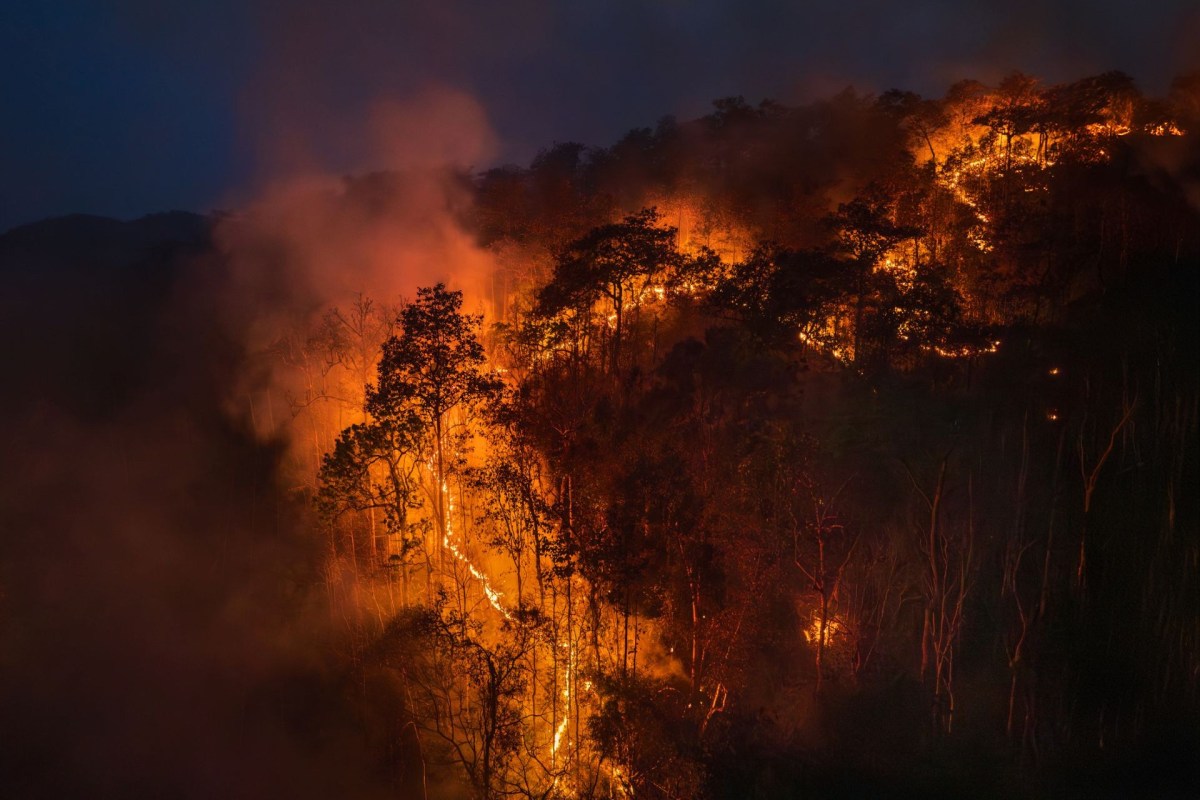
Residents in Southern Utah are dealing with evacuations and power shutoffs as a fast-growing wildfire has expanded to over 70,000 acres, according to Friday reporting from The Salt Lake Tribune, with containment still at 0%. Gov. Spencer Cox said the blaze may already be the most destructive fire in state history.
What happened?
According to ABC4, the human-caused Cottonwood Fire near Beaver was first reported Monday afternoon. Officials say the terrain is so challenging that containment is expected to remain at 0% for several days.
Residents at Eagle Point Resort, Merchant Valley, HiLo Estates, and Arrowhead Summer Homes are still under evacuation orders. Rocky Mountain Power has also de-energized lines in the area and has told people to be ready for an extended outage.
Cox linked the fire's severity to exceptionally dry conditions across the Beehive State. "There's a very good chance that this is already the most destructive fire in the state's history," he said, per ABC4. "... This is the first time that anyone can remember where the entire state — Northern Utah is as dry as Southern Utah, Eastern Utah is as dry as Western Utah. We're just seeing it on all corners."
A Forest Service closure order went into effect at 12:01 p.m. Wednesday. The Federal Emergency Management Agency approved funding Tuesday after determining the fire was a "major disaster" that threatened more than 300 homes.
Why does it matter?
Families are being forced from their homes, communities are facing prolonged power outages, and hundreds of properties are at risk. Smoke exposure can also worsen breathing problems, especially for children, older adults, and people with asthma or heart conditions.
TCD Picks » Quince Spotlight
💡These best-sellers from Quince deliver affordable, sustainable luxury for all




Extreme drought appears to have primed the landscape for rapid fire growth, and the aftermath could bring flooding and mudslides from burn scars in the coming months.
The effects can spread beyond the immediate fire zone, too. Wildfires can hurt tourism; strain emergency services; raise insurance and recovery costs; and leave communities dealing with damaged roads, utility systems, and natural areas for months or even years.
What's being done?
The response is focused on safety, with evacuation orders still active, power lines shut off to reduce risk, and federal disaster funding approved to support firefighting efforts.
The Forest Service closure order is intended to keep the public out of hazardous areas while crews work. Officials are also telling residents to prepare for more than the fire itself.
"If you're told to evacuate, don't screw around this year. … We've seen [fires] move a mile or two in five, 10 minutes," Cox said, per ABC4. "... Please exercise extreme caution."

Get TCD's free newsletters for easy tips, smart advice, and a chance to earn $5,000 toward home upgrades. To see more stories like this one, change your Google preferences here.







