


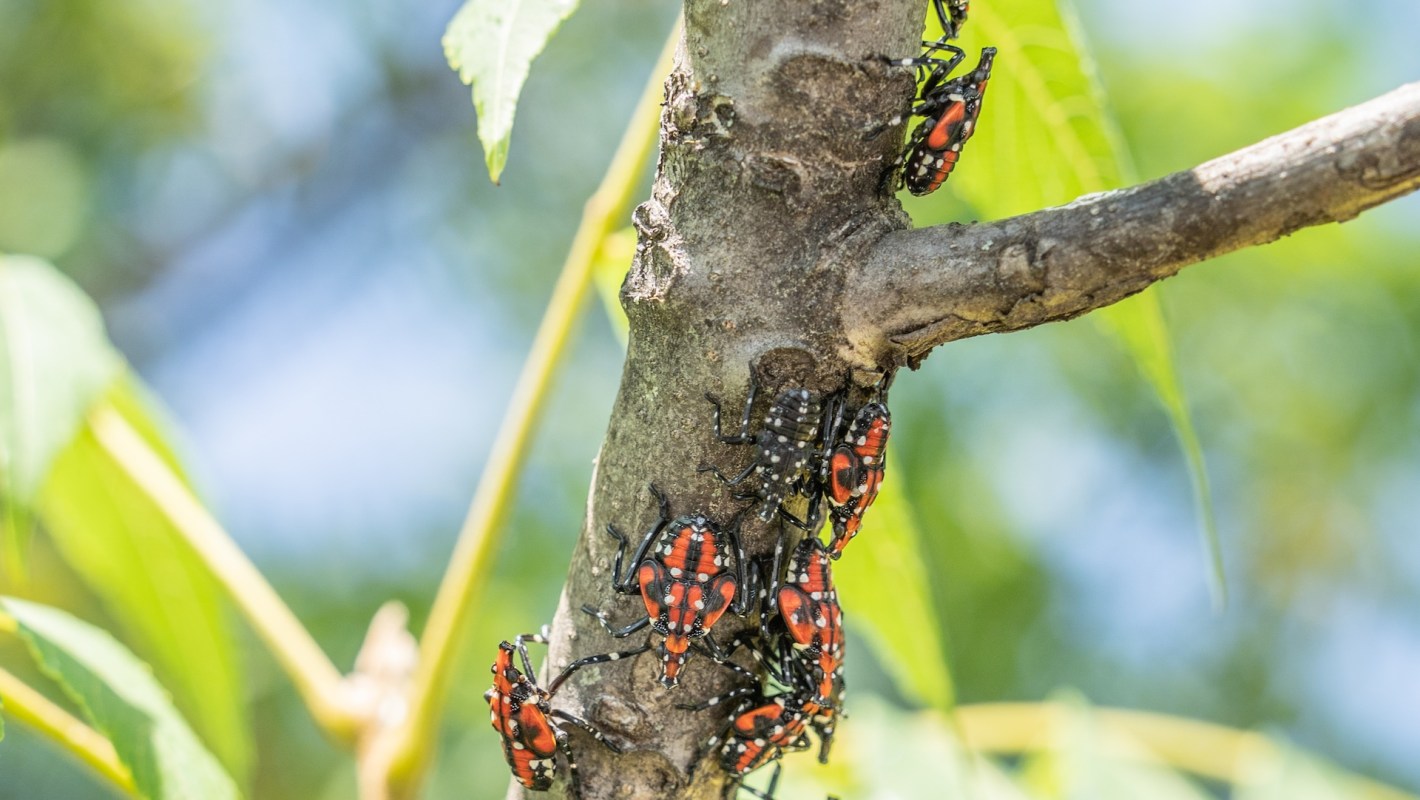
A New York state park best known for its dramatic gorge is being turned into a front-line defense against one of the Northeast's most destructive invasive pests.
Officials are setting aside insecticide-treated "trap trees" in an effort to wipe out spotted lanternflies before they travel further into the Finger Lakes wine region.
What's happening?
According to WXXI News, state parks officials want Watkins Glen to function as a protective zone for nearby farmland. The area around the park includes about 10,000 acres of vineyards, along with orchards and other cropland.
The plan is to lure in spotted lanternflies and kill them before they do more harm. These invasive insects feed on various plants and crops, such as fruit and nut trees, grapes, and hop vines, harming the plants' health in the process.
The strategy takes advantage of another invasive species — the tree of heaven. This fast-growing tree, also native to parts of Asia, is a preferred food source for spotted lanternflies.
Dave Rutherford, the parks office's Finger Lakes regional biologist, said crews will remove many of the trees throughout the park, including in the gorge, where a ropes team will carry out the work.
TCD Picks » Quince Spotlight
💡These best-sellers from Quince deliver affordable, sustainable luxury for all




Instead of cutting down every tree of heaven, crews plan to leave around twelve of the biggest male trees standing. Those trees will be treated with a systemic insecticide so lanternflies die after feeding on them.
Rutherford said the park is a logical place for the effort because it already has an established tree of heaven population, leading to perhaps thousands of spotted lanternflies living there already.
Why does it matter?
Because the Finger Lakes is a major wine-producing region, a large lanternfly population could do serious damage to vineyards and other crops.
According to WXXI News, Watkins Glen draws more visitors than any other state park in the Finger Lakes, making it a likely landing spot for pests arriving from elsewhere — especially Pennsylvania, where spotted lanternflies are widespread.
As Rutherford explained, "They are professional hitchhikers, both in their adult phase, you know, jumping into cars and stuff, and traveling, but also laying their egg cases on like RVs, stuff like that."
Reducing invasive species can also give native plants and ecosystems more room to recover. Invasive species can also threaten native wildflowers such as goldenweed that have been harmed by invasive plants like Russian thistle and cheatgrass.
What's being done?
The state parks office is hiring a contractor to manage tree of heaven throughout Watkins Glen, mainly through removal or herbicide treatment.
That work is intended to address two problems at once: the tree's own environmental impacts and its role in supporting lanternfly populations.
For the trap-tree part of the project, officials will keep only a small number of male trees and inject them with insecticide. The idea is that lanternflies will congregate on those trees to feed.
Rutherford said, "Any spotted lanternflies that are on site will be going to these trap trees for sustenance."
Other land managers in the region are also tackling the host-tree problem. Monroe County crews remove tree of heaven when they find it in parks, and, as WXXI News reported, the Finger Lakes Land Trust has also been trying to eradicate tree of heaven on its preserves.
Rutherford said his ultimate mission is for lanternflies brought into the park by visitors to "meet their demise through the trap trees" so "we can prevent them from, you know, reproducing and spreading and being more of a potential hazard."

Get TCD's free newsletters for easy tips, smart advice, and a chance to earn $5,000 toward home upgrades. To see more stories like this one, change your Google preferences here.







