


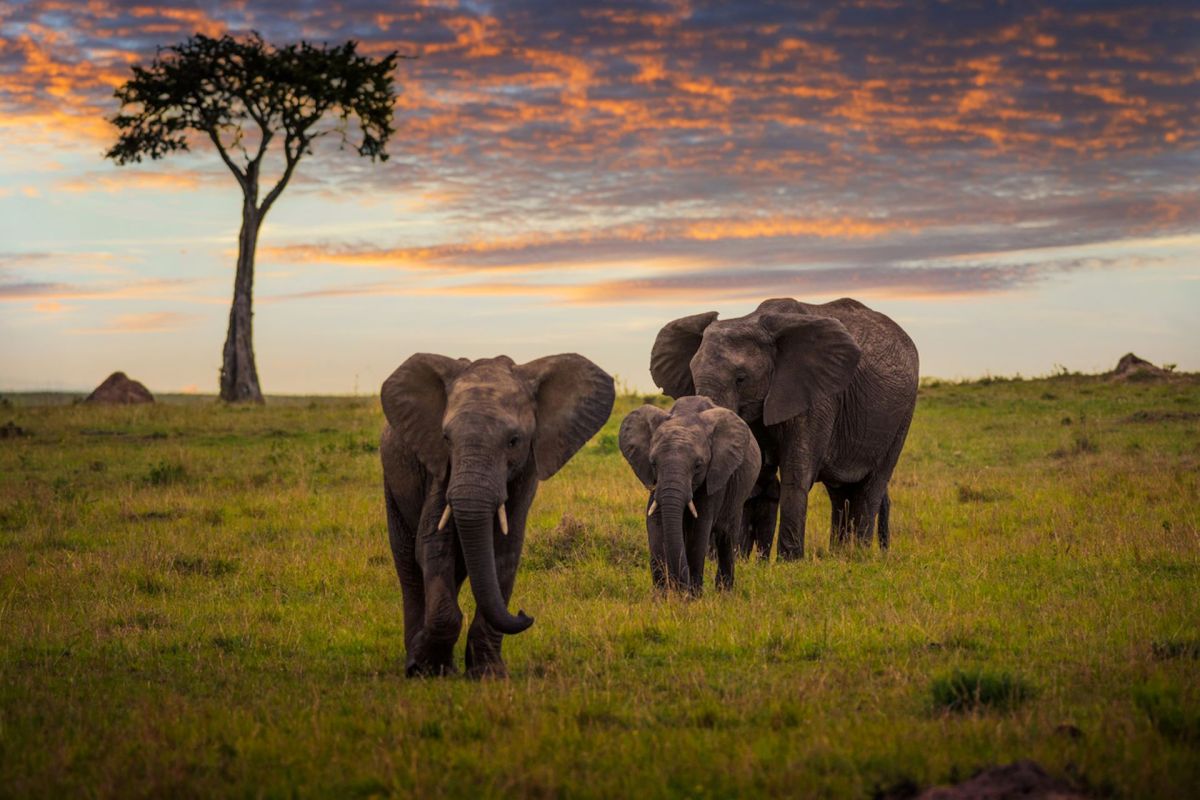
Watering holes are drying up in Zimbabwe's largest national park, causing droves of animals to flee in search of water.
What's happening?
Zimbabwe's 5,656-square-mile Hwange National Park is an important habitat for many iconic species, including giraffes, zebras, lions, Cape buffalo, and leopards. It is also one of Africa's largest elephant sanctuaries, per Brittanica.com.
Recently, these animals started migrating en masse from the park to search for water in neighboring Botswana — this represents the biggest migration of its kind from Hwange to Botswana in four years, Bloomberg reported.
It's all due to a drought that has caused the park's water holes to run dry.
"It's not only buffaloes [and] elephants but most of the animals because we are facing a lot of water shortages within the park," said Tinashe Farawo, spokesperson for Zimbabwe Parks and Wildlife Management Authority, as Bloomberg reported. "Most of the natural pans are now dry."
From November to March, the region experienced low rainfall, and drought conditions are likely to persist due to the El Niño weather pattern, Bloomberg reported, based on information from the Meteorological Services Department.
Why is this mass migration concerning?
According to Farawo, this migration will likely increase human-wildlife conflict, as the animals are expected to pass through human habitations during their journey.
This is concerning news, as human-wildlife conflict is already one of the greatest threats to Africa's carnivores and elephants.
As the planet's average temperature has risen, so has the potential for longer, more frequent, and more severe drought conditions, particularly in historically dry areas, per U.S. government agencies.
Since the 1950s, some regions of the world — like Southern Europe and West Africa — have experienced longer and more intense droughts, according to the EPA.
TCD Picks » Quince Spotlight
💡These best-sellers from Quince deliver affordable, sustainable luxury for all




But drought conditions don't just threaten wildlife — they can also negatively affect agriculture, water supplies, energy production, and human health, the EPA reports.
Moving forward, the United Nations Intergovernmental Panel on Climate Change has, as Bloomberg noted, named southern Africa, where Hwange is located, as a hotspot region for increased risk of heat extremes and decreased rainfall in the years to come.
What can I do to help with drought-induced animal migrations?
While you can't directly prevent drought conditions, you can take action at home to make for a healthier planet.
The U.N. suggests tackling the overheating of our planet by lowering energy usage — some ways you can do this include reducing heating and cooling use, investing in energy-efficient appliances, washing your laundry with cold water, and hanging clothing instead of using a dryer.
You can also reduce your environmental footprint by switching to clean, abundant energy sources like rooftop solar. Other ways to make an impact include reusing old items, eating more vegetables and less meat, switching to an electric vehicle, and planting native species at home.
The U.N. also outlines the importance of everyday people speaking up about climate action by contacting local political leaders, pushing corporations to follow environment-friendly practices, and talking to friends and family.
This could include asking your city's officials to set better climate targets (cutting planet-warming gases to as close to zero as possible) and urging government officials to shift subsidies from dirty to clean energy.

Join our free newsletter for cool news and cool tips that make it easy to help yourself while helping the planet.
Cool Picks






