


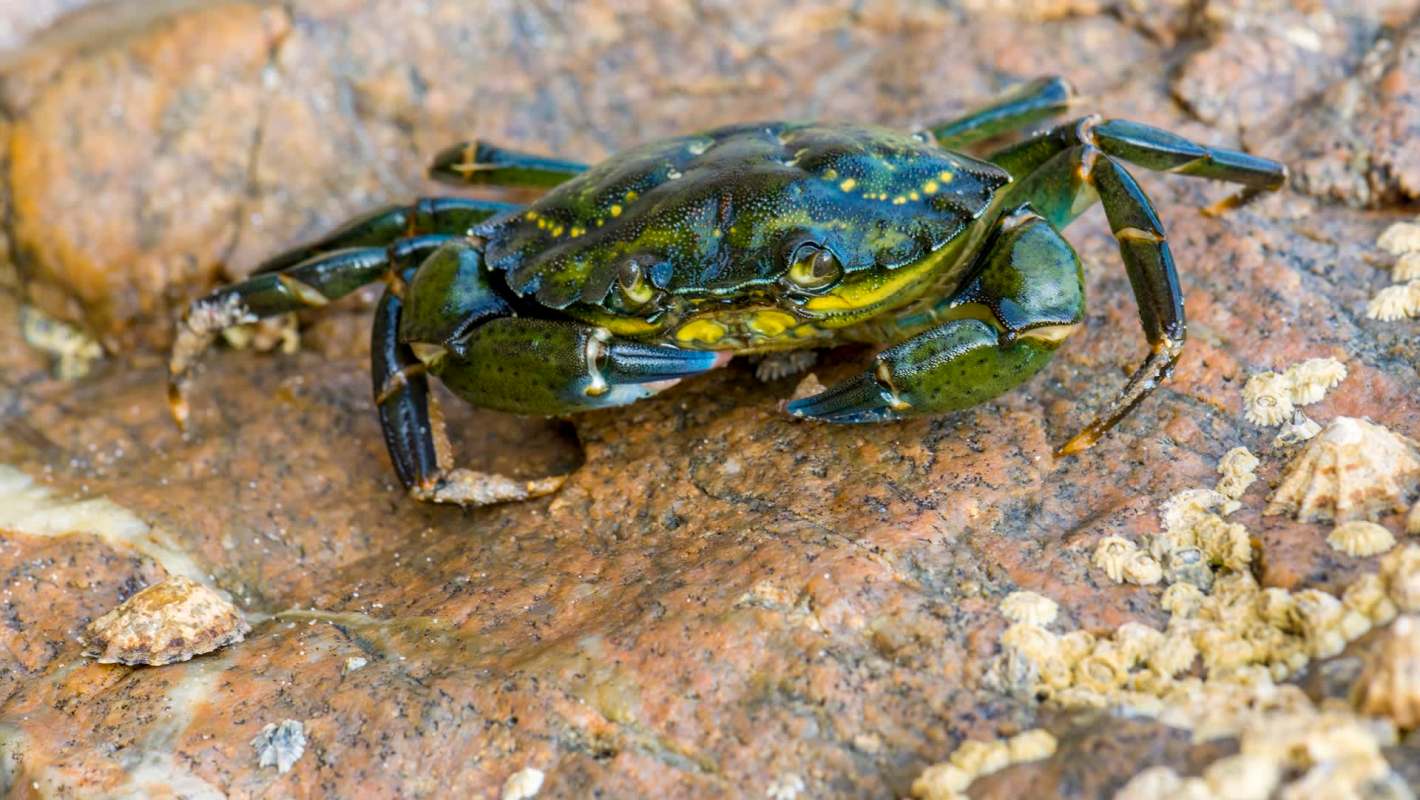
Washington trapped over 2 million invasive European green crabs in one year — more than the combined catch from earlier years.
The record haul points to a growing threat to native marine life and the shellfish industry, which depend on healthy coastal waters.
Here's what to know
The Washington Department of Fish and Wildlife's annual emergency response report documented the captures from July 2025 through June 2026, according to KUOW. The total was more than double the previous year's catch.
European green crabs were first documented in Washington in 1998.
Willapa Bay accounted for most captures, with about 1.9 million crabs trapped. Another 192,000 were caught in Grays Harbor, while 18,000 were captured in North Puget Sound.
Scientists do not know how many of the invasive crabs live in Washington's waters.
TCD Picks » Quince Spotlight
💡These best-sellers from Quince deliver affordable, sustainable luxury for all




"We've seen some pretty dramatic increases," said Brian Turner, an aquatic invasive species researcher with the department, according to KUOW. "It's not good news."
More background
KUOW reported that European green crabs eat juvenile salmon as well as oysters, mussels, and clams. Washington's highest-value commercial fishery depends on Dungeness crabs, whose young also fall prey to the invaders.
The threat to the shellfish industry prompted former Gov. Jay Inslee to declare an emergency in 2022.
Emily Grason, a crab researcher with Washington Sea Grant, told KUOW that efforts to market the crabs' meat or shells have largely fallen short. The animals are about 60% shell, and researchers have yet to find a cost-effective way to separate the meat.
Juvenile green crabs thrive in warmer waters, Turner said.
Willapa Bay experienced unusually warm winter temperatures, Turner noted. He also expects El Niño's warming effects to encourage more green crabs.
What's being done?
State and federal agencies spent at least $8 million to combat European green crabs in Washington during the 2025-2026 fiscal year.
Grason estimated that about 500 professionals and volunteers set and check traps. Most captured crabs become compost.
Paxton Erwin, a seventh-grader at Orcas Island Middle School, discovered the first green crab recorded on the island during a marine science field trip in May.
"It was a bummer to find it because they're bad for our environment but also kind of good that we know they're here," Erwin said, according to KUOW.
Turner has also instructed managers to watch for young green crabs that are too small to trap. Those sightings could indicate that warm water spreading north with El Niño is bringing another crop of the invasive animals to Washington's waters.
"This is a species that's repeatedly changed the ecology and the economy of marine shorelines around the world," Grason said. "This is not a species that we're going to 100% eradicate in our state in the near future. But slowing down the invasion and figuring out how to best protect resources is worth, I think, a lot."
Where can I learn more?
Washington isn't the only place working to limit the damage from invasive animals.
• In Florida, divers removed 36,187 invasive lionfish from state waters in a record-setting sweep.
• In Colorado, invasive snails that clone themselves were confirmed in Carter Lake, triggering boat checks.
• In Samoa, native snail populations crashed after a flatworm was introduced to control invasive snails.

Get TCD's free newsletters for easy tips, smart advice, and a chance to earn $5,000 toward home upgrades. To see more stories like this one, change your Google preferences here.







