


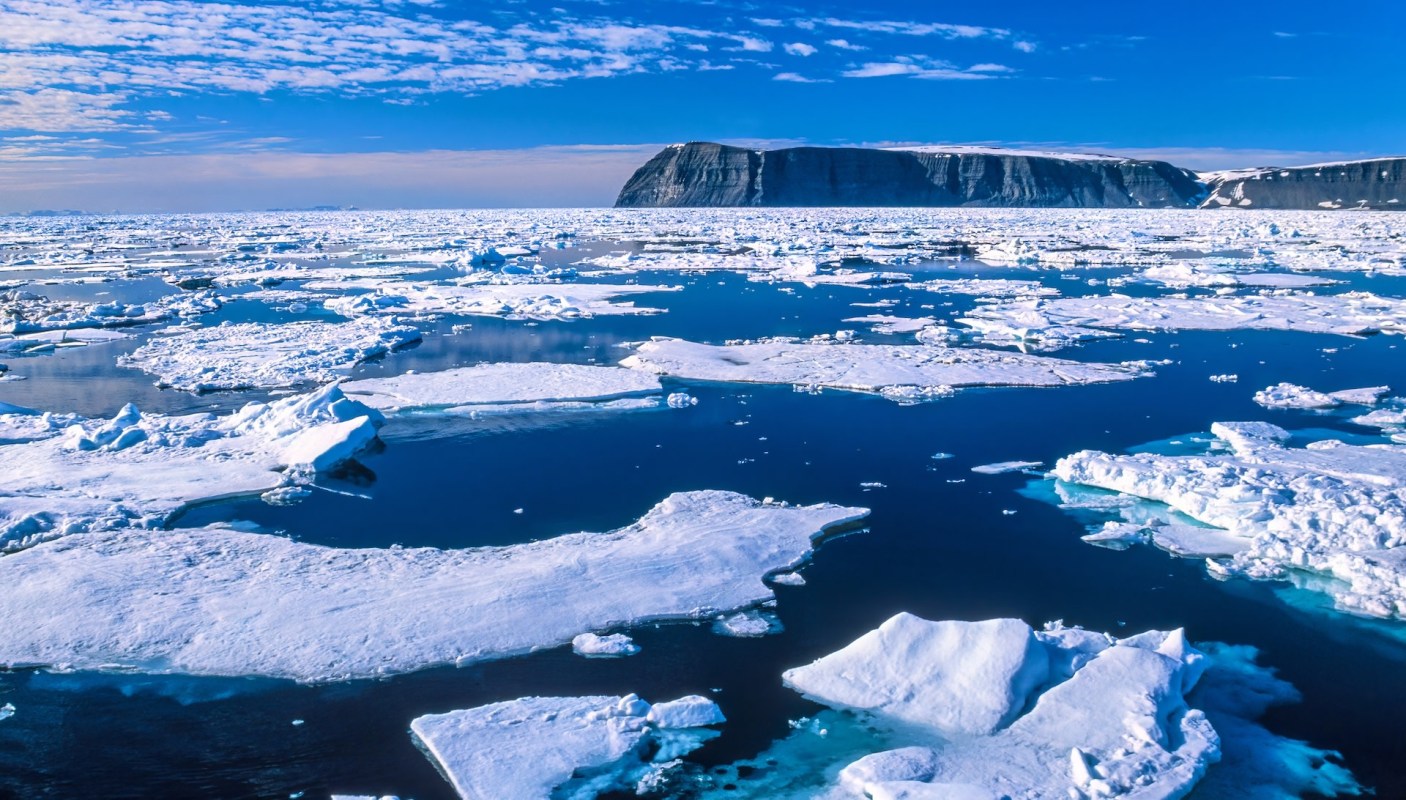
A research team examined how increasing Arctic rainfall is driving significant changes — and the implications hit closer to home than some might think.
What's happening?
The researchers used climate model simulations to study how sea-ice retreat impacts summer rainfall patterns. The results, published in Geophysical Research Letters, showed that rainfall would increase by 17% if global temperatures rise to 2 degrees Celsius (3.6 degrees Fahrenheit) above preindustrial levels, with 16% of the uptick attributed to sea-ice retreat.
This is because melting sea ice alters the "white cold cap" effect, weakening the region's ability to reflect solar radiation and thus pushing the Arctic toward a warmer, "rain dominated" water cycle, according to a Chinese Academy of Sciences (CAS) analysis published in Phys.org.
Researchers from the CAS' Northwest Institute of Eco-Environment and Resources, Beijing Normal University, and the University of Chinese Academy of Sciences also participated in the study.
Why is this important?
First author Yang Jiao explained that in the Arctic, animals that depend on sea ice for food and shelter, such as reindeer and polar bears, would "face survival crises," per Phys.org. These crises would disrupt the region's ecological balance, which is vital for limiting disease spread and supporting the food web.
And what happens in the Arctic wouldn't stay in the Arctic. Increased rainfall would accelerate permafrost thawing, releasing additional gases that warm the planet, per the study.
While extreme weather phenomena occur naturally — and events can't be solely tied to a warming planet, as complex factors influence weather, per the NOAA — human activities are pumping billions of tons of heat-trapping gases into the atmosphere each year.
This has led to more intense extreme weather, according to scientific consensus. At home, this can mean sky-high insurance premiums, shortages of essential goods, and a higher risk of grid outages.
What's being done about this?
The researchers believe their insights into this critical climate issue could help in developing more accurate predictive models for Arctic weather.
"This study not only deepens our understanding of the warming and humidification processes in the Arctic, but also establishes a quantitative relationship model of 'sea ice-precipitation,' providing a powerful tool for enhancing the prediction capability of extreme weather and climate events in the Arctic," Yang said, per Phys.org.
TCD Picks » Quince Spotlight
💡These best-sellers from Quince deliver affordable, sustainable luxury for all




|
Should we be pouring money into nuclear fusion technology? Click your choice to see results and speak your mind. |
 Yes — it'll pay off 👍
Get TCD's free newsletters for easy tips to save more, waste less, and make smarter choices — and earn up to $5,000 toward clean upgrades in TCD's exclusive Rewards Club.
Cool Picks






