



Student volunteers at the University of Wisconsin-Madison gathered to remove litter after photos of post-party trash scattered on a frozen Lake Mendota circulated online.
What happened?
Per The Badger Herald, the UW-Madison Sigma Alpha Epsilon fraternity generally holds the Lily's Classic fundraiser and hockey event on the ice each year to raise money for epilepsy research. This year, the event was canceled after SAE said it could not comply with UW administration requirements to address safety concerns.
Hundreds of people gathered at Lake Mendota to celebrate despite the event's cancellation, but trash was left all over the ice, as was visible in online photos.
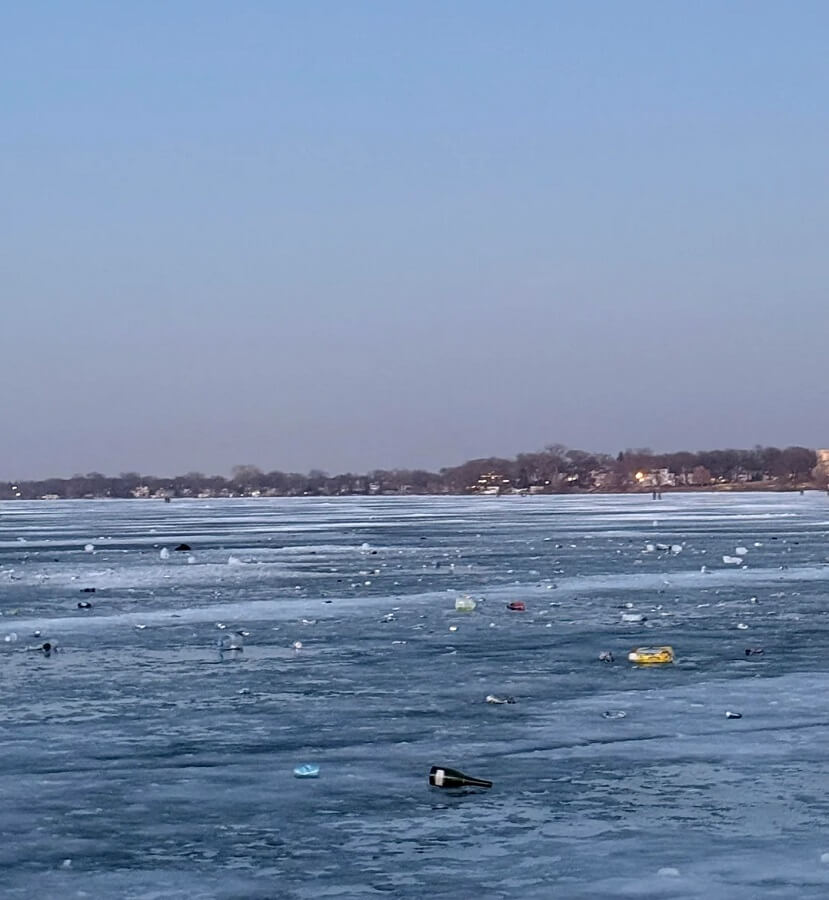
The Badger Herald reported that some volunteers showed up with trash bags after seeing the destruction and helped clean up the mess.
"The lake is part of our community, and covering it in trash just shows zero respect for the lake," Hilary Dugan, a UW expert in lake water quality and lake ice, told The Badger Herald. "These are lessons to be learned … one bottle [might not] have a huge impact, but these build up and persist over time."
Why is minimizing waste important?
Reducing waste can lower the amount of material that winds up in landfills and that escapes to our natural surroundings. According to the U.S. Environmental Protection Agency, there were more than 292 million tons of municipal solid waste generated nationwide in 2018. Of that amount, more than 146 million tons were sent to landfills.
A significant amount of trash also reaches the environment each year as litter. A study by Keep America Beautiful estimated that, in 2020, U.S. roadways and waterways were lined with almost 50 billion pieces of litter and that there were more than 2,000 pieces of litter per mile.
Minimizing waste helps with conservation efforts for our natural resources, according to The Sustainability Directory. By recycling or reusing materials, we can also reduce the need to extract new resources through methods such as deforestation, which promotes habitat loss.
Waste can impact wildlife too. Per NPR, the equivalent of 2,000 full garbage trucks worth of plastic gets dumped daily into oceans worldwide. Scientists cited by the news outlet said that eating just a handful of plastic can lead to death for marine animals.
What's being done about reducing waste?
The EPA reported that Americans recycled somewhat more than 23% of municipal waste in 2018. However, the agency estimated that Americans could be recycling as much as 75% of the trash produced, per NBC News. Knowing your recycling options can help keep trash out of landfills.
TCD Picks » Quince Spotlight
💡These best-sellers from Quince deliver affordable, sustainable luxury for all




|
Which of these savings plans for rooftop solar panels would be most appealing for you?
Click your choice to see results and earn rewards to spend on home upgrades. |
 Save $1,000 this year 💸
 There are several steps we can take to reduce waste in our everyday lives. Replacing single-use plastics with reusable containers is an easy way to keep plastic out of the environment.
Composting is another option to reduce biodegradable waste and help keep leftover food out of landfills. Meanwhile, composting your food scraps can help your plants and save you money on fertilizer.
As for the litter on Lake Mendota, Dugan was among those who expressed disappointment with the mess but encouragement that there was a cleanup that represented the community more positively.
"We almost never see what we saw in these pictures on Sunday, which is people just throwing a ton of trash in one area," she told The Badger Herald. "What's special about living in Madison is people really respect the environment here and tend to pick up trash."

Get TCD's free newsletters for easy tips to save more, waste less, and make smarter choices — and earn up to $5,000 toward clean upgrades in TCD's exclusive Rewards Club.
Cool Picks






