


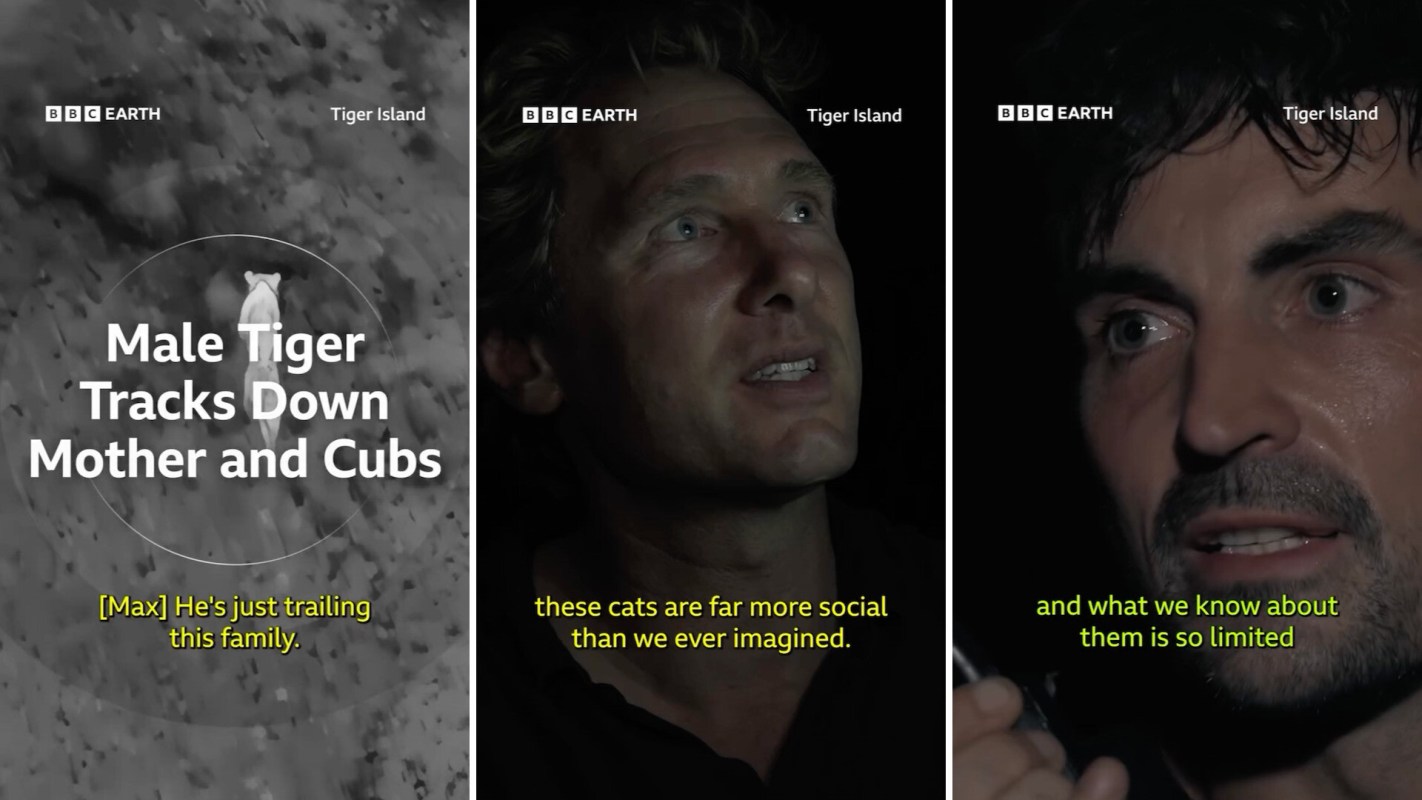
A wildlife video posted on BBC Earth's (@bbcearth) Instagram account is prompting viewers to look at tigers differently.
By highlighting an encounter that complicates the usual portrayal of the species as solitary, the clip suggests there may be more to learn about how these animals relate to one another.
What happened?
In an Instagram post about the footage, the account presents the sighting as a challenge to older ideas about tiger behavior.
"Every now and then, nature rewrites the script," BBC Earth's caption writes to set up the footage.
In it, a male tiger is being tracked by the BBC crew on Tiger Island using thermal cameras. While they expect the male to initiate a hostile interaction with the mother and its cubs, the tiger has different plans.
Instead of prompting defensive behavior from the mother and the cubs, the family relishes the moment. The cub greets the father, and the cub's mother is receptive to the visit as well.
TCD Picks » Quince Spotlight
💡These best-sellers from Quince deliver affordable, sustainable luxury for all




Members of the BBC Earth crew documenting the moment are taken aback and awestruck at the surprise twist.
"For decades, tigers were thought to be solitary animals," the caption explains. "However, encounters like this reveal there is still much to discover about their lives and relationships."
Why does it matter?
When a clip challenges a long-held belief about how a species behaves, it can help people see conservation as an evolving field rather than a finished body of knowledge.
In this case, the idea that tigers may have richer relationships than commonly assumed can spark greater curiosity about how they live, raise young, and use their habitat.
Protecting tiger habitat helps preserve forests that store carbon, support biodiversity, and safeguard water sources that nearby communities depend on.
A better understanding of tiger behavior can also strengthen public support for conservation efforts, ecotourism, and research that bring resources and attention to the places these animals call home.
The more people see wild animals as complex beings rather than distant symbols, the more likely they are to support policies and projects that protect ecosystems for future generations.
What are people saying?
Commenters on Instagram enjoyed the familial moment.
"Millennial dads.. changing the game," one quipped.
There was some pushback on the idea that the phenomenon of male tigers interacting positively with the cubs was entirely new.
"This is actually well known, that at least some male tigers are attentive fathers," a commenter suggested. "Nonetheless it's always nice to see, especially with thermal cameras."
"Tigers are solitary but every now and then they are surprisingly social and have a big range of vocalizations and Body language," a user said. "Male tigers are surprisingly gentle towards their cubs."

Get TCD's free newsletters for easy tips, smart advice, and a chance to earn $5,000 toward home upgrades. To see more stories like this one, change your Google preferences here.







