


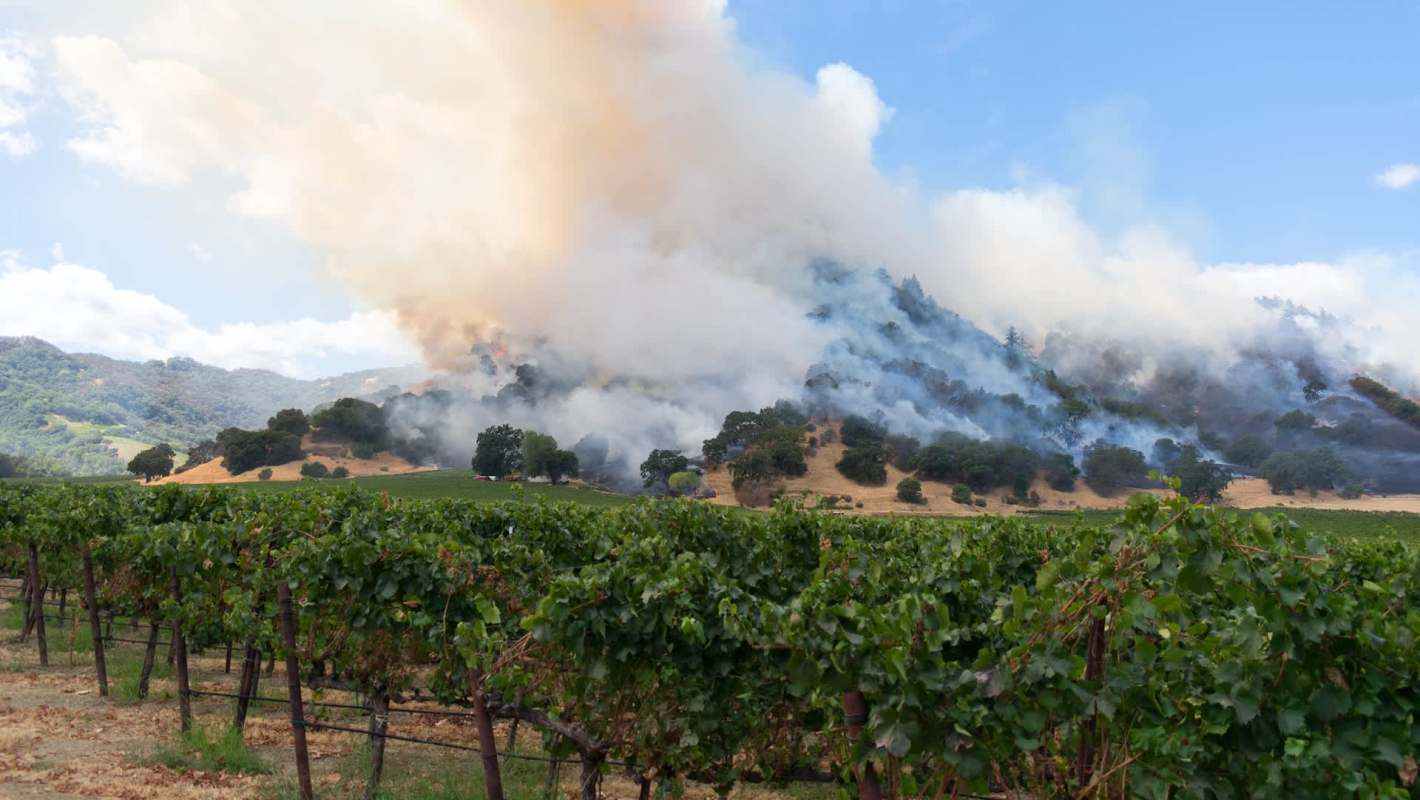
As wildfires intensify across Europe, an unlikely climate adaptation tool is drawing growing attention: vineyards.
In Catalonia, Spain, one family-run vineyard reportedly helped stop a 2017 blaze in its tracks, underscoring how certain agricultural landscapes can slow the spread of fire.
Researchers and growers in Spain are pointing to vineyards, truffle farms, and apiaries as potential buffers against destructive wildfires.
At Celler Abadal, an 800-year-old vineyard in Catalonia, flames tore through nearby forest in 2017 but stopped when they reached the grapevines, according to The New York Times.
That outcome is tied to the way vineyards are laid out. Green vines are harder to ignite than dry brush, rows are kept clear, and the bare or lightly vegetated ground between plantings can interrupt a fire's path. Some vineyards also maintain water connections and access roads in remote areas, which can help firefighters respond more quickly.
Europe had its most severe wildfire season last year since records began in 2006, with nearly 2.5 million acres burned. And in 2026, the acreage burned so far is already above the historical average.
TCD Picks » Quince Spotlight
💡These best-sellers from Quince deliver affordable, sustainable luxury for all




Wildfires are becoming more dangerous as rising temperatures and worsening drought dry out landscapes and lengthen fire seasons. That threatens homes, farms, ecosystems, and local economies, especially in places where forests and agriculture coexist.
The Forest Science and Technology Center of Catalonia has begun issuing "Fire Wine" and "Fire Product" labels to vineyards and other farms that use practices intended to reduce wildfire risk.
Celler Abadal became the first winemaker to receive the designation, which is meant to function somewhat like an organic label by rewarding better practices and helping shoppers identify them.
So far, six vineyards in Catalonia and two in Galicia have been awarded the "Fire Wine" label, with about 30 more producers going through accreditation.
The model has also drawn interest from southern France, Bulgaria, and the Canary Islands, and European Union officials say it could be adapted for other fire-prone regions.
It offers practical guidance and a possible market incentive to maintain buffer zones, reduce excess vegetation, improve water access, and manage surrounding forested land more actively.
"We are not only producing wine. We are producing security," researcher Elena Górriz Mifsud said, per The New York Times.
And for vineyard owner Ramón Roqueta, "We have to adapt for the next eight centuries."

Get TCD's free newsletters for easy tips, smart advice, and a chance to earn $5,000 toward home upgrades. To see more stories like this one, change your Google preferences here.







