


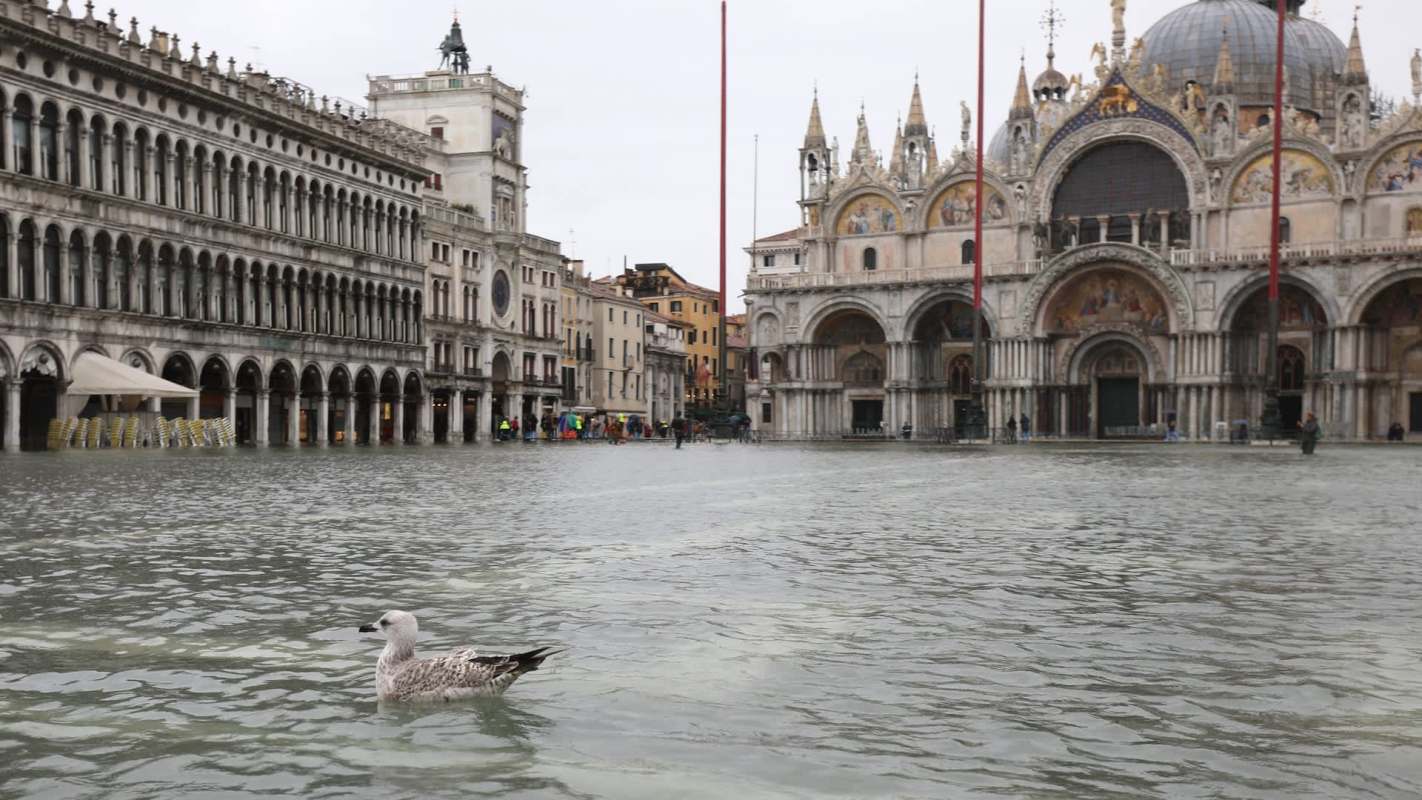
Researchers have found that Venice is so vulnerable to sea-level rise that the city may eventually be accessible only via submarine or other watercraft.
What's happening?
In a concerning study, published in the journal Nature in April, researchers from several European universities collaborated to investigate Venice's options for adapting to worsening sea-level rise.
Located in north-east Italy, Venice is famous for its extensive canal system that runs through its neighborhoods. Because of that, it is in a vulnerable position as water levels in the Adriatic Sea creep higher.
The scientists compared four strategies to deal with varying amounts of sea-level rise.
The first strategy, called "open lagoon," represents the simplest method for dealing with rising tides. It uses Venice's current mobile barrier system (MoSE) to block off the lagoon during high waters. Because it relies on the current MoSE system, it would be the cheapest path.
Unfortunately, the researchers noted that "its effectiveness rapidly diminishes as relative sea level rise [worsens]." They added that the strategy would "encounter hard limits within the current century."
TCD Picks » Quince Spotlight
💡These best-sellers from Quince deliver affordable, sustainable luxury for all




The second strategy, ring diking, would enclose the city from the rest of the lagoon in which it is located. But while this strategy may protect the lagoon ecosystem, according to the researchers, the "impacts of ring-diking would be non-negligible on tourism," and "propensity to live in Venice could be affected."
The third strategy would fully transform the lagoon into a lake, creating a bigger sea-level rise defense system (a "super levee") but causing unavoidable "ecosystem and biota losses."
The fourth and final strategy is to have residents retreat from Venice altogether, bringing some culturally important monuments to inland Italy. The researchers acknowledged that this is the most extreme and costly strategy, amounting to around $118 billion, but it will be necessary eventually.
Piero Lionello, the study's first author, explained to The Times that the abandonment of Venice, the fourth strategy, was inevitable.
|
Which of these savings plans for rooftop solar panels would be most appealing for you?
Click your choice to see results and earn rewards to spend on home upgrades. |
 Save $1,000 this year 💸
 "There are things we can do to delay this scenario, but they will not work forever — the future appears unavoidable," Lionello said.
What's next?
Three of the study's lead researchers penned an article about their analysis in The Conversation.
"Our analysis shows there is no optimal adaptation strategy," they concluded. "Any approach involves trade-offs between the well-being and safety of Venice's residents, economic prosperity, the future of the lagoon's ecosystems, heritage preservation, and the region's traditions and cultures."
But beyond Venice, the study's authors noted that while the city is facing intense environmental issues, it is beginning to plan for a future with higher sea levels, something that cannot be said about many coastal communities.

Get TCD's free newsletters for easy tips, smart advice, and a chance to earn $5,000 toward home upgrades. To see more stories like this one, change your Google preferences here.







