


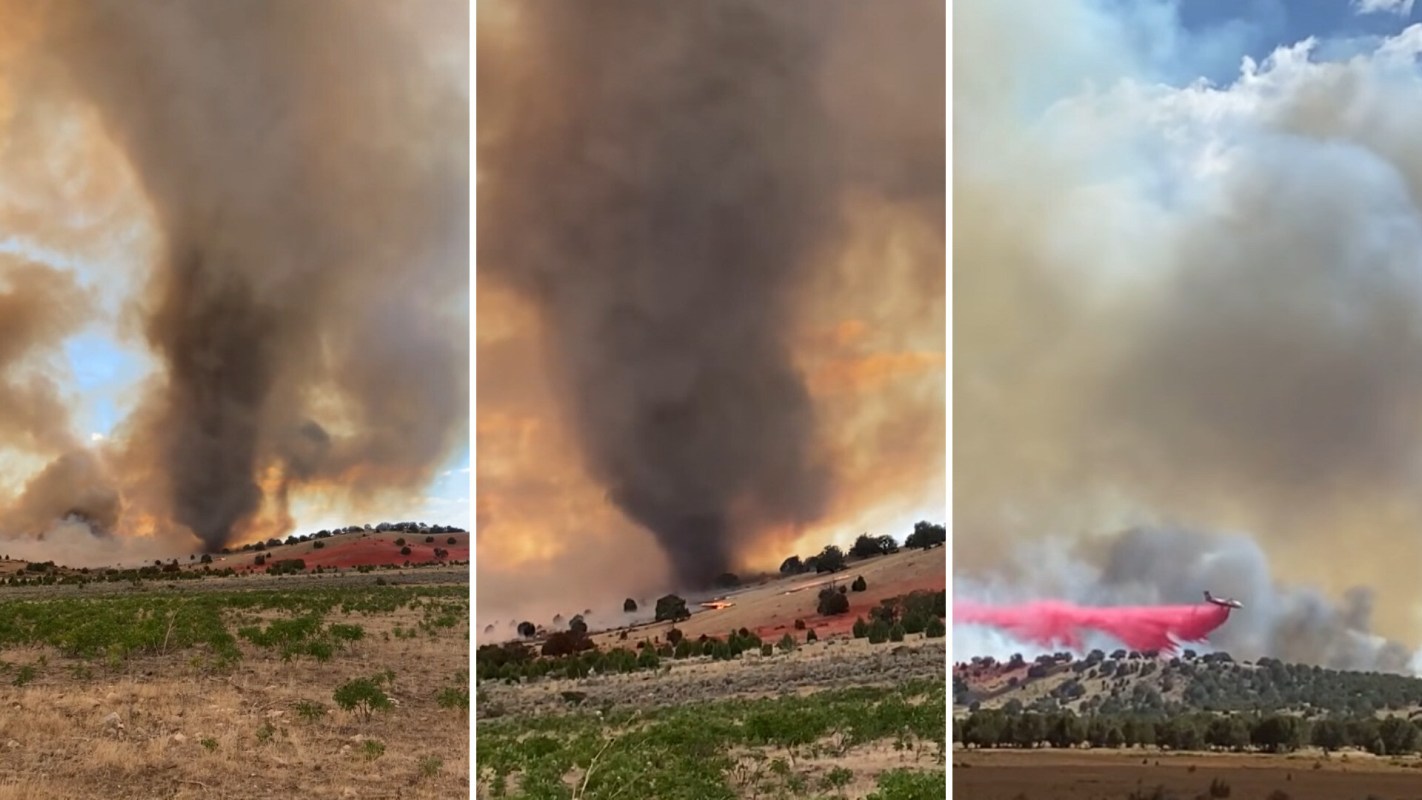
A wildfire in Utah produced one of the most dramatic and dangerous sights a fire can create: a firenado.
What happened?
In eyewitness footage shared by CNN (@CNN) on TikTok, the Widemouth 2 wildfire in Fishlake National Forest sends up a swirling tower of smoke, widely known as a firenado.
@cnn A wildfire in a Utah National Forest spawned a large "firenado." #weather #firenado #utah ♬ original sound - CNN
While the term "firenado" may sound like it's something out of a movie, the phenomenon itself is real. Fire whirls can form when intense heat from a blaze combines with dry air and unstable winds, which causes flames, ash, and smoke to become a vortex.
"This is a horrible fire year for us in Utah. My prayers go out to the firefighters of these fires," one commenter wrote.
According to real-time situational awareness platform Western Fire Chiefs, the Widemouth 2 fire had burned over 5,900 acres and was only 15% contained as of late Wednesday.
Why is this concerning?
The startling footage shows just how quickly wildfires can become horrifically destructive.
TCD Picks » Quince Spotlight
💡These best-sellers from Quince deliver affordable, sustainable luxury for all




A firenado is a sign that a wildfire is burning hot and erratically enough to generate its own dangerous, weather-like behavior.
Fast-moving blazes threaten homes and wildlife habitats. Smoke can also drift far from the flames, worsening air quality and increasing health risks for everyone. They pose an especially large risk for children, older adults, and people with respiratory or heart conditions.
Hotter, drier conditions can help wildfires grow more intense. And stronger, less predictable fire behavior makes emergency responses and recovery even harder.
What can I do?
When fires are active nearby, rely on official alerts rather than social media clips for guidance. Local emergency managers and fire agencies can provide evacuation notices, road closures, shelter information, and air-quality updates in real time.
It also helps to prepare before an emergency begins. That can mean signing up for community alerts, keeping a go bag ready, knowing multiple evacuation routes, and having masks or air filters available.
For homeowners in wildfire-prone areas, clearing dry brush and using fire-resistant materials where possible can reduce risk. Those measures will not stop a major wildfire on their own, but they can improve safety and buy valuable time.
As for firefighters and land managers, they're using forest-thinning projects, prescribed burns, and vegetation management to lower the odds of the most explosive fire behavior.

Get TCD's free newsletters for easy tips, smart advice, and a chance to earn $5,000 toward home upgrades. To see more stories like this one, change your Google preferences here.







