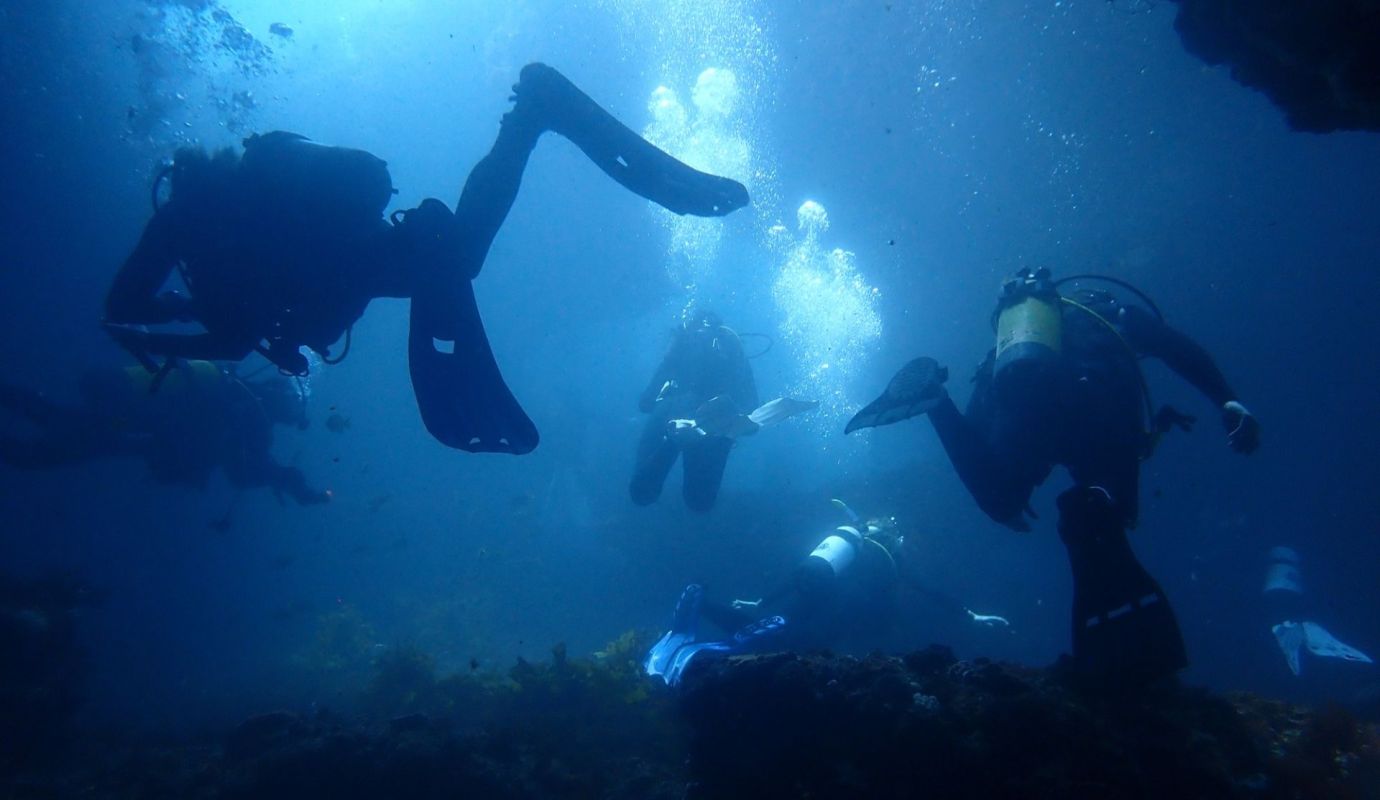
"Underwater hotels" placed in coral reefs off the coast of Guam in 2018 have finally been retrieved, and they revealed 20 new species of marine creatures.
According to IFL Science, the team of scientists retrieved autonomous reef monitoring structures that they placed among Guam's coral reefs about seven years ago. ARMS are like artificial reefs made from stacked PVC plates and act as habitats for sea creatures.
The California Academy of Sciences' ichthyology curator, Luiz Rocha, explained in a statement, "The autonomous reef monitoring structures, or ARMS … are essentially small underwater hotels that coral reef organisms colonize over time," via IFLS.
The ARMS help researchers study activity in the mesophotic zone, or "twilight zone," which is generally thought to span depths of about 100 to 500 feet below the surface.
The twilight zone covers the globe, but is difficult to study. Sunlight doesn't reach this ocean layer, but it's not completely dark either. And humans can only spend about 15-25 minutes there due to logistical challenges associated with depressurization.
When scientists retrieved 13 of these underwater hotels, they collected 2,000 specimens, 100 of which had never been found in that region, and 20 of which had never been discovered before.
Save $10,000 on solar panels without even sharing your phone number Want to go solar but not sure who to trust? EnergySage has your back with free and transparent quotes from fully vetted providers that can help you save as much as $10k on installation. To get started, just answer a few questions about your home — no phone number required. Within a day or two, EnergySage will email you the best local options for your needs, and their expert advisers can help you compare quotes and pick a winner. |

Some of the newly discovered species included a polka-dotted baby octopus, a yellow-spotted sea slug, an orange cardinalfish, and more quirky-looking creatures, per Mongabay News.
The ARMS also captured three years of temperature data, giving researchers insight into changes in the upper twilight zone. The data shows that the water is growing steadily warmer, likely caused by pollution, fishing, and other human-related factors.
This information helps inform conservation efforts, which currently focus mostly on coastal and shallow areas. The data is evidence that deeper parts of the ocean need protection, too.
Reefs can be repaired, and some deep-sea reefs have even evaded the effects of pollution. But most reefs are vulnerable, including ones in the twilight zone.
TCD Picks » Quince Spotlight
💡These best-sellers from Quince deliver affordable, sustainable luxury for all




|
Should we be harnessing the ocean to power our homes? Click your choice to see results and speak your mind. |
 Absolutely 👍
 Robert Lasley Jr., curator of crustacea at the University of Guam, said, "Our findings highlight the complexity and richness of mesophotic ecosystems and underscore their need for protection," per Mongabay.
Rocha echoed this sentiment, stating, "Most marine protected areas only cover shallow reefs, pushing human-driven pressures towards deeper waters. … Our goal is to show just how beautiful, unique, and valuable these ecosystems are so we can safeguard them before it's too late," via IFLS.

Get TCD's free newsletters for easy tips to save more, waste less, and make smarter choices — and earn up to $5,000 toward clean upgrades in TCD's exclusive Rewards Club.
Cool Picks