


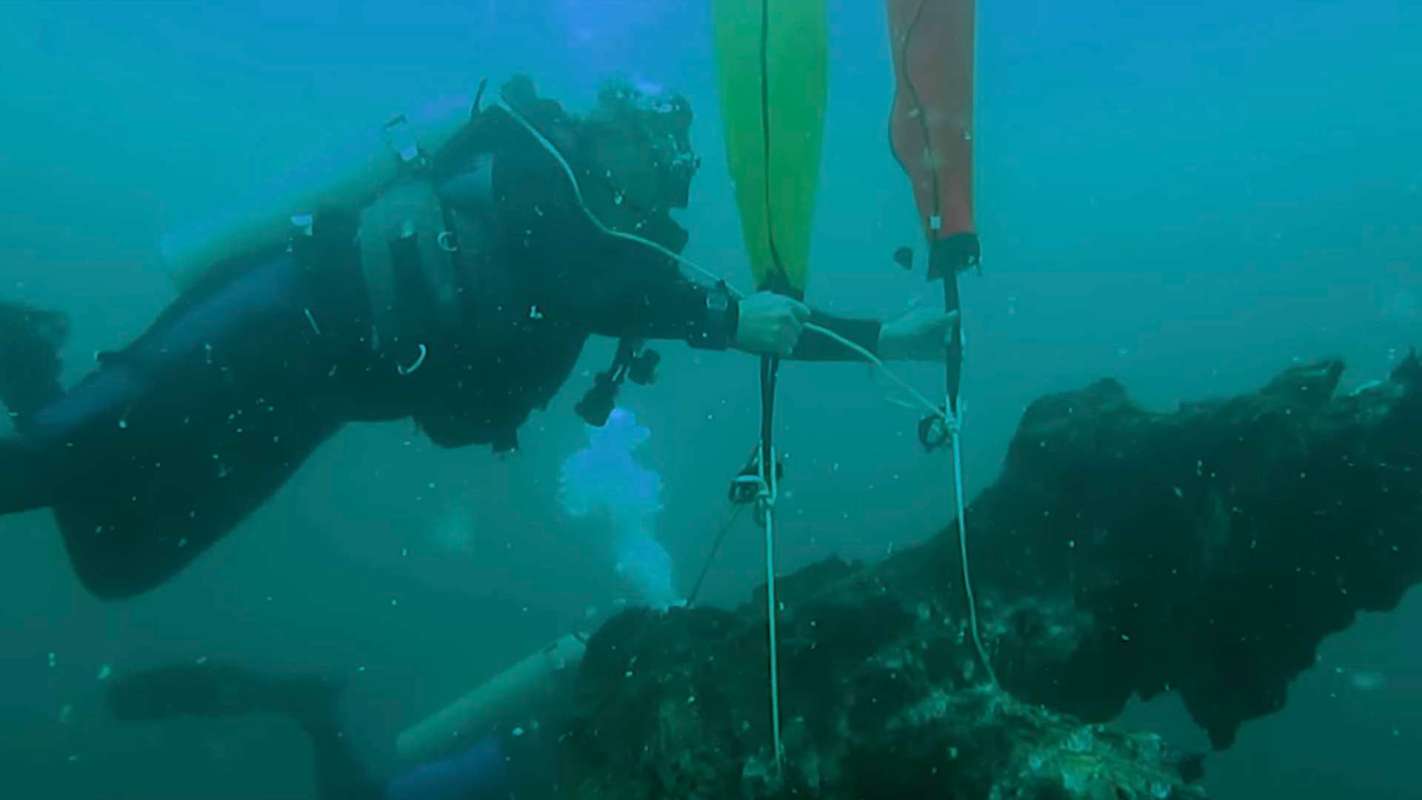
A team of scientists took a closer look at an underwater forest off the coast of the United States in the Gulf of Mexico. Their research revealed not only invaluable information about the past but also a potential warning for the planet's future.
What's happening?
Published in February 2025 in the Climate and Atmospheric Science journal, the study explored an underwater cypress forest in the northern Gulf of Mexico off the coast of Alabama.
Thanks to the discovery of well-preserved bald cypress remains, scientists were able to study the trees' growth rings and create a detailed model of the environment around 75,000 years ago.
Led by Grant Harley, associate professor of geography at the University of Idaho, the team of researchers developed a 489-year chronology using the tree rings. Leveraging this data, they could better understand how plant life changed year by year, discovering evidence that many of the trees suddenly died during a major disaster.
The scientists say the disaster may have been caused by powerful storms or large changes in ocean and freshwater bodies linked to major climate events rather than by more gradual sea level rise.
Why is this research important?
In a March 2025 news release from the University of Idaho, Harley emphasized the significance of the team's research.
"These findings allow us a rare glimpse into past climatic conditions and help us better understand the historical impact of climate change on coastal ecosystems," Harley said.
According to the study's co-authors, "freshwater fluxes from Heinrich events" could have been the main driver of the surge in intense storms. These events occur when large numbers of icebergs break off from glaciers and ice sheets and the resulting meltwater adds large volumes of freshwater to the ocean.
As global temperatures continue to rise, Arctic ice sheets may become increasingly vulnerable to further melting. This could provide even more fuel for storms, potentially causing severe flooding and shoreline erosion.
What's being done about sea level rise?
This look back into the past could prove a useful tool for developing accurate climate models that forecast future sea level rise and its impact on coastal communities.
TCD Picks » Upway Spotlight
💡Upway makes it easy to find discounts of up to 60% on premium e-bike brands





|
What's the most you'd pay per month to put solar panels on your roof if there was no down payment?
Click your choice to see results and speak your mind. |
 $200 or more 💰
 "Studying these rapid changes to Earth's climate back then will help us better understand how fast climate change might occur during this period of unprecedented warming to our planet," Harley said in the release.
The researcher continued, "This study not only adds to the field of paleoecology but also enhances our understanding of how coastal ecosystems have adapted to and been shaped by climatic events over thousands of years."
By raising awareness about the strength and volatility of shifting weather conditions, coastal communities may be able to implement more effective mitigation strategies to protect against encroaching waters. In some regions, officials are already turning to natural barriers, such as mangroves and wetlands, to help combat sea level rise.

Get TCD's free newsletters for easy tips to save more, waste less, and make smarter choices — and earn up to $5,000 toward clean upgrades in TCD's exclusive Rewards Club.
Cool Picks






