


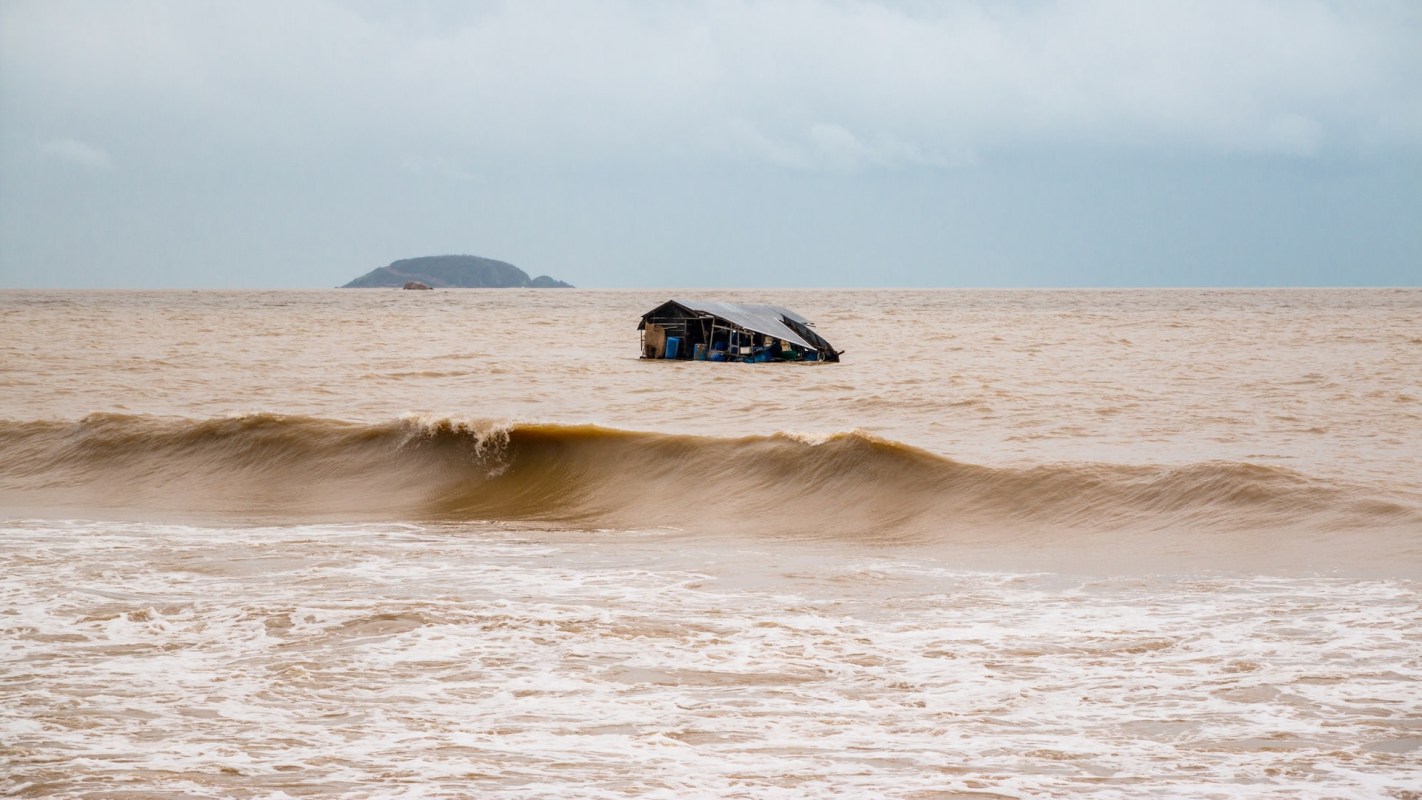
As Americans commemorate the important anniversaries of two of the country's most notorious hurricanes this week, nearly 9,000 miles away, a typhoon in Southeast Asia killed at least nine people.
Typhoon Kajiki made landfall in Vietnam on Monday, packing winds of between 73 and 82 mph. The Nghe An and Ha Tinh provinces bore the brunt of the storm's impacts in Vietnam. Flooding from torrential rain triggered landslides, killing at least nine across Vietnam and Thailand and injuring more than 30 others.
"Normally we get storms and flooding, but never this big," evacuated resident Nguyen Thi Nhan told the AFP news agency, per BBC News.
The death toll would have been a lot higher if not for evacuations ordered in advance of the storm striking central Vietnam. Officials ordered thousands of people living in high-risk areas to leave their homes prior to the storm's arrival. Almost 600,00 residents of the coastal province of Ha Tinh were ordered to evacuate.
Typhoon Kajiki comes a little less than a month after Typhoon Wipha hammered Hong Kong with heavy rain, striking coastline around 600 miles northeast of where Kajiki made landfall. As Wipha whipped up winds of over 103 mph, Hong Kong's weather service issued the highest level of typhoon warning.
A study released last year examined the impacts of tropical cyclones on Southeast Asia's coastlines, an area characterized by high population densities within low-lying coastal environments. Scientists found warmer seas from an overheating planet mean future tropical cyclones in Southeast Asia may intensify closer to coasts, linger longer over land, and hit cities like Hai Phong, Yangon, and Bangkok harder.
Typhoon Kajiki is the latest in a string of devastating extreme weather events, the severity of which has been consistently linked to our warming world.
Kajiki struck on the eighth anniversary of Hurricane Harvey, which made landfall near Rockport, Texas. Harvey sat and spun over the Houston area for almost three days, causing catastrophic flooding as the storm squeezed out up to 60 inches of rain in some spots. Hurricane Harvey was responsible for 89 direct deaths, the most from a tropical cyclone in Texas since 1919.
There is also an anniversary this week of the second-deadliest hurricane on record in the U.S. Hurricane Katrina struck the Gulf Coast near the Louisiana-Mississippi border 20 years ago this week, killing an estimated 1,833 people.
Katrina's power peaked when it strengthened to a Category 5 hurricane with maximum sustained winds of 175 mph.
TCD Picks » Quince Spotlight
💡These best-sellers from Quince deliver affordable, sustainable luxury for all




|
Do you think your house could withstand a hurricane? Click your choice to see results and speak your mind. |
 No way 😨
 Researchers with non-profit Climate Central say Katrina was supercharged by warmer waters brought on by an overheating planet.
"Our analysis determined that climate change made these ocean temperatures up to 18 times more likely and, along with tropical climate warming, increased Katrina's maximum sustained wind speed by 5 mph," a recent Climate Central analysis concluded.
A preliminary report from Climate Central on the only Atlantic hurricane so far this season found it was also intensified by a warming world. Hurricane Erin was a major Category 5 hurricane that peaked with 160 mph sustained winds on August 16. Erin's winds jumped around 85 mph in a little over 24 hours as it underwent rapid intensification.
"This rapid strengthening occurred as the storm passed over exceptionally warm ocean waters made 2°F (1.1°C) warmer, on average, and up to 100 times more likely due to human-caused climate change," according to the report.
Researchers also say Erin's top wind speed was boosted by about 9 mph, thereby increasing the storm's potential damage by up to 50% as a result of ocean temperatures warmed by an overheating planet.

Join our free newsletter for good news and useful tips, and don't miss this cool list of easy ways to help yourself while helping the planet.
Cool Picks






