


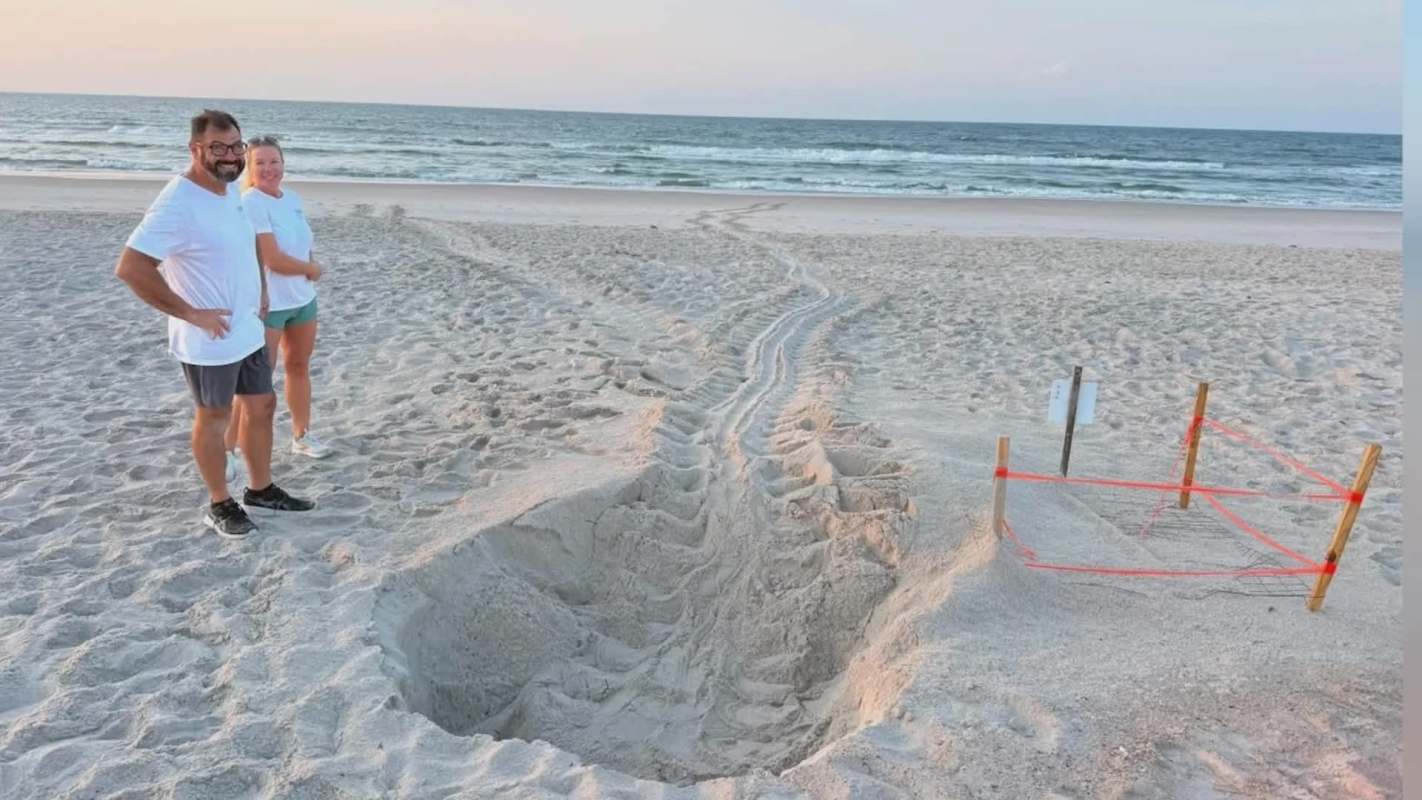
North Carolina's Topsail Island has already reached a major milestone in the 2026 sea turtle nesting season. A hundred nests have been found along its shoreline, including a rarer green sea turtle nest.
For a coastal community that depends on healthy beaches, wildlife, and volunteer stewardship, the development is an encouraging sign that local conservation efforts are paying off.
What's happening?
As the 2026 nesting season continues, the Topsail Turtle Project has been posting photos of the nest finds. WWAY identified the project as part of the Karen Beasley Sea Turtle Rescue and Rehabilitation Center.
The total has climbed to 100 sea turtle nests, with volunteers and beachgoers helping find them along the island's 26 miles of coastline, WWAY reported.
That count has already moved past Topsail Island's full 2025 season total of 91 nests, even though this year's season still has time left.
Among the recent discoveries was the season's first green sea turtle nest. On Topsail Island, green sea turtle nests are less common than loggerhead nests.
TCD Picks » Quince Spotlight
💡These best-sellers from Quince deliver affordable, sustainable luxury for all




In North Carolina, sea turtle nesting season runs from May 1 through October 31, so more nest discoveries could still happen before the season ends.
Why does it matter?
Sea turtles play an important role in coastal ecosystems.
While not every nest will produce surviving hatchlings, a higher number of nests creates more opportunities for these animals to reproduce.
Loggerheads are the more common nesters on Topsail Island, so the presence of a green sea turtle nest points to habitat used by multiple sea turtle species.
The growing count also reflects the help from volunteers and beachgoers who are assisting with spotting and protecting nests.
What can I do?
Keeping a respectful distance from marked nests, removing beach equipment at the end of the day, filling in holes, flattening sandcastles, and picking up trash can help reduce risks for nesting turtles and hatchlings.
Artificial light can disorient sea turtles, so using turtle-friendly lighting or turning off unnecessary beachfront lights can help keep hatchlings moving toward the ocean instead of away from it.
People can also volunteer with local wildlife groups, donate to sea turtle rescue organizations, or learn more about how coastal habitats are managed.

Get TCD's free newsletters for easy tips, smart advice, and a chance to earn $5,000 toward home upgrades. To see more stories like this one, change your Google preferences here.







