


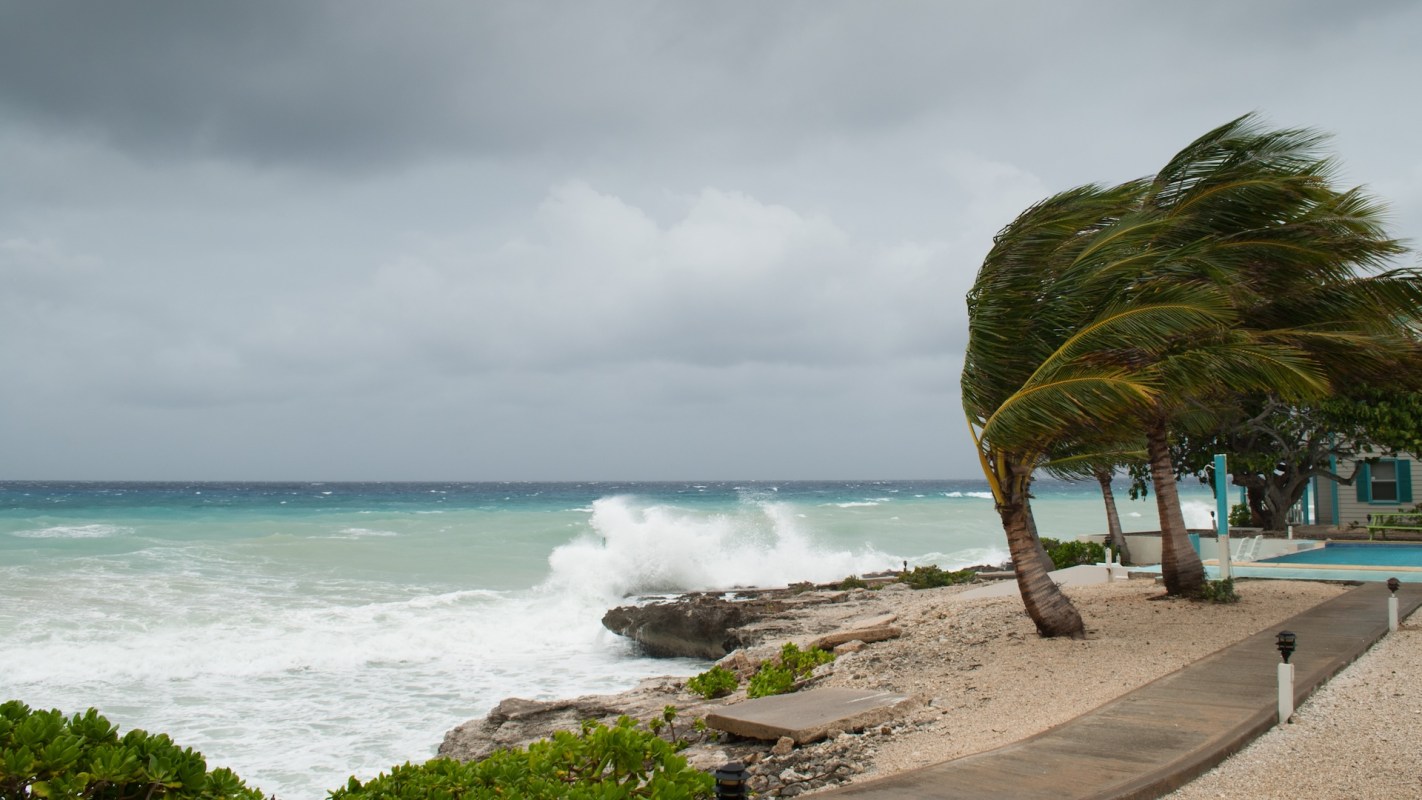
The tenth named storm of the 2025 Atlantic hurricane season formed on Tuesday, Oct. 7. Tropical Storm Jerry, moving quickly to the west in the south-central Atlantic Ocean, is expected to strengthen into a hurricane within 48 hours.
CNN reported that Jerry had maximum sustained winds of 45 mph around midday Tuesday. The tropical storm was located just over 1,300 miles east-southeast of the northern Leeward Islands.
A public advisory from the National Hurricane Center stated that Jerry will generate large swells that should reach the islands on Thursday. This will result in life-threatening surf and a rising risk of rip currents.
All the ingredients are in place for the storm to continue to strengthen. Forecasters with the NHC are calling for the storm to become a hurricane this week.
"The environmental conditions appear favorable for the system to strengthen during the next couple of days with the upper-level winds appearing light, waters quite warm, and abundant surrounding moisture," noted the NHC's first advisory for Jerry posted Tuesday morning.
It continued: "The NHC intensity forecast shows the system becoming a hurricane in a day or two before its closest approach to the northern Leeward Islands."
Jerry is forecast to be a strong Category 1 hurricane with winds between 85 and 90 mph. The storm will make its closest approach to the Leeward Islands late Thursday into early Friday.
There isn't a consensus among the computer models yet as to how Jerry will move away from the islands. The NHC forecast for now has Jerry turning northward toward Bermuda starting late Friday, Oct. 10. It also predicts that it will maintain Category 1 strength through at least Sunday morning.
The 2025 Atlantic hurricane season began on June 1 and will end in a little more than seven weeks on Nov. 30. The season has ramped up recently with three powerful storms forming in late September.
Gabrielle strengthened into a hurricane on Sept. 21. Humberto became a hurricane, northeast of the Leeward Islands, on Sept. 26. Just four days later, Imelda strengthened into a hurricane.
TCD Picks » Quince Spotlight
💡These best-sellers from Quince deliver affordable, sustainable luxury for all




|
How often do you experience power outages? Click your choice to see results and speak your mind. |
 Pretty regularly 😠
 Tropical Storm Jerry is the fourth named storm to develop in the Atlantic over the past three weeks.
While Gabrielle, Humberto, and Imelda did not make landfall in the U.S., all three storms stirred up dangerous surf, large swells, and rip currents along the East Coast. At one point in late September, alerts for either rip currents or high surf were issued to millions of people as dueling hurricanes Humberto and Imelda were spinning offshore.
The pounding surf and rising water contributed to the collapse of at least nine homes along North Carolina's Outer Banks, per WBTV.
Our warming world is amplifying extreme weather events like hurricanes.
According to Climate Central researchers, unusually warm oceans are fueling a new era of powerful Atlantic hurricanes. Their findings, published in Environmental Research: Climate, revealed nearly all storms since 2019, and all in 2024, intensified due to our overheating planet.

Join our free newsletter for good news and useful tips, and don't miss this cool list of easy ways to help yourself while helping the planet.
Cool Picks






