


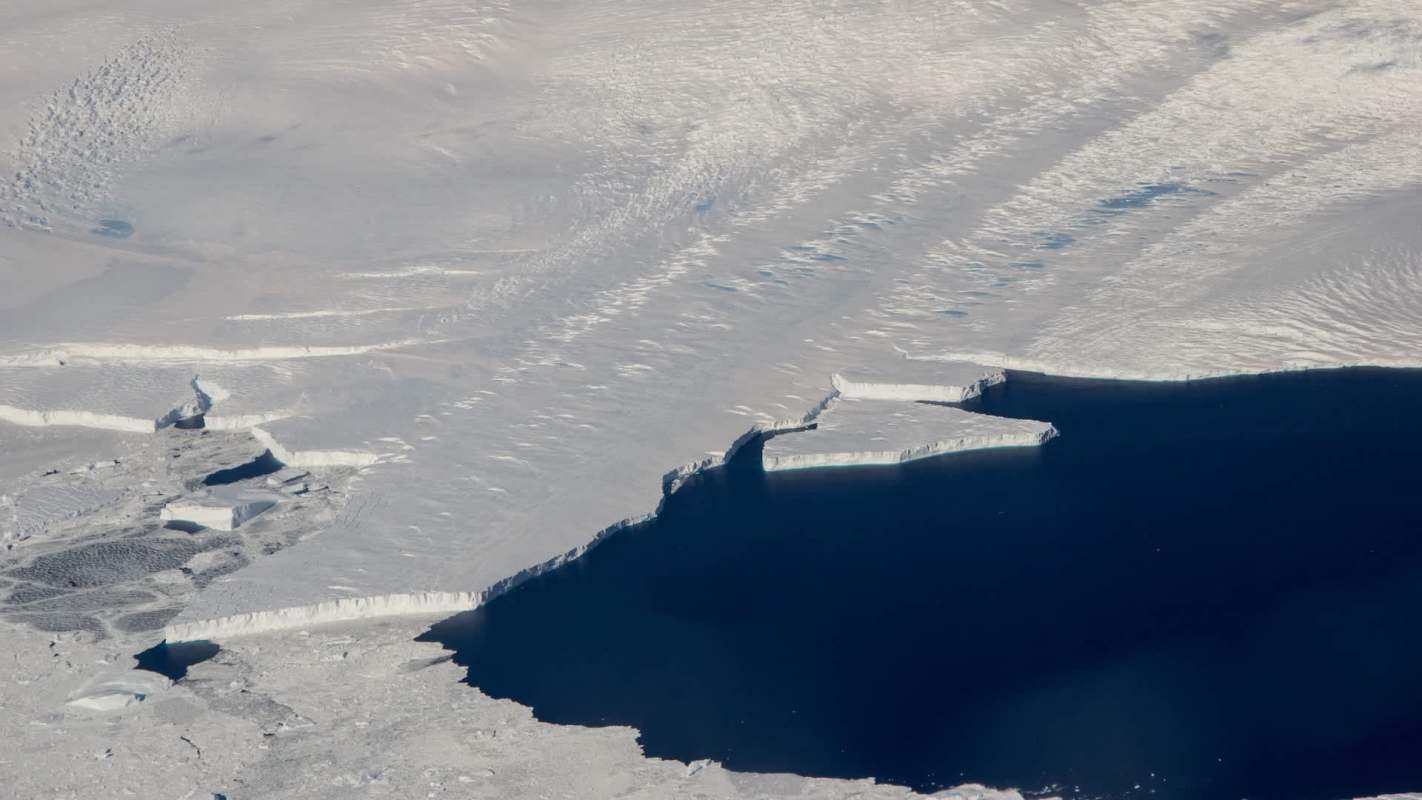
Antarctica's Thwaites Glacier, often referred to as the "doomsday glacier," is showing new signs that its floating ice shelf is breaking apart, according to scientists who say the change could accelerate sea-level rise for decades.
The glacier already accounts for about 4% of global sea-level rise. Now, researchers warn that the eastern ice shelf that is helping to hold it back may be nearing failure.
Scientists tracking Thwaites say its eastern floating ice shelf, called the Thwaites Eastern Ice Shelf, is fracturing quickly and losing its ability to support the enormous glacier behind it.
Thwaites is roughly the size of Britain, according to New Scientist.
The shelf ahead of it covers about 1,500 square kilometers — roughly the size of Greater London — and is about 350 meters thick.
But satellite imagery shows widening cracks near its anchoring points and along the grounding line, where the glacier begins floating on the ocean.
TCD Picks » Quince Spotlight
💡These best-sellers from Quince deliver affordable, sustainable luxury for all




"It looks like a windscreen that's shattering," Christian Wild of the University of Innsbruck said, per New Scientist.
Rob Larter of the British Antarctic Survey told the outlet that the breakup could happen so suddenly that researchers have already prepared an "obituary" press release.
According to scientists, changes in ocean circulation have been melting the shelf from below, while changes in ice flow have increased stress on the parts that once helped keep it stable.
Karen Alley of the University of Manitoba told New Scientist that the shelf has changed from "a thick, strong ice shelf" into "a thin, weak ice shelf" that is now breaking apart around the very point that once held it in place.
The latest numbers are concerning. Wild said the shelf's flow speed increased more than threefold from January 2020 to January 2026, reaching a little over 2,000 meters per year, with further acceleration in recent months.
In an upcoming study, he and his colleagues found that glacier ice formerly held back by the shelf sped up by roughly 33% over the same period — a strong signal that the shelf is already losing much of its buttressing power.
Scientists still cannot say exactly when the final breakup will happen. Larter compared it to forecasting an earthquake: Researchers can see the strain building, but they cannot predict the precise moment the system will give way.
The biggest concern is not whether a single giant iceberg breaks off in a dramatic event. It's what happens once the shelf can no longer act as a barrier.
Ice shelves help slow the movement of land ice into the ocean. When they weaken or disappear, the glaciers behind them can speed up, sending more ice into the sea and driving sea levels higher.
That is especially troubling at Thwaites, because scientists worry its continued retreat could destabilize more of the West Antarctic Ice Sheet.
Over time, that could reshape coastlines worldwide.
Researchers estimate that a full collapse of the broader West Antarctic system could add about 3.3 meters — nearly 11 feet — to global sea levels.
That would not happen overnight, but even far smaller increases can worsen flooding, erode shorelines, damage roads and homes, and strain communities already facing stronger storms and higher tides.
Scientists say this is a slow-moving crisis, not an instant catastrophe. But slow-moving problems can still be deeply disruptive.
Ted Scambos of the University of Colorado at Boulder told New Scientist that losing the shelf will affect how quickly Thwaites changes and how fast it contributes a larger share of sea-level rise in the years ahead.
According to a January study cited by New Scientist, Thwaites could be losing roughly 190 gigatons of ice each year by 2067 — about 30% more than it loses today.
The wider trend is troubling as well. Nearby Pine Island Glacier is also changing rapidly, and scientists have spent decades documenting how Antarctic ice shelves are becoming less stable as ocean and air temperatures rise.

Get TCD's free newsletters for easy tips, smart advice, and a chance to earn $5,000 toward home upgrades. To see more stories like this one, change your Google preferences here.







