


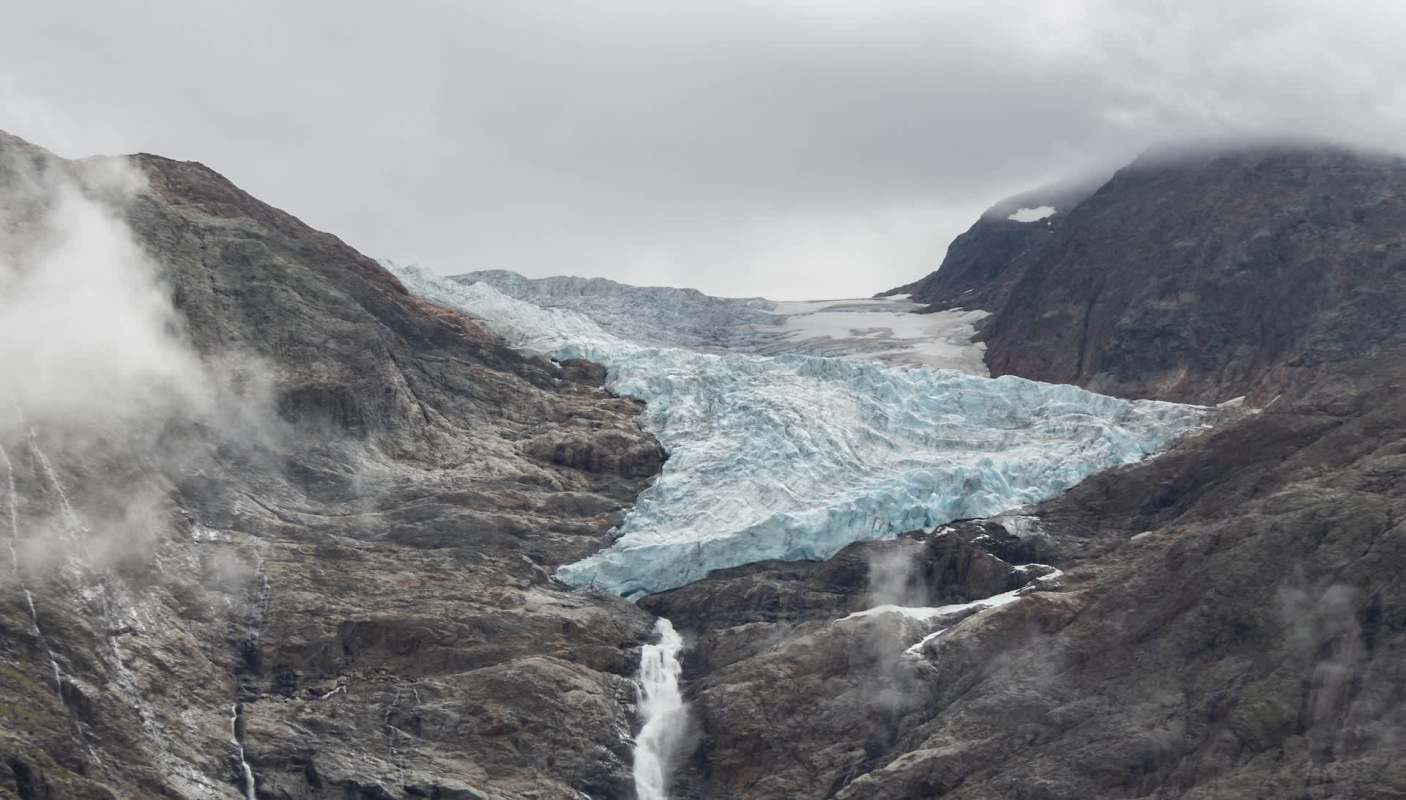
Rising temperatures continue to wreak havoc on glaciers around the world. The latest evidence comes from Switzerland, where scientists have measured another "enormous" loss in ice mass.
What's happening?
Researchers from the monitoring group GLAMOS and the Swiss Academy of Sciences say that Switzerland's glaciers lost 3% of their total volume this year.
As ABC News reports, that means Switzerland, home to more glaciers than any other European country, has now lost one-quarter of its ice mass over the past decade.
"Glacial melting in Switzerland was once again enormous in 2025," the scientists said in a statement. "A winter with low snow depth combined with heat waves in June and August led to a loss of 3% of the glacier volume."
This year's ice loss is the fourth-largest on record, trailing only 2022, 2023, and 2003.
Why are melting glaciers a concern?
Switzerland has already lost more than 1,000 small glaciers, scientists say, and that melting ice has a major impact on tourism, hydropower, agriculture, and more throughout Europe.
TCD Picks » Quince Spotlight
💡These best-sellers from Quince deliver affordable, sustainable luxury for all




But just as concerning is the reason behind this ice loss. It's a direct result of rising global temperatures, which itself is the result of human-caused pollution.
"Glaciers are clearly retreating because of anthropogenic global warming," GLAMOS head Matthias Huss told ABC News. "This is the main cause for the acceleration we are seeing in the last two years."
Globally, the last 10 years have been the 10 warmest on record. This year, Switzerland experienced its second-warmest June. Combined with below-average snowfall from the previous winter, this led to ice starting to melt earlier than ever.
And it's not just Switzerland. Recent research also shows that glaciers in the United States and Canada have lost nearly 12% of their volume since 2020 and that they are melting twice as fast as they did last decade.
|
How often do you feel hopeful about the future of the planet when you read news stories or watch entertainment content? Click your choice to see results and speak your mind. |
 Often 😇
 What can I do to help glaciers?
Ultimately, the only way to stop glaciers from melting so quickly is to stop the cycle of pollution that has led temperatures to soar.
This requires a global effort — not only with worldwide governmental initiatives like the Paris Agreement, but also with eco-friendly moves by each of us.
That may sound daunting, but there are several simple, realistic steps we can take that make a big difference.
Buying reusable grocery bags and glass food containers can greatly reduce the amount of plastic we use, while walking or riding your bike more often means fewer toxic emissions are spewed into the atmosphere from gas-guzzling cars. And all of that can help make our planet a little cooler and healthier.

Join our free newsletter for good news and useful tips, and don't miss this cool list of easy ways to help yourself while helping the planet.







