


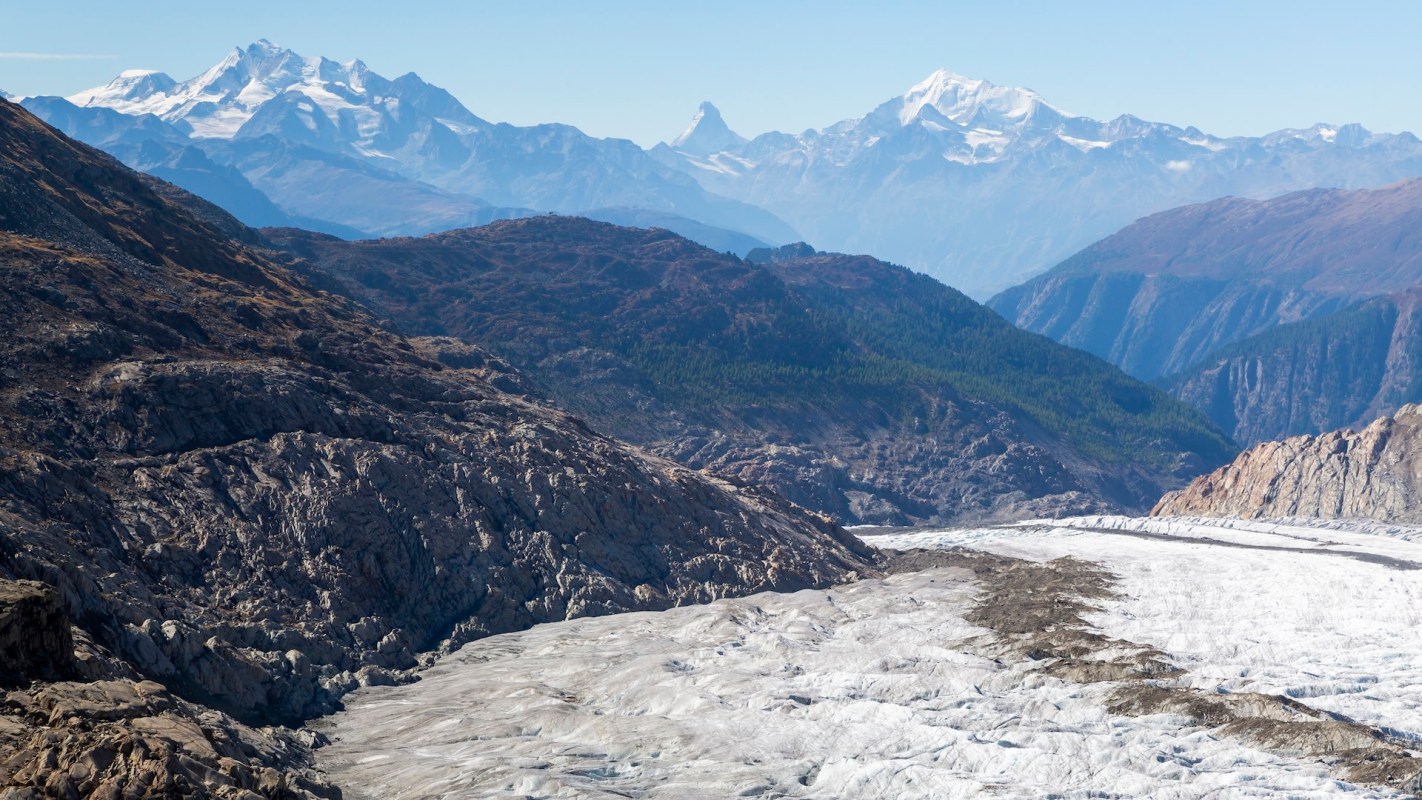
The Swiss Alps have changed significantly in just a few years. Snowy glaciers are now revealing bare rocky summits where new species replace the ones that no longer feel at home.
What's happening?
Swiss glaciers are melting at an ever-faster rate, and what people once deemed monstrous ice streams now fear their gradual disappearance, which reshapes both landscapes and ecosystems, per the Guardian.
As hostile as snowy glaciers may seem, they are actually home to rich biodiversity, including algae, springtails, and spiders. But as the ice melts, the entire ecosystem and its inhabitants are affected.
Now is the time for glacial margins, a transitional landscape where ecosystems vanish and appear, explained Tom Battin, professor of environmental sciences at Lausanne's Swiss Federal Institute of Technology, in the Guardian. The blooms of algae Hydrurus foetidus, for example, thrive in glacier-fed rivers.
Why is the disappearance of glaciers concerning?
Lee Brown, professor of aquatic sciences at Leeds University, noted to the Guardian that we do not yet know the full importance of the species that are likely to disappear with glaciers. However, for Battin, the risks are clear: Given that mountains have unique ecosystems that are still poorly understood, he warns that "without this biodiversity which you can't see, all that other biodiversity that people care about might disappear."
While new ecosystems exposed by the retreating ice emerge, "much is lost," the Guardian reported, pointing to the narrowing habitats of the ptarmigan and the Alpine ibex. Alpine flowers and plants are also threatened, it said, pushed out by forests and meadows.
This is even more worrying as global temperatures are predicted to continue at or near record levels in the next five years, according to the World Meteorological Organization. Per research by NASA, Arctic sea ice is shrinking at a rate of 12.2% every decade.
This pattern only exacerbates climate risks and impacts, whether it is the spread of infectious diseases due to changing vectors and habitats or higher tides during extreme weather events, which disrupt food systems.
What is being done to mitigate this pattern?
Listening to scientists, who have been warning us for years about the irreversible risks that reaching climate-related tipping points, such as early-melting glaciers, could cause, is certainly the first step to take. It is indeed essential to engage in science-backed conversations to better understand critical climate issues.
This applies to individuals, who can reduce their carbon footprint by making small, practical changes, such as upcycling old clothes, cutting down on meat consumption, or switching to renewable energy, as well as to governments and large organizations, which must ensure that all is done to reach net zero by 2050.
TCD Picks » Quince Spotlight
💡These best-sellers from Quince deliver affordable, sustainable luxury for all




|
Do you think America does a good job of protecting its natural beauty? Click your choice to see results and speak your mind. |
 Definitely 👍
Join our free newsletter for good news and useful tips, and don't miss this cool list of easy ways to help yourself while helping the planet.
Cool Picks




