


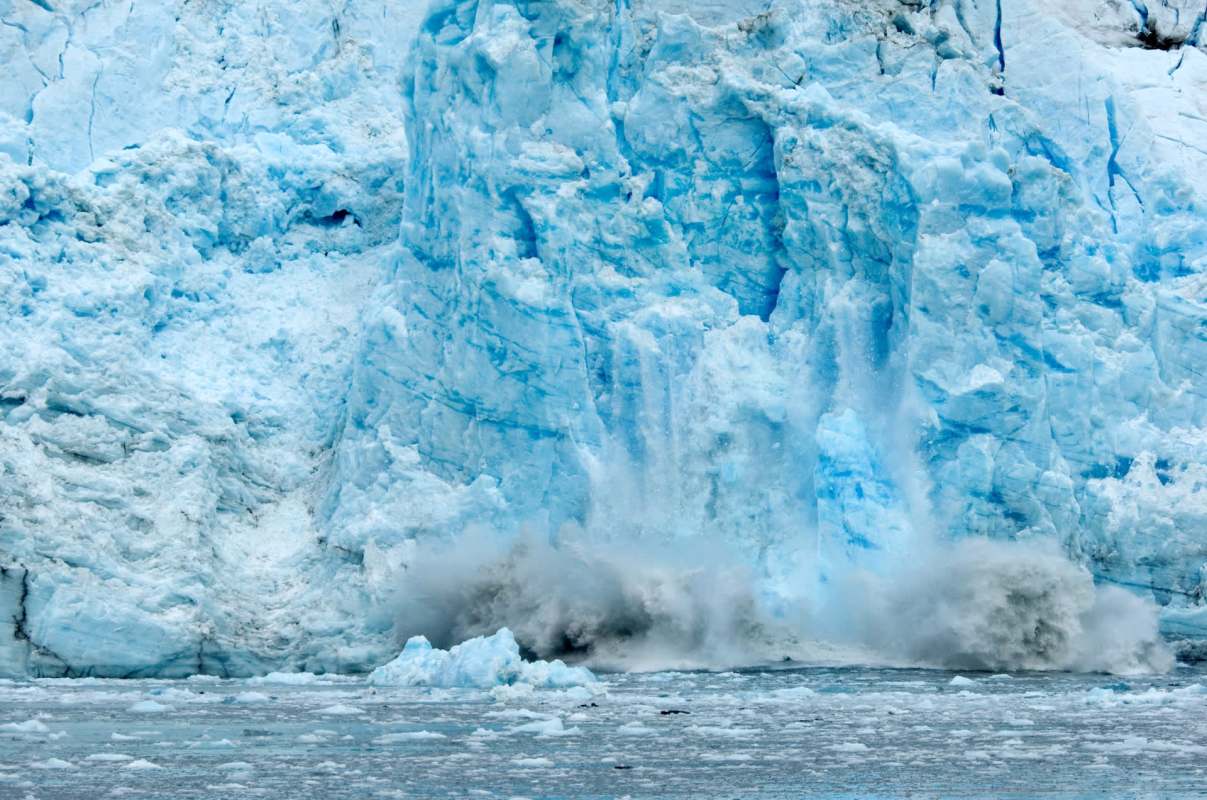
Record-high floodwaters threatened Juneau, Alaska, as a glacial outburst made it past a natural ice dam formed by the Mendenhall Glacier, CBS News reported.
Officials did not mince words when telling those in the flood zone to evacuate: "Don't wait, Evacuate TONIGHT," they warned, per CBS News.
What's happening?
Above Juneau sits the so-called Suicide Basin. Formerly, the Suicide Glacier filled the Suicide Basin, but rising global temperatures have resulted in that glacier's retreat, leaving the empty basin behind.
As snow and ice melt each summer, the Suicide Basin fills with water, and the adjacent Mendenhall Glacier acts as a natural dam, preventing the waters from flowing into Lake Mendenhall and the Mendenhall River below.
Mendenhall Glacier sits roughly 12 miles from Juneau.
"Since 2011, Suicide Basin has released glacier lake outburst floods that cause inundation along Mendenhall Lake and River annually with a record major flood event taking place on August 6, 2024," according to the National Weather Service.
In recent days, water levels in Suicide Basin were observed to be rising by as much as four feet per day, per CBS News, leading officials to issue warnings of a record-breaking flood.
"This will be a new record, based on all of the information that we have," said Nicole Ferrin, a meteorologist, at a news conference on August 12, the day before the record floods were expected, according to CBS News.
When the floods arrived, they did indeed surpass the former record. High water levels on August 13 were measured at 16.65 feet, surpassing the previous record of 15.99 feet, which occurred just the year prior, per CBS News.
Why is flooding in Alaska important?
That Juneau has now experienced record-breaking floods for the third consecutive year provides a snapshot into the impact that rising global temperatures are having on the Arctic region.
TCD Picks » Quince Spotlight
💡These best-sellers from Quince deliver affordable, sustainable luxury for all




|
Do you think your city has good air quality? Click your choice to see results and speak your mind. |
 Definitely 🥰
 Due to an effect known as arctic amplification, areas in the Arctic are warming significantly faster than the rest of the globe. A study published in 2022 found that, since 1979, the Arctic has warmed four times faster than the rest of the planet, a gap considerably wider than previously thought and a scenario considered highly unlikely under previous climate models.
Rising temperatures in the Arctic melt land ice such as glaciers, which run off into the ocean, causing sea levels to rise. The rising temperatures also impact the local economy and the world's food supply by interfering with Alaska's salmon fisheries, according to NOAA.
What's being done about rising temperatures in the Arctic?
To reverse the trend of arctic amplification and rising temperatures around the globe, the world's economy must transition away from energy sources that release heat-trapping pollution into the atmosphere and toward cleaner, renewable energy sources like wind and solar.
While doing so will require coordination on a massive scale among governments, industry, and NGOs, there are still steps that individuals can take to make a difference. For example, by using your voice, contacting your elected representatives, and supporting climate-friendly candidates, you can help spur political change.
There are also steps that can be taken at the community and household levels. Driving an EV or installing solar panels on your home are great ways to reduce planet-heating pollution while also saving money on gas and electricity. Plus, by pairing solar panels with a home battery system, you can make your home more resilient in the event of a power outage.
Others are adopting mitigation measures to protect against flooding. Flood gates, double storm doors, and aquadams are potential ways to make you home more resilient against water intrusion.

Join our free newsletter for good news and useful tips, and don't miss this cool list of easy ways to help yourself while helping the planet.
Cool Picks






