


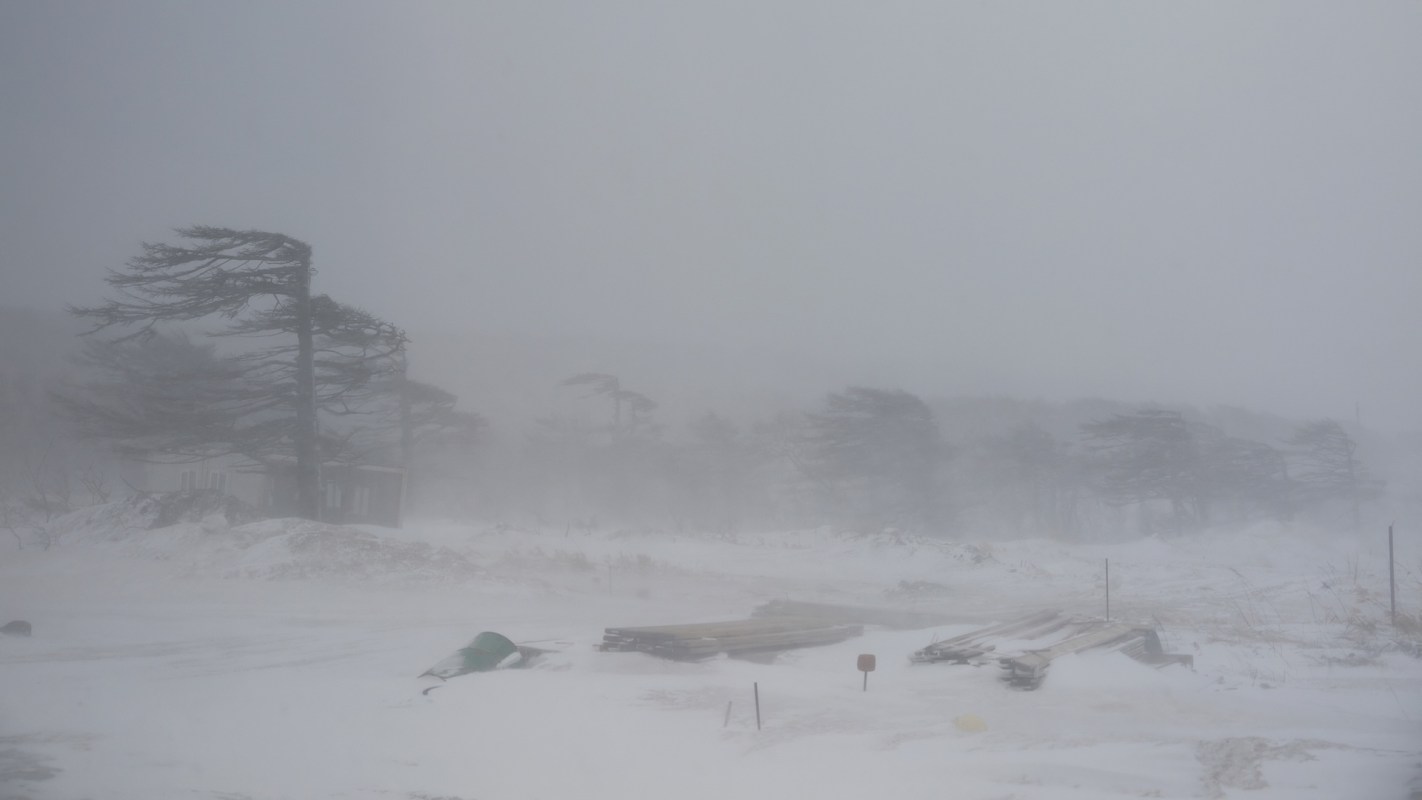
There are signs that something is happening above the Arctic that will have major implications for the weather in the United States soon. It's referred to as "major sudden stratospheric warming," possibly the earliest event of its kind since 1998.
Jonathan Erdman, senior meteorologist at Weather.com, said: "In records dating to the late 1950s, only twice before has a major SSW event happened as soon as November, in 1968 and 1958." And the last time one happened in December was in 1998. So, this could be the earliest such event in at least 27 years.
The predicted warming at the mid levels of the atmosphere would disturb the polar vortex, eventually allowing temperatures to tumble well below average across a large swath of the country.
"The polar vortex is an area of low pressure — a wide expanse of swirling cold air — that is parked in polar regions," the National Environmental Satellite, Data, and Information Service explains. "During winter, the polar vortex at the North Pole expands, sending cold air southward. This happens often and can be associated with cold-weather outbreaks in the United States.
The large, upper-level low with extremely cold air at its center sits high above the Arctic in the stratosphere, about 10-30 miles above the ground. It can be found year-round at the Poles, but disruptions to the polar vortex can send chunks of bitterly cold Arctic air spilling southward into the U.S.
A potential sudden stratospheric warming (SSW) event would be the source of the disruption that sends a surge of unusually cold air into the central and eastern U.S. by the end of Thanksgiving week, with a cold pattern continuing into the start of December.
SSWs can cause temperatures to spike in the stratosphere, rising quickly to as much as 50 to 70 degrees or more in a matter of a few days. Meteorologists are quick to point out that it remains to be seen just how strong an SSW this event will be. They also say that the details of the long-range forecast, which suggests a flip to a possible record-breaking cold pattern, could change.
"This looks to be a prolonged event, and I expect the weather models to struggle correctly simulating how it evolves and how it will impact our weather," Judah Cohen, MIT research scientist and the Janus Research Group's director of seasonal forecasting at Atmospheric and Environmental Research, told Weather.com.
The forecast now is calling for the country's rollercoaster ride of temperatures to continue. Weather whiplash saw at least 90 cold records fall from Nov. 9-12, followed by at least 40 record highs broken in a single day, only around a week later. The U.S. could now be on the cusp of a record-breaking cold snap settling in about a week from now.
Our overheating planet is weakening and destabilizing the polar vortex, driven by changes in the Arctic. The region is warming almost four times faster than the global average. Our warming world is supercharging this phenomenon known as Arctic amplification.
TCD Picks » Quince Spotlight
💡These best-sellers from Quince deliver affordable, sustainable luxury for all




"It makes sense that the polar vortex tends not to be as strong due to global warming because the planet isn't warming uniformly," according to Dr. Steven Decker, director of the Meteorology Undergraduate Program at Rutgers University. "It's warming more at the pole, overall decreasing the strength of the polar vortex and the jet stream and making it more susceptible to being dislodged and sent our way."
|
Do you worry about the quality of the air inside your home?
Click your choice to see results and speak your mind. |
 Yes — often 😬
💰Get TCD's free newsletters for easy tips to save more, waste less, and make smarter choices — and earn up to $5,000 toward clean upgrades in TCD's exclusive Rewards Club.
Cool Picks




