


At over 4 billion years old, the Earth has seen civilizations come and go. While many of these civilizations have been studied, others have been swallowed up by the planet and nearly forgotten about. For one Stone Age settlement, its past is finally being remembered.
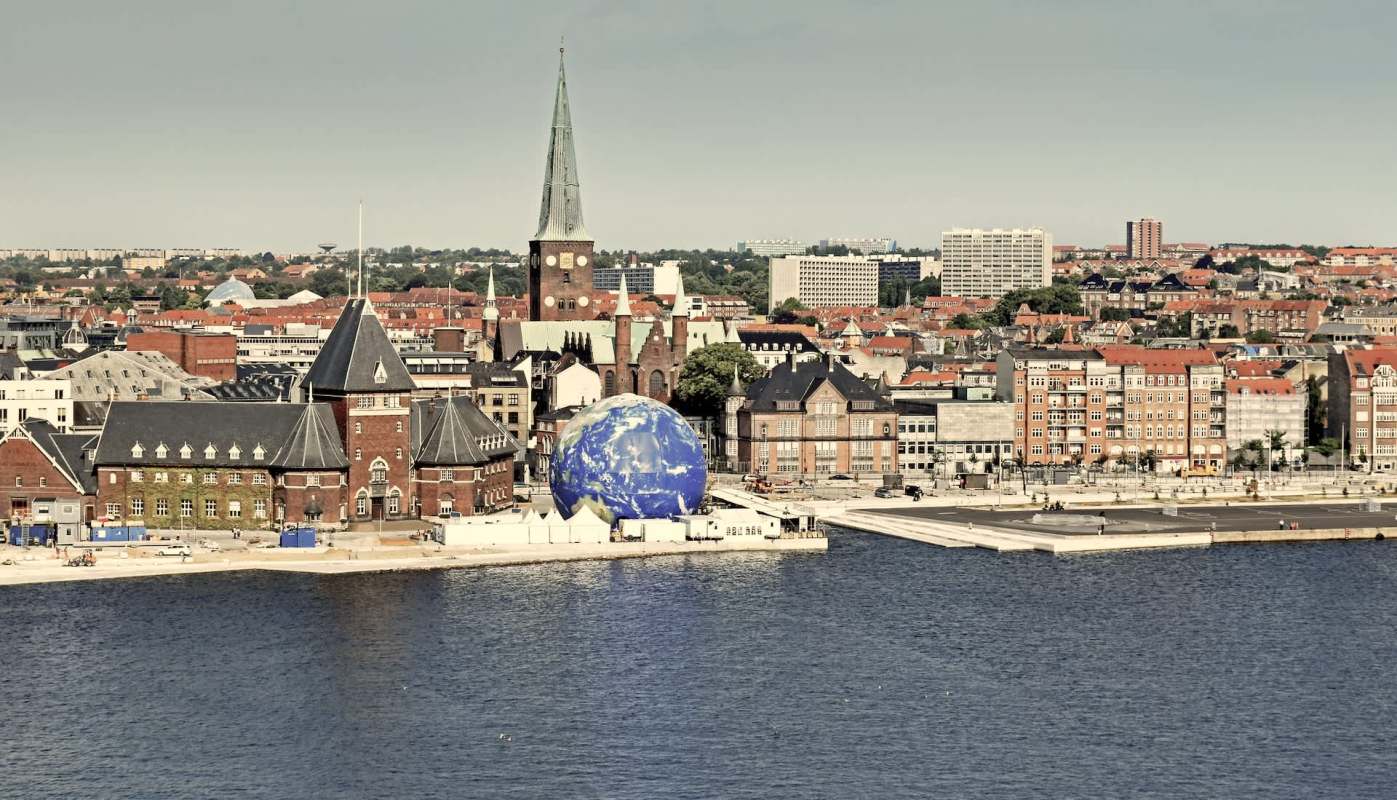
As reported by CBS News, a team of divers has located the remnants of an 8,000-year-old settlement on the seabed in the Bay of Aarhus in northern Denmark. The discovery was part of a $15.5 million six-year international project funded by the European Union. The project aims to map regions of the seabed in the Baltic and North Seas.
Underwater archaeologist Peter Moe Astrup is heading the expedition into the waters off the coast of Denmark. "Here, we actually have an old coastline. We have a settlement that was positioned directly at the coastline," Moe Astrup said. "What we actually try to find out here is how was life at a coastal settlement."
With the remnants of the settlement now sitting 26 feet below the surface, Moe Astrup explained that the world has seen massive changes over the 8,500 years. Once massive ice sheets melted from rising temperatures, global sea levels rose by about 6.5 feet per century.
"It's like a time capsule. When sea level rose, everything was preserved in an oxygen-free environment … time just stops," Moe Astrup said. "We find completely well-preserved wood. We find hazelnut ... Everything is well preserved."
As of September 2025, the team of divers has discovered animal bones, stone tools, arrowheads, a seal tooth, and a small piece of worked wood. Their findings allow researchers to get a clearer idea of how coastal settlements operated in the Stone Age.
Due to our current climate conditions and rising temperatures, sea levels are expected to rise by up to six feet by 2100, a number comparable to the sea level rise rate seen 8,000 years ago. This is threatening millions of people currently living in coastal communities all throughout the world.
With the discovery of the underwater settlement, researchers can attempt to piece together how the ancient community possibly adjusted to a rapidly changing climate. "It's hard to answer exactly what it meant to people," Moe Astrup said. "But it clearly had a huge impact in the long run because it completely changed the landscape."
|
Do you think we still have a lot to learn from ancient cultures? Click your choice to see results and speak your mind. |
 Definitely 👍
Join our free newsletter for good news and useful tips, and don't miss this cool list of easy ways to help yourself while helping the planet.
Cool Picks






