


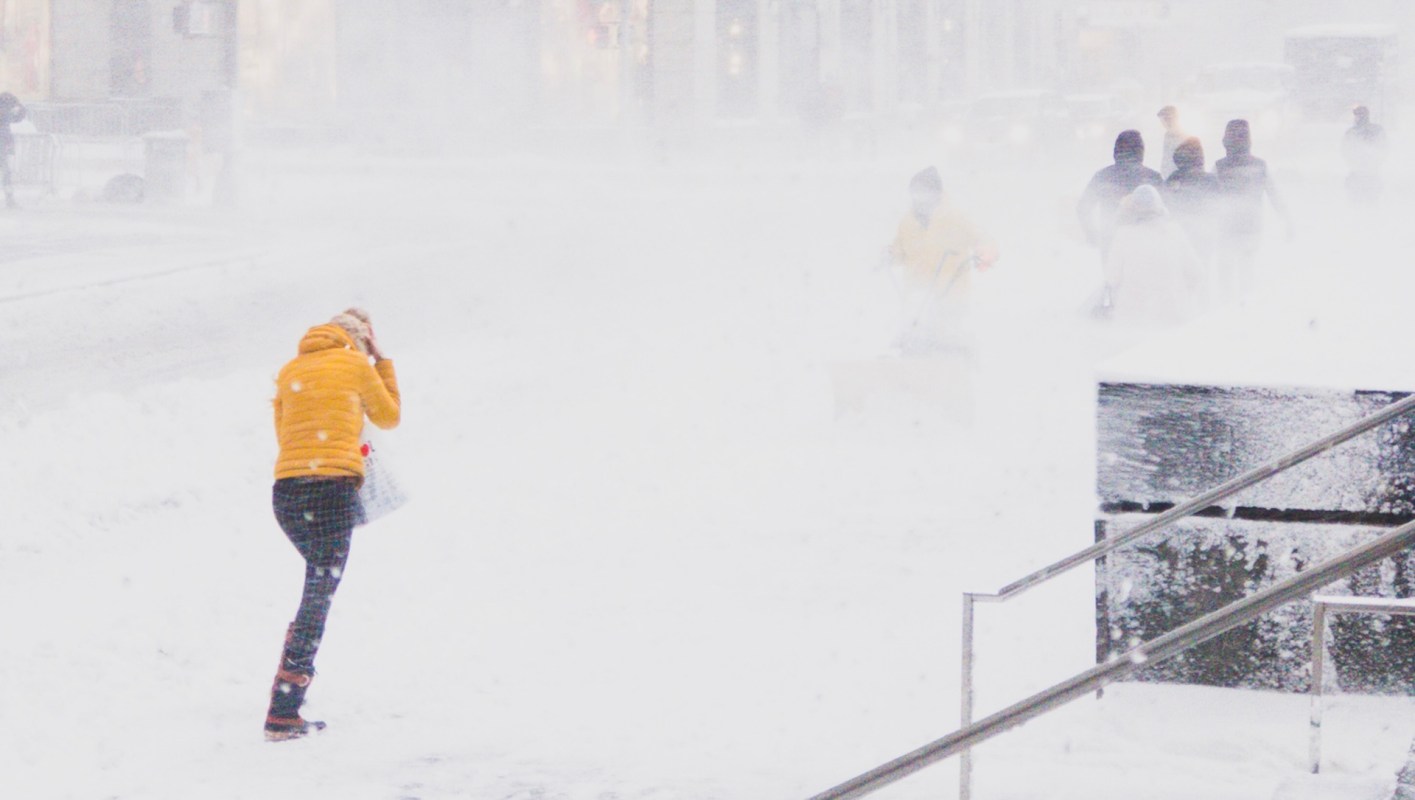
Monday's nor'easter could become only the third winter storm to earn an "extreme" ranking by the National Centers for Environmental Information. The expansive storm produced between two and three feet of snow and winds over 80 mph as it impacted the weather up and down the East Coast.
Providence, Rhode Island, broke its all-time snowfall record after 37.9 inches fell, surpassing the previous record of 28.6 inches set during the Blizzard of '78. Boston reported 31.8 inches of snow. Just under 20 inches of snow buried Central Park in Manhattan, ranking the storm among New York City's 10 biggest winter storms on record.
"These are dangerous conditions," New York City Mayor Zohran Mamdani said Monday, per NBC News. Even after the worst of the storm had passed, Mamdani continued cautioning New Yorkers to avoid traveling. "Not only is snow continuing to fall, accumulated snowfall and refreezing have made it hazardous to travel," he added. "If you can, remain indoors. If you must leave your home, please rely on public transit."
The satellite imagery of this week's historic nor'easter was stunning. The satellite loop from February 22-23 was posted on X by the New York City National Weather Service Office. It captured a well-defined center of the storm spinning counterclockwise east of the Delmarva Peninsula.
"Well well well... is that an EYE in the middle of our bombogenetic blizzard!?" asked meteorologist Matthew Cappuci on X. "Looks like it, right? While the clear, calm area at the center of the storm IS a signal that it's an *extremely* intense nor'easter, it forms in a fundamentally different way."
Tropical cyclones draw energy from warm seas and form true eyes; nor'easters feed on clashing air masses and can briefly resemble hurricanes despite very different mechanics. The nor'easter not only looked like a tropical cyclone from space, but it actually produced hurricane-strength wind gusts of up to 83 mph. The storm's impacts could place it in the most severe category of winter storms on the Northeast Snowfall Impact Scale (NESIS).
NESIS focuses on a storm's societal impacts, taking into account both the amount of snow a storm produces and the number of people affected in its path. There have been just two blizzards to earn the "extreme" Category 5: the March 12-14, 1993, Superstorm and the January 6-8, 1996, blizzard.
The storm's ramifications reached well beyond the Northeast. Arctic air came crashing southward behind the nor'easter, reaching as far south as Florida by Monday night. At one point, almost 16 million people in the Sunshine State were under a cold weather advisory. It was a case of weather whiplash after several record highs were set over the weekend, including 90 degrees in West Palm Beach, Fort Lauderdale Beach, and Lakeland, Florida.
Scientists say that as our world warms, the strongest nor'easters are becoming even more intense. "Our analysis of nor'easter characteristics reveals that the strongest nor'easters are becoming stronger, with both the maximum wind speeds of the most intense (>66th percentile) nor'easters and hourly precipitation rates increasing since 1940, suggesting an additional contribution to coastal risk in a warming world," concluded a study published in the Proceedings of the National Academy of Sciences of the United States of America.
|
Which of these savings plans for rooftop solar panels would be most appealing for you?
Click your choice to see results and speak your mind. |
 Save $1,000 this year 💸
Get TCD's free newsletters for easy tips to save more, waste less, and make smarter choices — and earn up to $5,000 toward clean upgrades in TCD's exclusive Rewards Club.
TCD Picks » Upway Spotlight
💡Upway makes it easy to find discounts of up to 60% on premium e-bike brands





Cool Picks






