


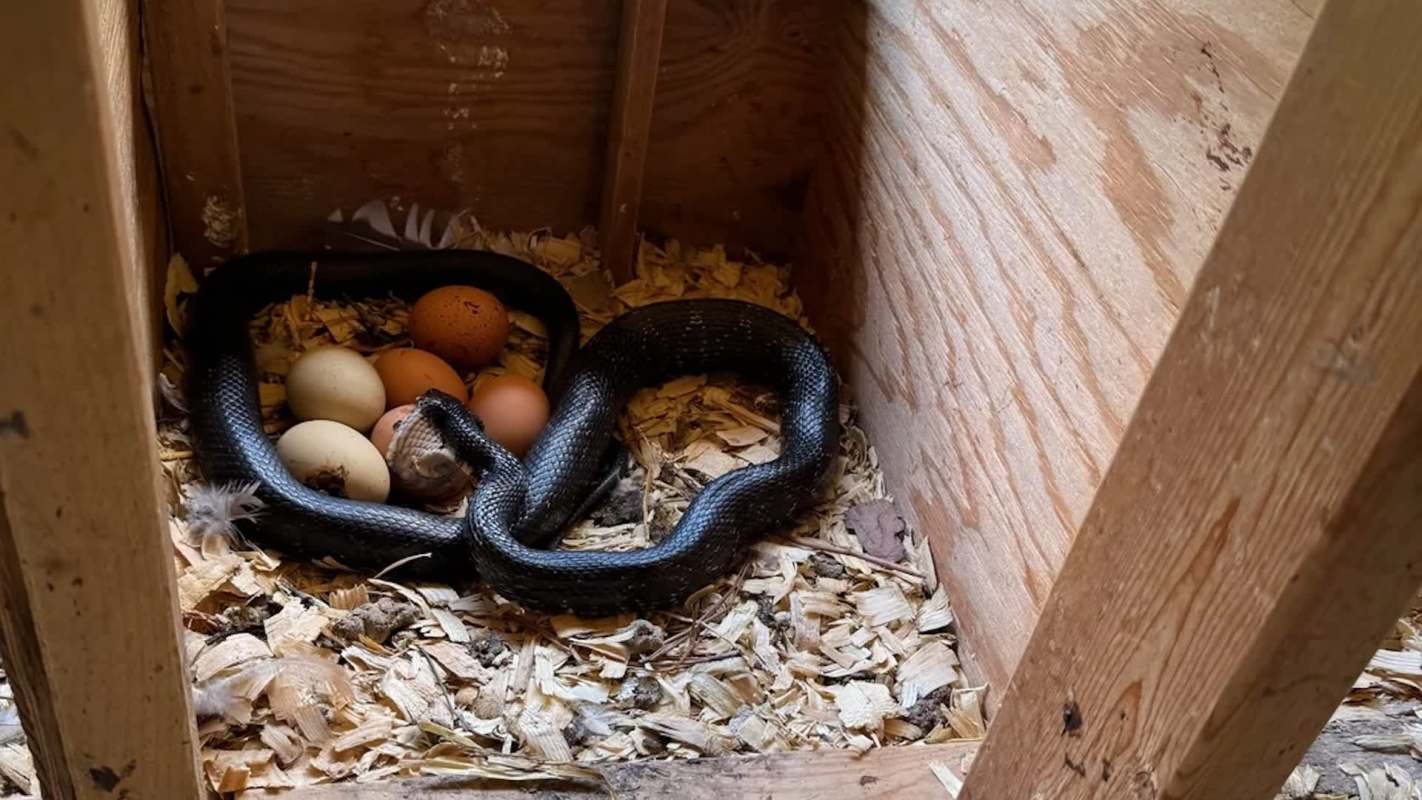
A person in North Carolina got an unwelcome surprise after discovering a snake inside a chicken coop eating eggs. Luckily for them, fellow Redditors assured them the animal might even have been performing a service for them elsewhere.
What's happening?
In a post to ther/whatisthissnake subreddit, the user shared that they found the snake in the coop and shared a couple of pictures. In one of them, the long black reptile is seen slithering through the grass.
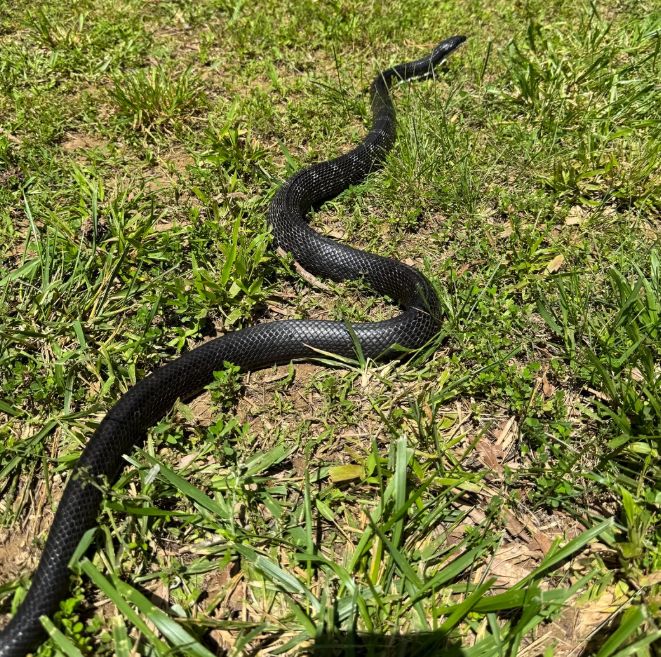
"Was able to get him out of the coop and then shoo him over to the long grass away from my coop and property," they added in their post.
Commenters quickly identified the animal as a central rat snake, a nonvenomous species that commonly turns up around barns, sheds, and coops where food is easy to access. In this case, the allure of chicken eggs was clear.
"Definitely a harmless rat snake, they shouldn't harm your chickens, but they might come back again for more eggs," one wrote.
One commenter said they had dealt with a similar situation before.
TCD Picks » Quince Spotlight
💡These best-sellers from Quince deliver affordable, sustainable luxury for all




"We had a morbidly obese Central Ratsnake eating our chicken eggs," they wrote. "He was so fat it was funny."
They added that after changing the nest setup so the snake could no longer access the eggs, "Suddenly we were collecting so many more!"
Another commenter jokingly said that the snake was "just collecting the Egg Tax in exchange for rodent control services."
Why does it matter?
The situation is a reminder that many conflicts with wildlife involve the animals being lured in. A backyard coop concentrates food in one place, which can draw in creatures that might otherwise stay away from people.
In other words, the snake likely responding to an easy meal created by a human-managed environment.
That distinction matters for anyone raising backyard hens. Rat snakes are widely valued for helping control rodents, which can damage feed, spread disease, and create bigger issues around homes and farms. So while a snake in the coop is certainly inconvenient — and losing eggs can be frustrating and costly — it can also be a sign that the surrounding habitat is supporting natural pest control.
The challenge is figuring out how to protect eggs without escalating a preventable conflict with wildlife.
What Can I Do?
For backyard chicken keepers, the most practical solution is to make the coop less rewarding. Collecting eggs promptly, checking for structural gaps, and adjusting nest placement can all help reduce the chances of repeat visits.
As the aforementioned commenter wrote, simply rearranging the nests made a noticeable difference. It can also help to reduce other potential draws. Spilled feed may attract rodents, and rodents can, in turn, attract snakes. Therefore, keeping feed sealed and the coop clean can interrupt that chain.
If a snake cannot access eggs and does not find prey nearby, it has less reason to return. If you do encounter a snake, it is best to give it space and avoid handling it unless you are completely sure it is safe to do so. Humane removal and exclusion are often more effective long-term solutions than killing wildlife, especially when the animal is nonvenomous.

Get TCD's free newsletters for easy tips, smart advice, and a chance to earn $5,000 toward home upgrades. To see more stories like this one, change your Google preferences here.







