


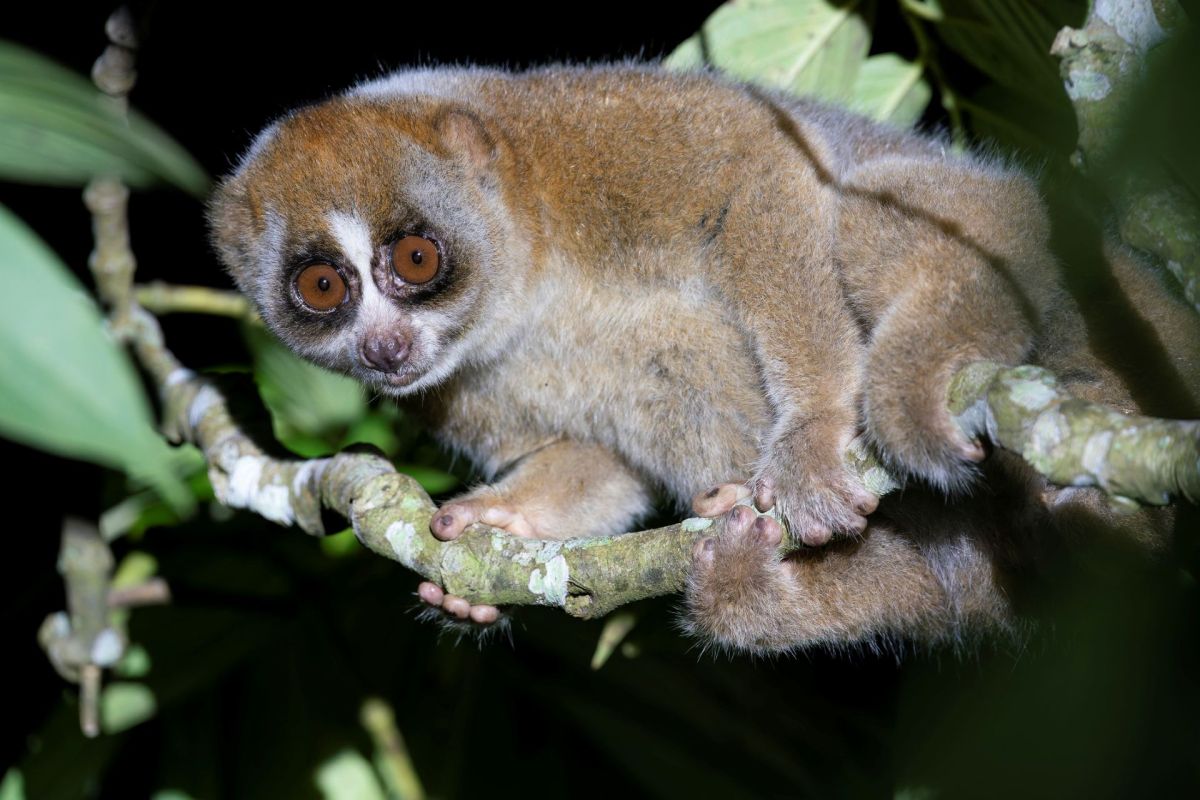
A young slow loris, an endangered venomous primate, was found in an unexpected place — an industrial site near Tuas in May, the sight catching workers off guard.
Here's what to know
After workers noticed the animal near an industrial estate, ACRES rescued it and confirmed it was a Sunda slow loris, according to The Straits Times.
ACRES chief executive Kalaivanan Balakrishnan said the primate was first seen in a tree before it moved into the premises. He called the case highly unusual, since Singapore's wild population of the species is confined to the Central Catchment Nature Reserve, and he suggested the loris may either have been unintentionally transported in a lorry or abandoned after being kept illegally as a pet.
The loris was in relatively good condition when rescuers reached it, showing only mild dehydration. Because it did not display the behavioral or physical signs often associated with illegally kept pets, ACRES concluded it could be released back into the wild.
"Slow lorises are prominent in the illegal wildlife trade. They are also sadly mistreated and used as photo props in other countries," Kalaivanan said.
More background
The Sunda slow loris is rare, and Karina Lim, ACRES' wildlife rescue and rehabilitation manager, said wild individuals are not often encountered because they are typically shy and elusive.
TCD Picks » Quince Spotlight
💡These best-sellers from Quince deliver affordable, sustainable luxury for all




Still, Lim warned that habitat pressure could be changing that pattern. "As more habitat loss occurs, it may result in animals venturing out in search of other suitable green spaces to inhabit," she said.
That trend is not limited to Singapore. As roads, buildings, and other development fragment natural landscapes, animals can end up in neighborhoods, workplaces, and transport corridors. Research has also shown that human-wildlife encounters often rise when habitats change and overlap increases.
These encounters can be dangerous at times. Despite the loris's adorable appearance, The Straits Times described it as the only known venomous primate and said its bite can trigger flesh decay and anaphylactic shock in humans — so it's best to look from a distance.
Poaching is unfortunately an issue for the slow loris – their teeth are often removed or filed down to keep them from biting their owners when they are captured in the exotic pet trade, The Straits Times notes.
What's being done?
Before it was released, the animal spent about two months in rehabilitation. Lim said ACRES created a tailored recovery plan using scientific research and guidance from an overseas wildlife rescue organization with expertise in slow lorises.
Staff closely monitored the nocturnal primate almost every night and fed it insects, bird eggs, and tree sap, much of it collected from natural sources. Tan Hui Min, who manages ACRES' veterinary department, said blood tests indicated stress, so fluids were also administered, possibly because the animal had been stranded outside its normal habitat.
ACRES waited until the loris was again able to climb, forage, and avoid people before returning it to the wild. On Aug. 3, it was released into a forested area where wild slow lorises already lived.
Kalaivanan said the organization is also expanding its rehabilitation capabilities amid continued development pressure on wildlife.
"We have been rooting for his release from the very start, and we are glad that after two months of rehabilitation efforts, he was able to return and be free in the wild again," Lim said.

Get TCD's free newsletters for easy tips, smart advice, and a chance to earn $5,000 toward home upgrades. To see more stories like this one, change your Google preferences here.







