


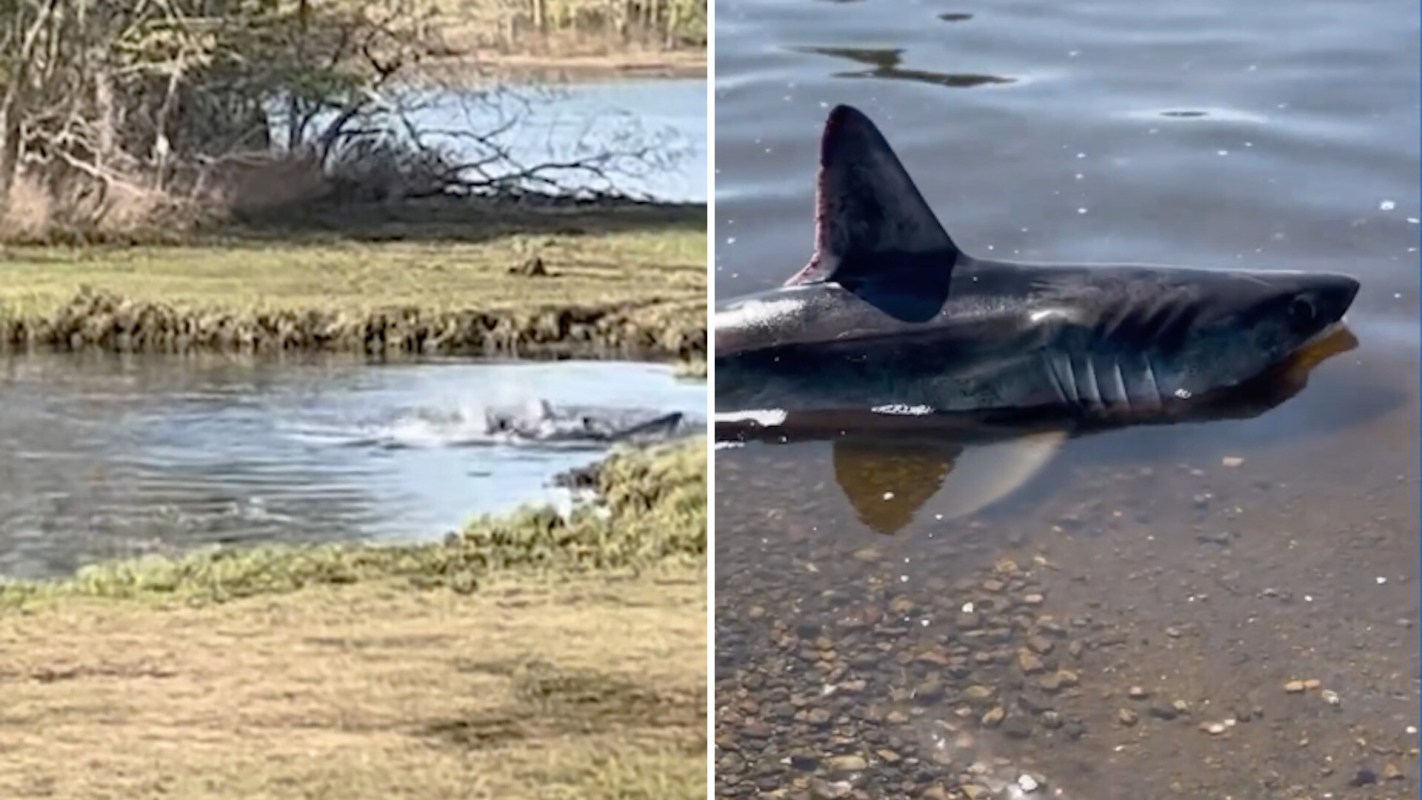
A seven-foot shark briefly turned a Rhode Island pond into the center of local fascination after surfacing in shallow water near Narragansett last weekend.
The unusual sighting sparked dramatic social media videos — and ended sadly when the shark later died after swimming deeper into Point Judith Pond.
Locals first spotted the shark beside the breakwater by Salty Brine State Beach in Galilee, where it appeared wedged among rocks before freeing itself. A video later showed the animal circling in the pond, drawing attention both online and along the shore.
The Atlantic Shark Institute identified the shark as a porbeagle, a cold-water species found across the North Atlantic.
While porbeagles can grow to around 12 feet, researchers said this roughly seven-foot individual was not considered a major threat to people.
According to the Boston Globe, the shark likely entered the pond by mistake and may already have been in poor condition.
TCD Picks » Quince Spotlight
💡These best-sellers from Quince deliver affordable, sustainable luxury for all




"It never really looked like it was in great shape, frankly," said Jon Dodd, a marine biologist and executive director of the Atlantic Shark Institute, according to the Boston Globe.
Even as onlookers and shark researchers tried to track it, the animal ultimately died.
A necropsy was still pending.
The encounter at first seemed to mark Rhode Island's first major shark sighting of the year, arriving as scientists in New England get ready for great white sharks to return and as other shark species have shown up more often in Massachusetts waters this year.
Even though this shark was not considered dangerous, the incident is a reminder that changing ocean conditions are reshaping where marine animals appear — sometimes in surprising and stressful ways for both wildlife and people.
Researchers said porbeagles tend to follow colder water north as ocean temperatures rise. That matters because warming seas, driven largely by human-caused pollution, can push animals into unfamiliar territory, increase unusual wildlife encounters, and put extra strain on species already navigating busy coastlines filled with boats, beachgoers, and man-made structures.
For coastal residents, that means more sightings may not always signal a growing threat so much as an ecosystem under pressure. A shark in a pond reflects a broader environmental story about warming waters and disrupted migration patterns.
The event also highlights how easy it is to misunderstand sharks. In this case, a species that typically poses little risk to humans became the focus of alarm simply because it appeared so close to shore.
The Atlantic Shark Institute also thanked Greg Skomal of the Massachusetts Division of Marine Fisheries and John Chisholm from the New England Aquarium for helping identify the species.
That kind of monitoring is becoming increasingly important as shark activity shifts around New England. Tracking species, documenting sightings, and studying deaths like this one can help researchers better understand how warming oceans are affecting marine life and how communities can respond safely.
It also helps build a clearer picture of which species actually pose risks and which mostly need space.
For beachgoers, the best response to unusual wildlife sightings is often the simplest one: keep your distance, avoid entering the water near a distressed animal, and report what you see to lifeguards, marine officials, or local researchers instead of trying to intervene yourself.

Get TCD's free newsletters for easy tips, smart advice, and a chance to earn $5,000 toward home upgrades. To see more stories like this one, change your Google preferences here.







