


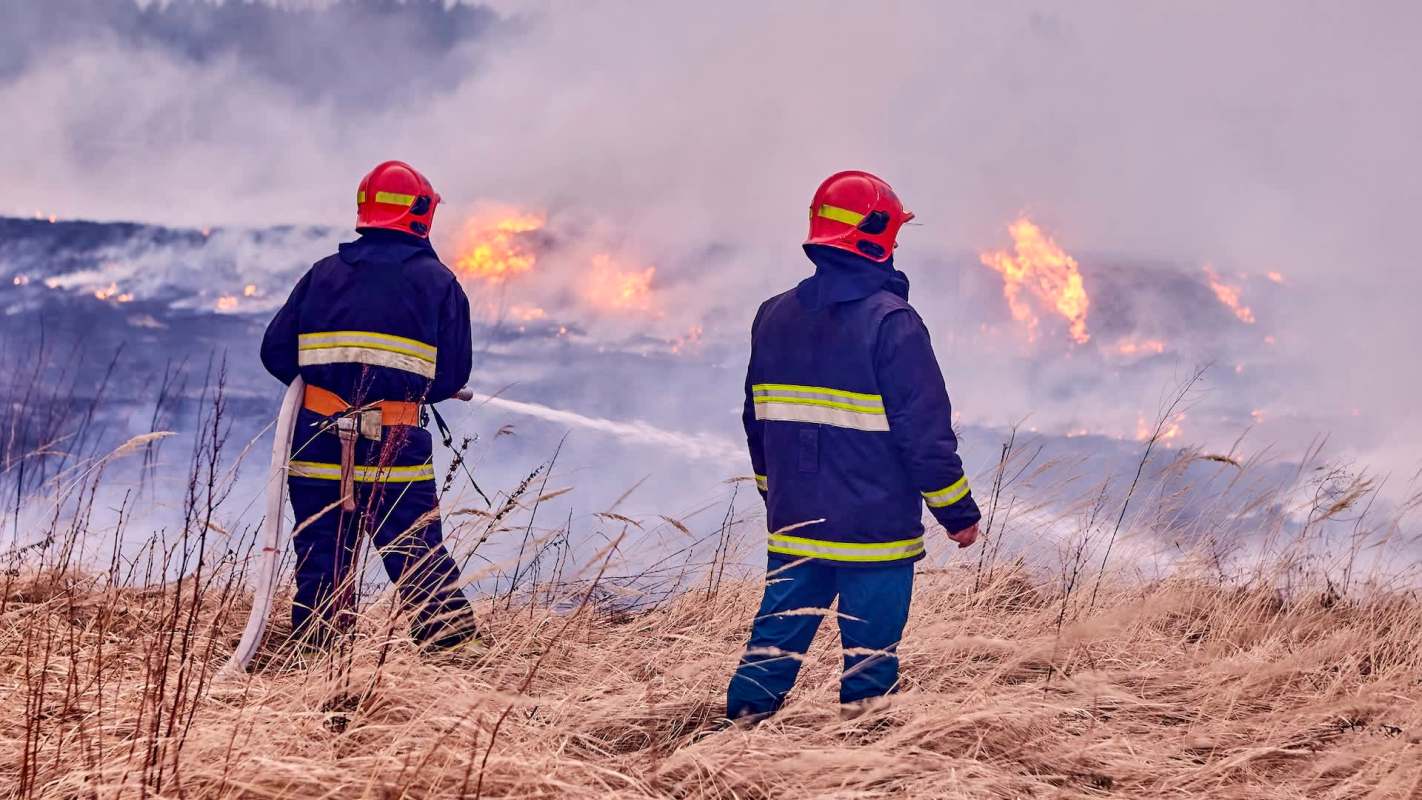
The area of the United States enduring the worst categories of drought expanded last week as several large wildfires blazed across the West.
The percentage of the country in an extreme or exceptional drought (the two most severe levels) increased, according to the latest U.S. Drought Monitor report. Nearly 6% of the contiguous U.S. is now in those two worst categories of drought. The portion of the country in a severe drought expanded slightly over the past week. The only category that saw a reduction was the moderate category, declining slightly compared to a week ago.
The West saw its drought intensify in every category. A little more than two-thirds of the region is in at least a moderate drought, with 42% in at least a severe drought. Leading the way is Arizona, with over 95% of the state experiencing a drought. The entire state of Utah and nearly 96% of Washington are in a drought.
The parched conditions are fueling wildfires across several Western states. There were at least 29 large wildfires burning across a dozen states as of Thursday morning. The majority of the fires were blazing in states from the Rockies to the West Coast, according to the National Interagency Fire Center.
The Dragon Bravo fire burning in the Grand Canyon National Park is one of the biggest active wildfires. The fire became Arizona's 10th-largest fire in the state's history after charring over 105,000 acres near the north rim of the Grand Canyon. It is now the nation's largest wildfire of 2025 so far. The Dragon Bravo fire was only 9% contained as of early Thursday.
Wildfire smoke drifting into the Midwest has prompted the National Weather Service to issue air quality alerts Friday for major cities such as Chicago, Milwaukee, and Minneapolis. All of Minnesota, Michigan, Wisconsin, and Iowa faced air quality alerts Friday.
"Sensitive groups: Consider rescheduling or moving all activities inside. Go inside if you have symptoms," cautions the air quality alert for Wisconsin. "People with asthma: Follow your asthma action plan and keep quick-relief medicine handy. People with heart disease: Symptoms such as palpitations, shortness of breath, or unusual fatigue may indicate a serious problem. If you have any of these, contact your health care provider."
Our overheating planet is making conditions more conducive to the spread of wildfires, stretching out the wildfire season.
"Since 2015, the United States has experienced, on average, roughly 100 more large wildfires every year than the year before," noted a report released by the Union of Concerned Scientists. "This changes region by region and year to year, but generally we're seeing more wildfires, more acres burned, and longer, more intense fire seasons."
Through the end of July, there have been more fires this year than in any other year since 2015 over the same period.
TCD Picks » Quince Spotlight
💡These best-sellers from Quince deliver affordable, sustainable luxury for all




"So far this year, more than 40,000 wildfires have burned over 3.2 million acres, a reminder that this is the fire year, not just the fire season," according to the NIFC. "Even with fewer acres burned than average, many parts of the country remain vulnerable to new starts."
|
Do you worry about air pollution in your town? Click your choice to see results and speak your mind. |
 All the time 💯
Join our free newsletter for good news and useful tips, and don't miss this cool list of easy ways to help yourself while helping the planet.
Cool Picks






